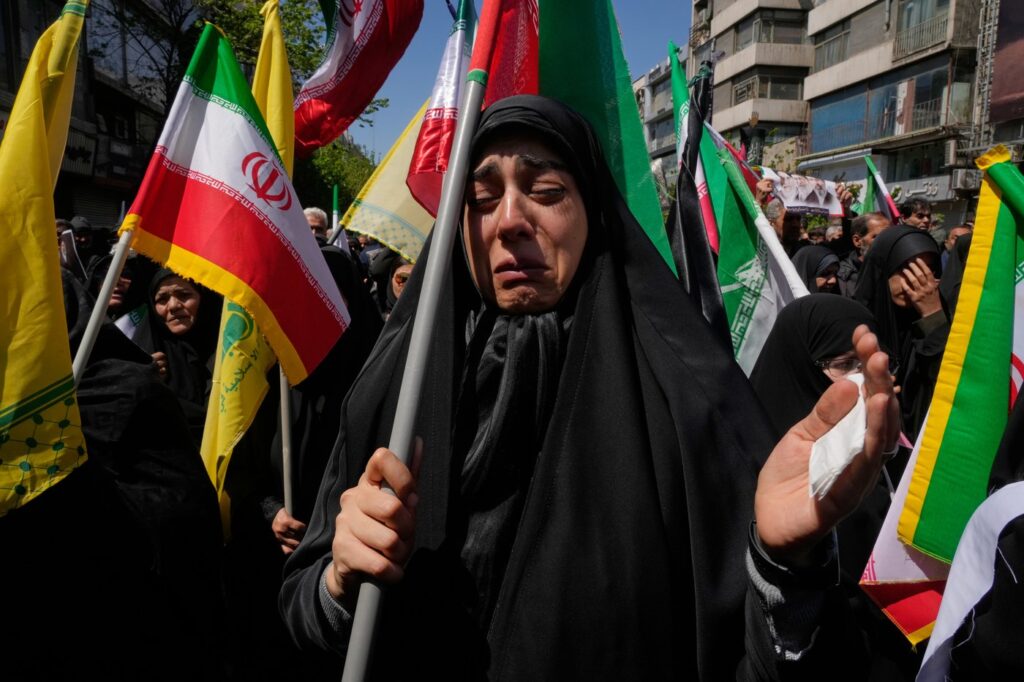
DUBAI, United Arab Emirates (AP) – In a significant move aimed at fostering a ceasefire in the Middle East, Israeli Prime Minister Benjamin Netanyahu announced on Thursday his decision to initiate direct negotiations with Lebanon. The talks, set to focus on disarming Iranian-backed Hezbollah militants and establishing diplomatic relations between the two nations, are expected to begin next week at the U.S. State Department in Washington, according to sources familiar with the details.
Israel and Lebanon have technically remained in a state of war since the establishment of Israel in 1948. Netanyahu emphasized that there is currently no ceasefire in place, stating that Israel will continue its military operations against Hezbollah until security is restored in northern Israel. The Israeli Prime Minister's video statement came after a series of airstrikes on Hezbollah targets in Beirut, marking one of the deadliest days in Lebanon since the conflict reignited on February 28.
The situation remains tense as U.S. President Donald Trump expressed skepticism regarding the ceasefire’s viability, criticizing Iran for purportedly preventing oil from passing through the vital Strait of Hormuz. Trump labeled Iran's actions as “dishonorable” while additional drone attacks from Iranian proxies targeted Kuwait, magnifying the pressure on the ceasefire ahead of U.S.-Iran discussions planned for the weekend.
Saudi Arabia also reported damage to a key pipeline in recent attacks attributed to Iran, further escalating tensions in the region. In response, Iran’s paramilitary Revolutionary Guard denied any involvement in these strikes, asserting instead that they are engaged in a campaign to exert pressure on the U.S. and its allies, particularly during this critical period of attempted negotiations between Israel and Hezbollah.
The talks in Washington are poised to be conducted by U.S. Ambassador to Lebanon Michel Issa and Israeli Ambassador to the U.S. Yechiel Leiter. However, Lebanon's representatives remain unspecified. Despite the potential for progress, past hostilities and longstanding differences, particularly regarding each country’s border, present significant challenges to achieving a lasting agreement.
In the backdrop of these negotiations, Iran's influence remains a pivotal factor. During a visit to a U.S. naval vessel, Trump pressed for a reduction in Israeli military actions in Lebanon, even as tensions flared after Israeli airstrikes reportedly resulted in more than 300 fatalities and over 1,100 injuries in Lebanon. These strikes targeted areas believed to be affiliated with Hezbollah's operations, igniting fears of further conflict.
As military and diplomatic maneuvers unfold, the region’s oil supply remains in jeopardy. The Strait of Hormuz, through which a substantial portion of global oil and natural gas is transported, has seen tankers navigate under threats of mining operations reported by Iranian sources. The U.S. has vowed to respond aggressively to any violations of the ceasefire and has raised concerns about Iran’s uranium enrichment activities, which are central to ongoing geopolitical tensions.
The escalation of violence and airstrikes has complicated the notion of a ceasefire. While both the U.S. and Iran appear to be at an impasse over terms of the ceasefire, including Iran’s missile and nuclear capabilities, the urgent situation surrounding civilian life in Lebanon cannot be overlooked. As over 230 ships, laden with oil, await passage through the Strait of Hormuz, global oil prices are soaring, exacerbating economic strife beyond the immediate region.
Overall, while there is potential for groundbreaking discussions between Israel and Lebanon, numerous unanswered questions about military actions and the broader regional dynamics continue to hinder the path toward a peaceful resolution.