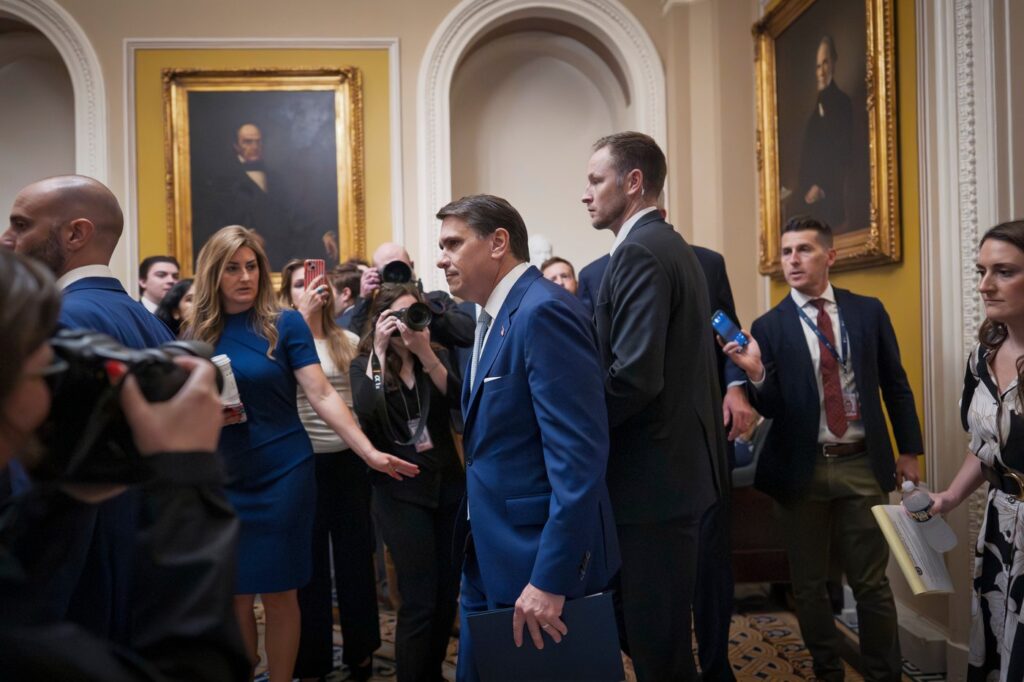
The recent political landscape took an unexpected turn when the Senate, typically accommodating to President Donald Trump, decided to reject his latest demands. Angered by Trump's insistence on a $1.776 billion fund aimed at supporting individuals involved in the January 6 riots, Republican senators opted for an unprecedented move: they simply refused to proceed with Trump’s agenda and adjourned, leaving behind the GOP's significant budget priorities.
This bold decision marked a significant moment for Congress, which has often failed to assert itself as an independent branch of government in recent years. The Senate's defiance resulted in a postponement of a key budget package, approximately $70 billion, intended to enable Trump's immigration and deportation objectives until 2029. Consequently, Trump’s aim to have the budget on his desk by June 1 fell short as Congress is scheduled to reconvene next month.
In response to questions about his diminishing control over the Senate, Trump nonchalantly shrugged, expressing uncertainty about the situation. This incident occurred during a challenging week for Trump, who had recently celebrated victories in midterm primary elections, successfully unseating several Republican lawmakers who contradicted his stance. His hostile approach seemed to galvanize the GOP base but alienated many current party members, leading to a fraught political atmosphere.
The friction escalated notably in the Republican Senate concerning Trump's proposed “anti-weaponization” fund, which was designed to offer compensation to those he believes were unfairly prosecuted. The proposal caught many senators off guard and intensified existing frustrations. Sen. Thom Tillis of North Carolina condemned the fund as a “payout for punks,” while Senate Minority Leader Mitch McConnell expressed deep moral objections to providing restitution to individuals convicted of crimes during the January 6 incident.
Amid escalating tensions, key GOP members began to question Trump's approach, indicating growing discontent within the ranks. Senate Majority Leader John Thune noted that the political climate influenced senators’ decisions, emphasizing a collective frustration over Trump’s demands. Although Trump’s candidate endorsements have proven successful in primary elections, these victories come at the expense of contributing factions within the party feeling increasingly marginalized.
The fallout continued as Trump’s endorsement of Ken Paxton against incumbent Senator John Cornyn in Texas raised alarms among GOP members who worried about jeopardizing essential Senate seats. This was echoed by Sen. Tillis, who predicted higher costs for maintaining that crucial seat, reflecting a broader unease regarding election strategies in light of Trump’s polarizing influence.
The House of Representatives mirrored this discontent, with notable Republican figures defying Trump on various legislations. Rep. Brian Fitzpatrick from Pennsylvania introduced a measure to block taxpayer funds from being allocated to Trump’s controversial compensation fund, asserting that the issue was based on legitimate policy concerns rather than political fear.
The internal conflicts within the Republican Party underscore a transformative period as tensions mount between Trump’s leadership style and the longstanding practices of congressional collaboration. While some members insist on traditional legislative processes, Trump’s propensity for confrontation has created cracks within the party structure, revealing divisions that could threaten the party’s unity heading into the general elections later this year.