BEIRUT (AP) – Israeli airstrikes on southern Lebanon on Friday resulted in the death of 10 individuals, which included six paramedics and a Syrian girl, according to Lebanon's Health Ministry. These attacks are part of the ongoing hostilities between Israel and Hezbollah that have persisted despite a fragile U.S.-brokered ceasefire aimed at mitigating violence in the region.
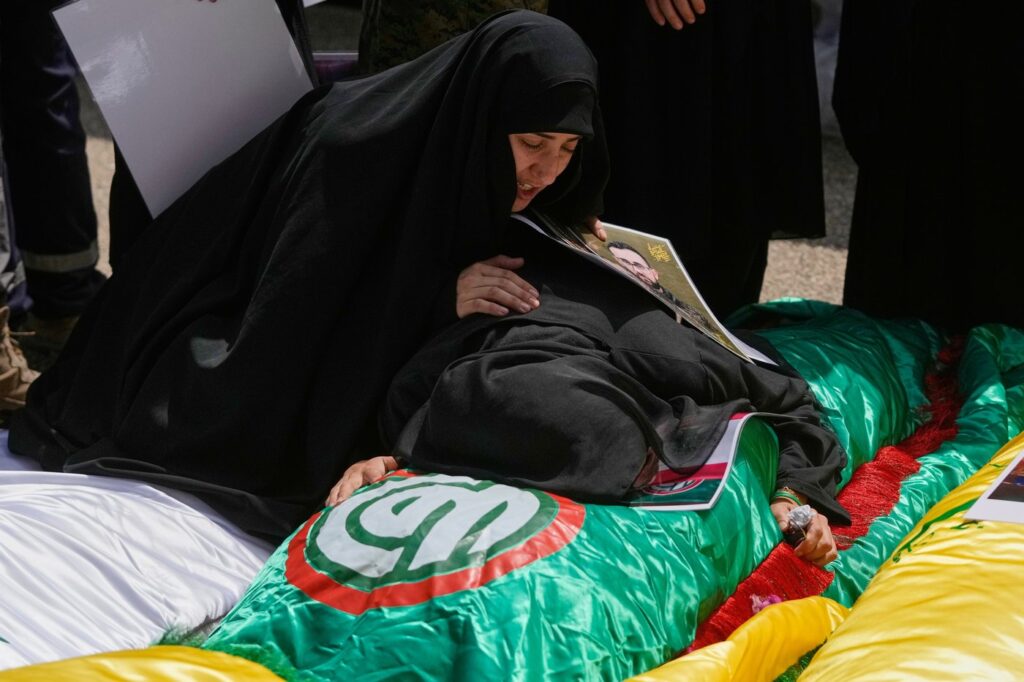
The first airstrike targeted the village of Hanouiyeh, killing four paramedics from Hezbollah's Islamic Health Association. Additionally, two other paramedics were wounded in this strike. Shortly afterward, another airstrike occurred in the village of Deir Qanoun al Nahr in the Tyre province, which led to the deaths of six more people, including a Syrian child and two paramedics from the Al-Risala Scouts Association, a group allied with Hezbollah's Amal movement. This attack injured six more individuals, three of whom were paramedics, alongside a Syrian woman.
The Health Ministry criticized the attacks, stating that they "violated" international law. The World Health Organization previously reported that there have been 169 confirmed assaults on healthcare workers and facilities in Lebanon since the latest Israel-Hezbollah conflict erupted, resulting in at least 116 deaths.
The Israeli military claimed that their strikes were aimed at Hezbollah infrastructure and admitted to assessing the claim that civilians, who were not intended targets, suffered harm as a result of the bombardments. They stated that precautions were taken to evacuate the population and minimize civilian casualties, including the use of precise munitions and aerial surveillance.
Furthermore, the military reported targeting Hezbollah members in Deir Qanoun al Nahr who were traveling on motorcycles. They stated that the decision to strike was made in a bid to eliminate perceived threats from the militant group.
Israeli officials have previously accused Hezbollah of using ambulances to shield militant activities, although they have not presented substantial evidence to substantiate these claims. The ongoing hostilities have persisted despite the U.S.-brokered ceasefire in place.
As of earlier this week, Lebanon's Health Ministry reported that the overall death toll from the ongoing fighting between Israel and Hezbollah has surpassed 3,000 since the conflict began. This latest escalation commenced on March 2, following Hezbollah's launch of rockets into northern Israel, which occurred just two days after the U.S. and Israel initiated military actions against Iran, a major backer of Hezbollah.
In a related context, statements were issued by the Lebanese army and the General Security Directorate asserting their commitment to discipline, professionalism, and loyalty solely to the Lebanese state and its institutions. This announcement followed the U.S. Department of the Treasury's sanctions against several legislators affiliated with Hezbollah, as well as state security officials accused of attempting to bolster Hezbollah's influence within Lebanese state institutions and hindering disarmament efforts.
This marked a significant move, as it was the first time that the U.S. imposed sanctions on current Lebanese state security officials, including one from the General Security Directorate and another from military intelligence, who were alleged to have provided Hezbollah with illicit support during the ongoing conflict.