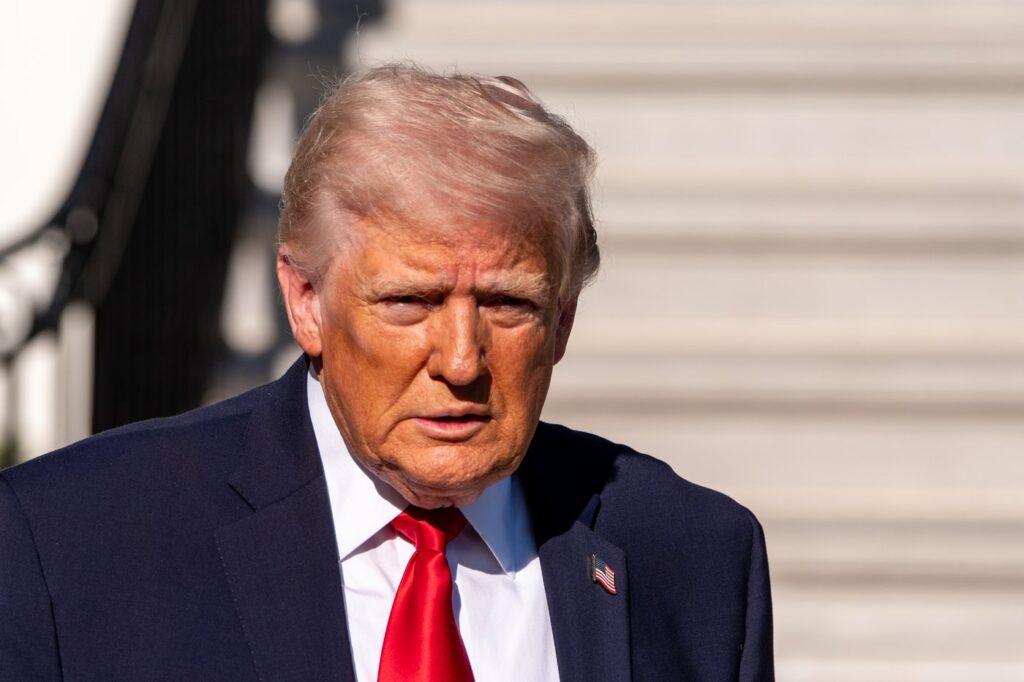
On Sunday night, President Donald Trump launched a scathing criticism of Pope Leo XIV, expressing his dissatisfaction with the U.S.-born leader of the Catholic Church. Trump described Leo as "a very liberal person" and argued that he is not fulfilling his duties effectively, asserting that the pontiff should "stop catering to the Radical Left." This attack came as Trump was traveling back to Washington from Florida.
Utilizing a lengthy social media post, Trump articulated his views, which he later reiterated to reporters on the tarmac after deplaning in Washington. He stated, "I'm not a fan of Pope Leo," a sentiment that aligns with the pope's recent comments regarding the ongoing U.S.-Israel war in Iran, where Leo suggested that a "delusion of omnipotence" is fueling the conflict. While clashes between popes and presidents are not unprecedented, the direct and personal nature of Trump's statements marks a significant moment in their relationship.
In his social media message, Trump labeled Leo as "WEAK on Crime" and criticized his foreign policy, specifically regarding nuclear weapon discussions, saying, "I don’t want a Pope who thinks it’s OK for Iran to have a Nuclear Weapon." He echoed this sentiment in his comments to the press, emphasizing his disapproval of Leo's stance on international security issues.
Further complicating the narrative, Trump posted an image in which he appeared to possess saint-like powers, donning a biblical-style robe while laying hands on a bedridden individual. The surreal depiction was accompanied by symbols such as eagles and an American flag, suggesting a divine endorsement of his actions and leadership.
Pope Leo had presided over an evening prayer service at St. Peter’s Basilica shortly before Trump’s remarks. While the pope did not directly mention Trump, his tone and message appeared to critique U.S. actions, particularly in the context of military interventions justified in religious terms. Leo, who was scheduled for an 11-day trip to Africa, had previously expressed that God "does not listen to the prayers of those who wage war," emphasizing a moral stance against conflict.
Amid the tensions, Trump criticized Leo’s views on U.S. military actions, particularly the administration’s approach to Venezuela, noting, "I don’t want a Pope who thinks it’s terrible that America attacked Venezuela, a Country that was sending massive amounts of Drugs into the United States." He framed his actions as being in line with his electoral mandate, highlighting that he won the 2024 election by a landslide.
In a provocative statement, Trump suggested that Leo's papacy was enabled by his American identity, implying that it was a strategic move to manage relations with Trump. "If I wasn’t in the White House, Leo wouldn’t be in the Vatican," Trump stated, further asserting that Leo should focus on his papal duties instead of political engagement, which he claimed is damaging the Catholic Church.
In response to Trump’s remarks, Archbishop Paul S. Coakley, president of the U.S. Conference of Catholic Bishops, expressed his dismay. Coakley stated, "Pope Leo is not his rival; nor is the Pope a politician. He is the Vicar of Christ who speaks from the truth of the Gospel and for the care of souls."
In the backdrop of this contentious exchange, it is noteworthy that Trump garnered 55% of the Catholic vote in the 2024 election, reflecting a complex relationship between his administration and various religious factions, including conservative evangelical groups. This interplay highlights the intricate dynamics of religion and politics within the current U.S. landscape.