ISLAMABAD (AP) – President Donald Trump announced on Sunday that the U.S. Navy would begin a blockade of ships entering or leaving the strategically significant Strait of Hormuz starting Monday at 10 a.m. EDT (5:30 p.m. in Iran). This decision followed unsuccessful U.S.-Iran ceasefire talks held in Pakistan, which ended without any agreement.
The U.S. Central Command (CENTCOM) stated the blockade would target all Iranian ports but would allow ships traveling between non-Iranian ports to transit the strait. This approach signifies a moderation from Trump’s earlier threat to fully blockade the strait, allowing continued shipping traffic vital for global oil supply as long as it bypasses Iranian ports.
Trump has sought to diminish Iran's strategic leverage in regional warfare, particularly after demanding that the nation open the strait, through which approximately 20% of global oil passes. Despite the ceasefire, maritime traffic has been notably limited; marine trackers reported that over 40 commercial ships transited the strait since the ceasefire began.
The blockade announcement elicited a reaction in global energy markets, causing oil prices to increase substantially. U.S. crude surged by 8% to $104.24 a barrel, while Brent crude rose by 7% to $102.29—a substantial increase from roughly $70 per barrel prior to the conflict in late February.
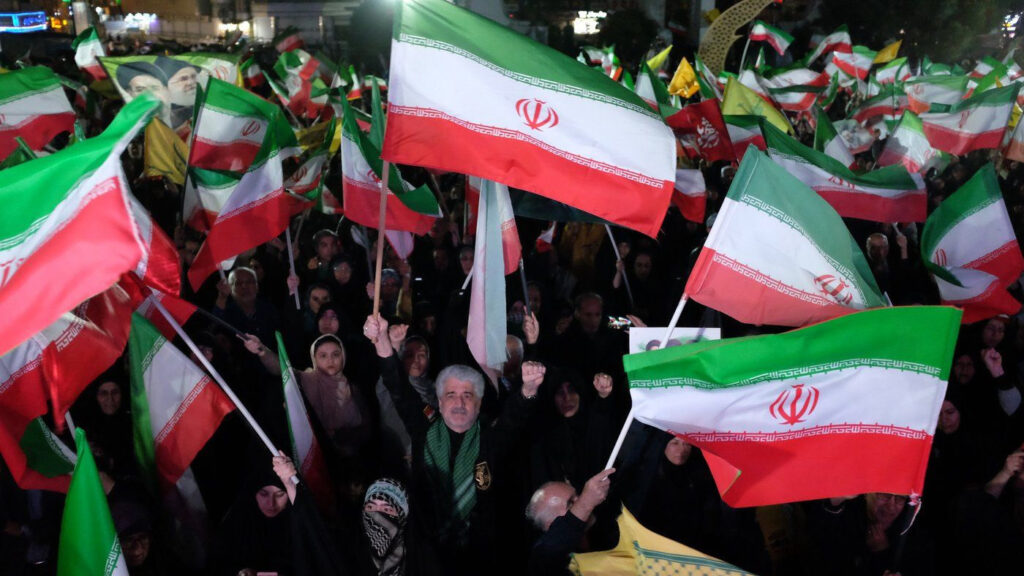
Later on Sunday, Trump escalated his ongoing conflict regarding the war with Pope Leo XIV, attacking the Catholic leader for his foreign policy stance in a social media post after Leo criticized the war and urged for peace negotiations. Iran's Revolutionary Guard responded, asserting that the Strait of Hormuz remains under their "full control" and would be open for non-military vessels, but military ships would face a "forceful response."
The recent U.S.-Iran talks lasted 21 hours and represented the highest-level negotiations since the 1979 Islamic Revolution. Neither side indicated a future plan post-ceasefire expiration on April 22. U.S. Vice President JD Vance emphasized the need for Iran to commit to not pursuing a nuclear weapon, noting that U.S. negotiators could not reach a consensus on critical U.S. "red lines," which included halting uranium enrichment and dismantling major enrichment facilities.
Iranian officials cited U.S. "overreach" as a significant factor in the talks' collapse, with Iranian parliament speaker Mohammad Bagher Qalibaf calling it a time for the U.S. to prove their trustworthiness. Pakistani Foreign Minister Ishaq Dar indicated a willingness to facilitate renewed dialogue in the near future, and Iran expressed openness to continue discussions.
The nuclear program remains a central sticking point in negotiations. Though Iran has consistently denied seeking nuclear weapons, it maintains its right to a civilian nuclear program. The conflict has resulted in significant casualties across the region, impacting at least 3,000 lives in Iran, 2,055 in Lebanon, and additionally in Israel and Gulf Arab states.
Iran’s diplomatic official refuted claims that talks failed over nuclear ambitions, with further unrest and frustration brewing within Iran following months of protests and warfare. The U.S. military has conducted preparations for potential military actions, with Trump threatening to target civilian infrastructure as leverage in negotiations. Iranian officials and military responses have emphasized their determination to maintain a robust defense against perceived threats.
In the broader regional context, the situation remains fluid, with airstrikes continuing in Lebanon but calming elsewhere. Israel and Lebanon are negotiating later this week on efforts to address Hezbollah's strength amid ongoing hostilities. The complexity of the situation underscores the challenges of achieving lasting peace in a multifaceted conflict.