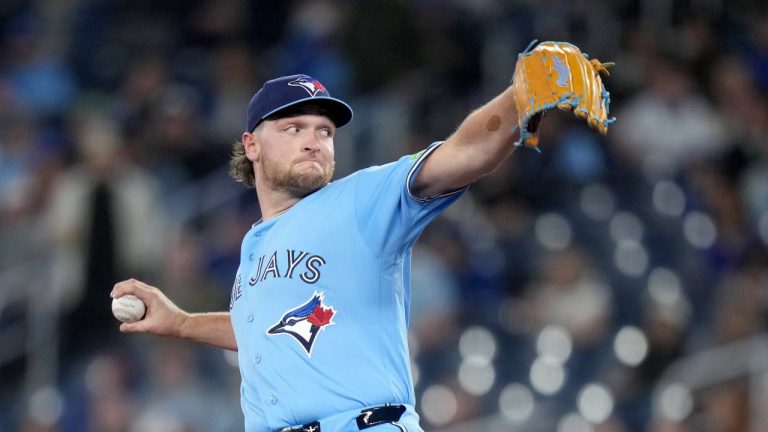
The Toronto Blue Jays have witnessed dominance from rookie right-hander Trey Yesavage, which has set high expectations and created a distorted sense of perspective around his performances. Despite being just 22 years old, Yesavage impressed during crucial moments of the season, particularly in the playoffs. He played a vital role in the team's quest for the American League East title and excelled in the postseason, striking out 39 batters—an unprecedented feat for a rookie. His Game 5 performance in the World Series, which included 12 strikeouts without issuing a single walk, solidified his reputation as a rising star.
However, the challenges of a full MLB season are fresh for Yesavage. From participating in Opening Day introductions while on the injured list to pitching on a routine Tuesday night in April, the 162-game grind presents a different kind of challenge than the short bursts of postseason brilliance. Following an impressive season debut where he pitched 5.1 shutout innings against the Boston Red Sox, questions arise regarding the reasonable expectations for a player still new to the league.
Blue Jays manager John Schneider acknowledged the complexities of transitioning from postseason adrenaline to the regular season grind. He noted that while Yesavage's peak performance during crucial playoff games is commendable, replicating that intensity over the long haul is a different matter. Schneider emphasized the importance of consistency and the adjustments both Yesavage and opposing hitters will need to make as the season progresses. He highlighted that the novelty of Yesavage’s unique delivery might wear off, necessitating further adjustments on his part.
In his season debut against the Red Sox, Yesavage managed to record four hits and struck out three batters in a commendable 74-pitch effort. Unlike his postseason outings against teams like the New York Yankees, Seattle Mariners, and Los Angeles Dodgers—where he predominantly overpowered hitters—this game showcased his ability to induce weak contact instead. He maintained an impressive fastball velocity, sitting at 94.3 miles per hour, and efficiently mixed his pitches, including sliders and a split-finger fastball.
Throughout the game, Yesavage navigated potential threats in the early innings but quickly found his rhythm. His first strikeout came in the fourth inning against Wilyer Abreu, proving he could retire batters effectively even when not at his peak performance. Critical to the Blue Jays' success, he kept the opposing team off the scoreboard, allowing his teammates to contribute offensively.
Yesavage exited to a standing ovation after striking out Willson Contreras in the sixth inning, setting the stage for his teammates, including Mason Fluharty, Jeff Hoffman, Tyler Rogers, and Louis Varland, who eventually secured the victory and locked down the ninth inning for the save. As the first of the 13 injured players to return, Yesavage's performance is seen as a positive development for a roster that has faced significant injury challenges. Schneider pointed out that with the expected return of key players, the team could stabilize its identity and return to its usual routines.
In conclusion, Yesavage's debut offers hope for the Blue Jays as they navigate the early season with a roster impacted by injuries. As he continues to adapt to the demands of a full season, his progress will be crucial for the team's overall success.