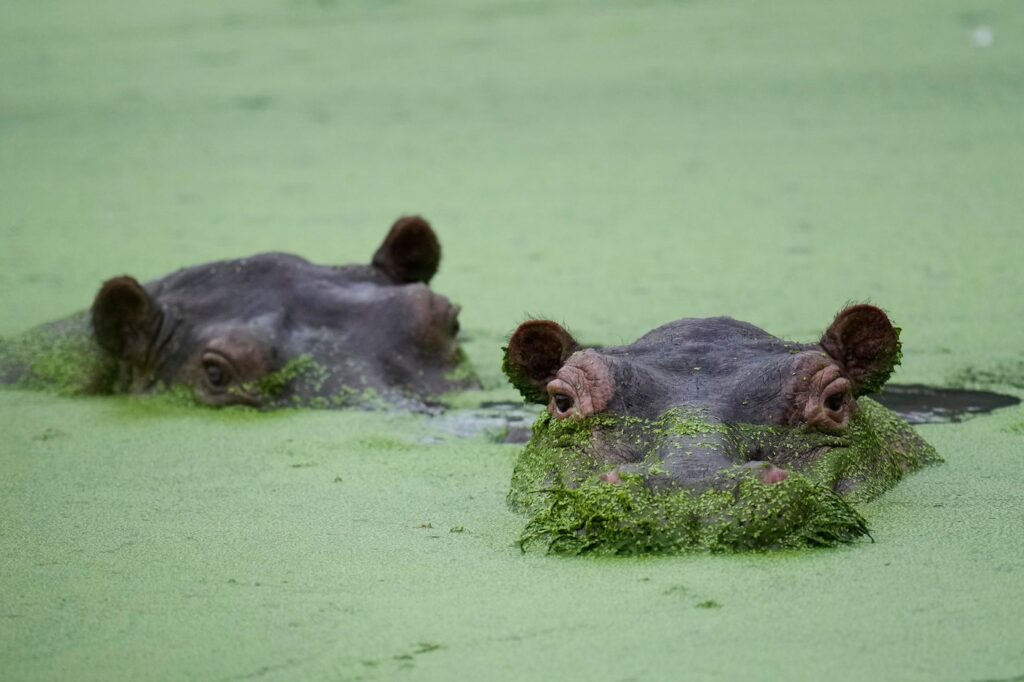
PUERTO TRIUNFO, Colombia (AP) – Along the Magdalena River, an essential waterway in Colombia, fishermen navigate with caution due to the presence of hippopotamuses. These semi-aquatic creatures can appear suddenly, posing a significant threat to those on the river. Fisherman Wilinton Sánchez described the hippos as a "true nightmare," recounting an encounter where one lunged at him, capable of inflicting severe harm with their powerful jaws.
The hippos also attract attention from tourists, with boats arriving weekly to seek glimpses of the animals in the murky waters. These "hippo-watching" tours sometimes lead to alarming moments, yet they contribute economic benefits to the local community. Currently, the population of these invasive hippos, all descendants of animals brought to Colombia by the infamous drug lord Pablo Escobar during the 1980s, is estimated to be around 200 and continues to grow rapidly.
The Colombian Environment Ministry has issued a warning that the hippo population could surpass 500 by 2030 without intervention. To address this concern, officials recently approved a controversial plan to euthanize approximately 80 hippos starting in the latter half of the year. This decision has sparked intense debate in Colombia, with scientists advocating for euthanasia facing threats, while animal welfare activists label the plan as "murder." Local residents of Puerto Triunfo, located about 200 kilometers from Bogotá, fear the culling will jeopardize the tourism that supports their livelihoods.
Diana Hincapié, a local restaurant owner, expressed her discontent regarding the euthanasia plan, stating, "We don't want to see a dead hippopotamus. They aren’t African anymore; they are Colombian, born and bred here for over 30 years." She highlighted the importance of hippos to the local economy, with her restaurant attracting nearly 200 tourists monthly, many of whom come specifically to see the hippos.
The hippos now inhabit around 43,000 square kilometers (16,600 square miles) of land, having multiplied in a climate far more suitable to them than their native Africa. The "Island of Silence," a river island in the Magdalena, has become a focal point of the population growth. Fisherman Álvaro Molina, who has lived near the river for over 11 years, noted that the hippo population has surged, with encounters becoming a commonplace aspect of fishing trips.
Molina expressed a pragmatic perspective on the situation, suggesting that whether the hippos are killed or relocated, it could benefit the local fishing industry, which has suffered due to widespread fear among local fishermen. The government’s plan includes options for hippo confinement, relocation to international sanctuaries or zoos, and euthanasia as a last resort if non-lethal alternatives prove unfeasible.
Experts note that hippopotamuses can profoundly affect local ecosystems, and Daniel Cadena, dean of the faculty of sciences at the University of the Andes, emphasizes the necessity of a balanced control strategy which may involve euthanasia. However, executing such plans is complex; lethally targeting the animals may require specific methods due to their thick skin, posing further implementation challenges.
Senator Andrea Padilla has called for the prioritization of relocation over lethal measures, criticizing the plan as an "extermination" and reflecting on the legacy of Escobar. Despite exploring the possibility of relocating the hippos, the Environment Ministry has reported that no countries have committed to accepting them, largely due to the prohibitive costs and legal barriers against importing invasive species.
The situation of the hippos in Colombia illustrates a complicated intersection of wildlife management, economic interests, and ethical considerations, with the local population and government grappling over the best path forward for both humans and hippos. As the debates continue, the future of these animals hangs in the balance, underscoring the challenges of coexistence in an increasingly human-dominated landscape.