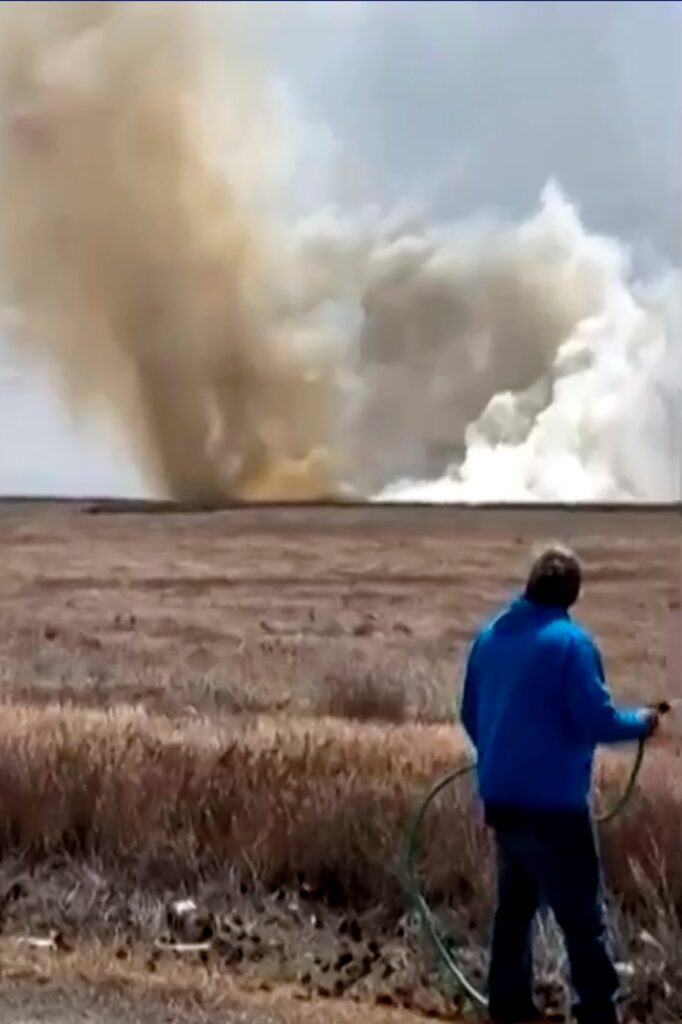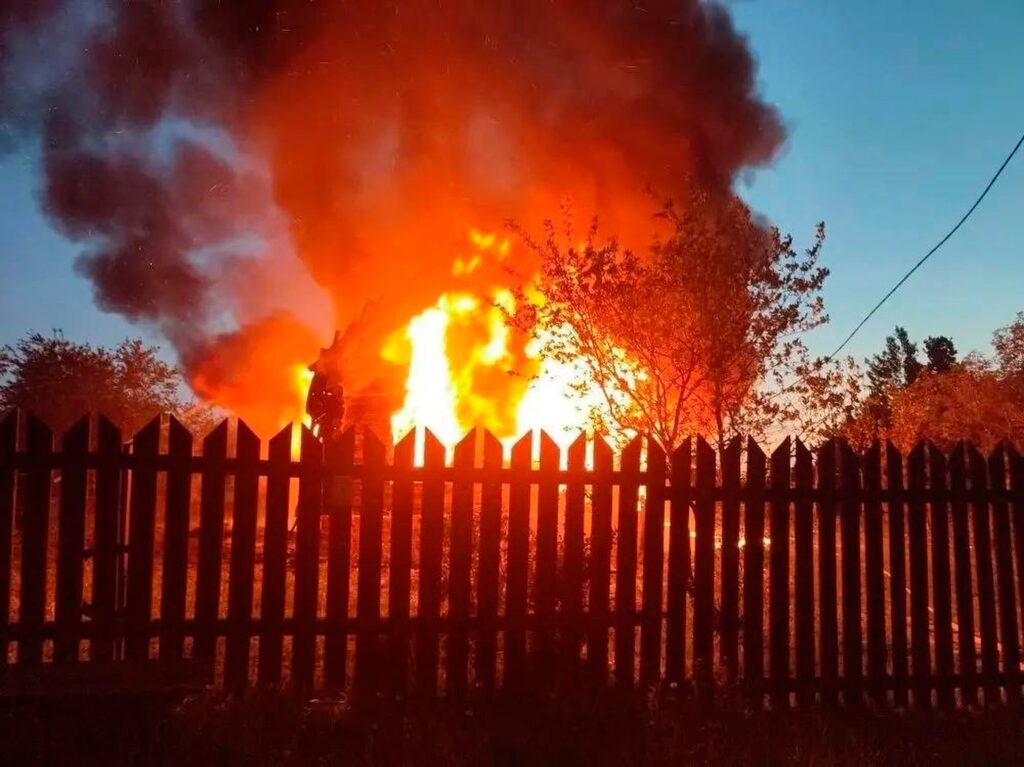
KYIV, Ukraine (AP) — One of Ukraine's largest drone strikes targeting Russia has resulted in at least four deaths, including three individuals near Moscow, and has injured a dozen others, according to local authorities reported on Sunday. Debris from the attack fell on Sheremetyevo Airport, Russia's largest, but did not cause any damage or disruption to flights.
Ukrainian President Volodymyr Zelenskyy confirmed the drone strikes, stating they were “entirely justified.” Russia has frequently launched similar assaults on Ukraine's capital and various other cities during the ongoing conflict. Experts believe the strikes were likely a form of retaliation for recent Russian attacks on Kyiv.
In the recent strikes, a woman was killed when a drone struck her home in Khimki, a city located just northwest of Moscow, while two men died in the village of Pogorelki, about 10 kilometers (6 miles) north of the capital, as reported by local Governor Andrei Vorobyev. Additionally, one man was killed in the Belgorod region after a drone hit a truck.
In Moscow, at least 12 individuals sustained injuries during the nighttime strike, primarily near the entrance of the city's oil refinery. Mayor Sergei Sobyanin noted that the refinery's infrastructure remained undamaged amidst the chaos. Hours following the attacks, the Indian Embassy in Moscow announced the death of an Indian national in the drone strike, with three other Indian nationals reported injured. It remains uncertain whether this individual was one of the three confirmed fatalities by regional officials.
According to state agency Tass, Russian defenses successfully shot down 81 drones aimed at Moscow in what appears to be one of the most significant assaults on the city since the onset of Russia's full-scale invasion of Ukraine on February 24, 2022. The Russian Defense Ministry reported the destruction of 556 drones across Russia, the occupied Crimean Peninsula, and the Azov and Black Seas overnight, claiming that more than 1,000 drones were neutralized or jammed within the preceding 24 hours.
Zelenskyy highlighted that the drones traveled more than 500 kilometers (310 miles) from Ukrainian territory, indicating that Ukraine is “overcoming” the air defense systems prevalent in and around the Russian capital. He emphasized that Ukraine's responses to Russia's prolonged aggression and assaults on Ukrainian cities are justified, signaling to the Russian state that it must conclude its war efforts.
Nigel Gould Davies, a senior fellow for Russia and Eurasia at the International Institute for Strategic Studies, described Ukraine's extensive attack as likely being the promised “retaliation or revenge” from Zelenskyy following the severe strikes on Kyiv. He pointed out that these Russian attacks occurred right after a brief ceasefire meant to facilitate Russia's annual Victory Day parade on May 9, commemorating the Soviet victory over Nazi Germany during World War II.
Gould Davies noted that there is no active peace process, and instead, the attack is likely to heighten anxiety within Russia, particularly in light of recent battlefield setbacks and the Kremlin's increasing crackdown on the internet, including in major urban areas like Moscow and St. Petersburg. He stressed that Ukraine demonstrating its ability to strike deep into Russian territory could cause considerable concern for the Kremlin.
In addition to the strikes in Russia, Ukraine reported that Russian forces launched 287 drones targeting Ukrainian territory, with 279 of these drones being intercepted or jammed. Overnight strikes wounded eight people in Ukraine's central Dnipropetrovsk region, specifically in the cities of Dnipro and Kryvyi Rih, and in the district of Synelkove, resulting in damage to residential buildings across all attack locations.
This escalation not only affects military operations but also has profound implications on civilian life and infrastructure, drawing greater international scrutiny to the ongoing conflict and highlighting the vulnerabilities on both sides.