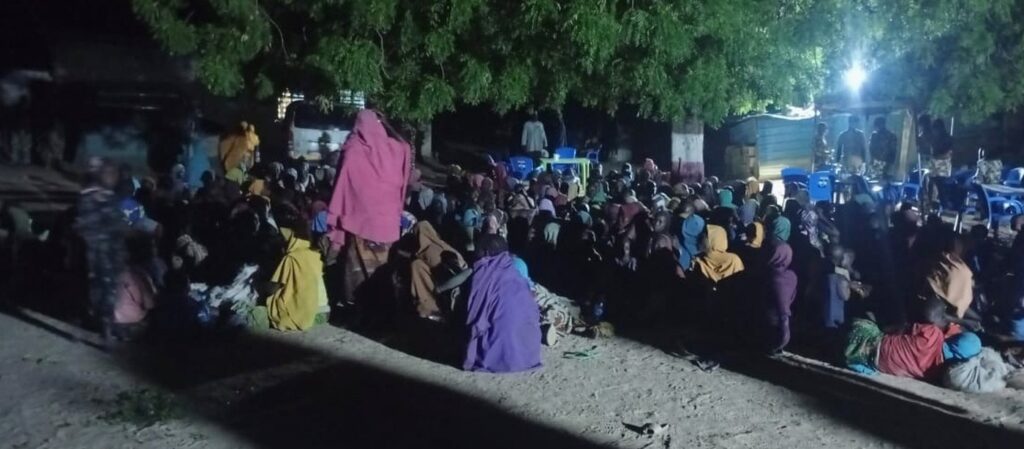
On Sunday, the Nigerian army announced the successful liberation of 360 individuals who were abducted by the Islamist militant group Boko Haram in the southern region of Borno, located in northeastern Nigeria. This military operation took place in the Mandara mountains, an area known as a stronghold for the militant group.
The army's spokesperson, Haruna Sani, reported that the rescue operation led to the release of several captives, including children, who had been taken from various communities within Borno. The ordeal, however, resulted in a tragic loss as two infants reportedly "succumbed to exhaustion" due to the harsh mountainous terrain and the severe conditions faced during their extended captivity.
Sani further stated that the remaining rescued individuals were successfully transported to safe locations where they received medical care and humanitarian assistance. He emphasized that this operation marked a significant triumph for the Nigerian military while simultaneously representing a considerable setback for Boko Haram.
Nigeria continues to grapple with a multifaceted security crisis, particularly in the northern regions where an insurgency has been ongoing for over a decade. Armed groups have intensified their activities, engaging in kidnappings for ransom and illegal mining, which have exacerbated the nation’s security challenges. Boko Haram and its splinter faction affiliated with the Islamic State, known as the Islamic State West Africa Province (ISWAP), are among the most notorious Islamic militant organizations operating in the country.
In a related development, last month, the Nigerian government announced that a joint military operation with the United States resulted in the deaths of 175 ISWAP fighters. The ongoing insurgency in northeastern Nigeria has led to the deaths of thousands and the displacement of millions, according to statistics from the United Nations. Despite repeated assurances from President Bola Tinubu to curb the escalating violence and restore safety for citizens, analysts argue that insufficient measures are being implemented by the government to effectively protect the populace.
This recent rescue operation and the ongoing military efforts highlight both the challenges and the determination of the Nigerian military to combat terrorism and secure the safety of its civilians. With the complex interplay of various armed groups and the continual threat posed by Boko Haram and ISWAP, the situation in Nigeria remains precarious as efforts to achieve lasting peace and security continue.