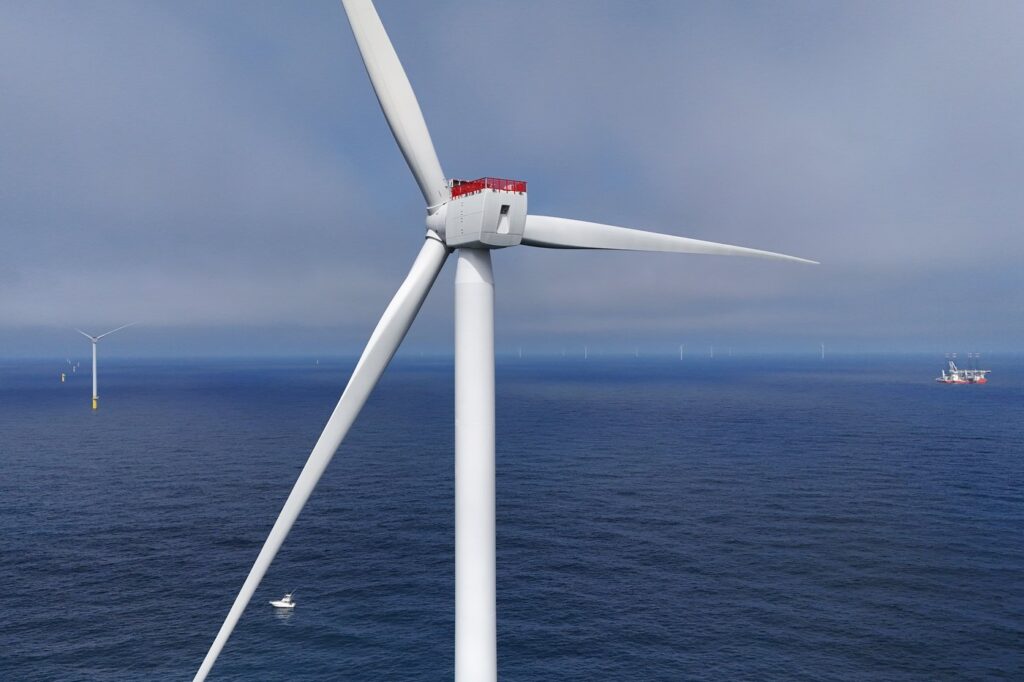
HALIFAX – The development of Canada's first offshore wind farms took a major step forward when Nova Scotia's offshore energy regulator announced late Friday the list of companies qualified to bid on seabed licenses. This announcement is part of a significant progress in the province's transition to renewable energy sources.
The Canada-Nova Scotia Offshore Energy Regulator revealed that five companies and two consortiums successfully met the required criteria after an extensive review process conducted between October 2025 and January 2026. These companies had to demonstrate their capabilities by fulfilling specific financial, technical, legal, and social criteria necessary for undertaking offshore wind projects.
While the regulator confirmed that some of the companies meeting the eligibility criteria opted to keep their identities confidential, the names of those that consented to be disclosed were released. This confidentiality could mean that not all participants in the bidding process are publicly known at this stage.
A formal call for bids is anticipated to be issued later this year, which will entail ministerial reviews from both federal and provincial authorities. This structured assessment aims to ensure that the projects proposed will be sustainable and beneficial for the region.
The companies approved to participate in the bidding process are geographically diverse, hailing from Canada, Belgium, China, Ireland, Luxembourg, Singapore, Switzerland, South Korea, and France. Among them, Q Energy France has indicated an estimated timeline for commissioning its offshore turbines around 2035, signifying the long-term planning involved in these projects.
Nova Scotia Premier Tim Houston highlighted this progress in a statement, describing it as a significant milestone toward establishing the province as a leader in energy production on the global stage. He emphasized that attracting experienced companies would create an environment conducive to a robust offshore wind industry, stating, “This kind of growth will move us from a have-not to a have province and create many new opportunities for our young people, small businesses, and communities.”
In a bold expansion of its initial goals, Houston remarked that the province’s plan to license offshore wind farms capable of generating five gigawatts of electricity had ballooned to an ambitious target of 40 gigawatts. This is substantially more than the 2.4 gigawatts that Nova Scotia currently requires. The Premier also urged the federal government for financial support in covering the costs of the Wind West project, indicating that the surplus electricity produced could potentially supply 27% of Canada’s total energy demand. There has been interest from Quebec and Massachusetts in purchasing electricity generated by this significant clean energy initiative.
The first phase of the Wind West project is projected to cost approximately $60 billion. It aims to generate five gigawatts of power by as early as 2033, with estimates suggesting that around $40 billion will be allocated for turbine infrastructure and the remaining $20 billion for new transmission lines. Furthermore, the ambitious plan to reach a total of 40 gigawatts specifies that commissioning could occur by 2050.
The designated ocean areas for the initial phase encompass Sydney Bight, located to the northeast of Cape Breton in the Gulf of St. Lawrence, as well as three more parcels situated off the eastern shore of mainland Nova Scotia.
The qualified companies and business alliances that have consented to the release of their names include:
- DEME Concessions Wind N.V. (Belgium)
- Ming Yang Smart Energy Group Ltd. (China)
- Northland Power Inc. (Toronto, Canada)
- Simply Blue Energy (OSW) Ltd. (Ireland)
- Jan De Nul N.V. (Luxembourg)
- A consortium including Halifax-based DP Energy Canada Ltd., Enterprize Energy Atlantic Pte. Ltd. (Singapore), Nova East Wind Inc. (Halifax), and SBM Renewables Holding SA (Switzerland)
- A consortium that includes Hanwha Ocean Co., Ltd. (South Korea) and Q ENERGY France SAS