British Columbia Premier David Eby has announced that local businesses will be able to access a federal emergency fund if the United States proceeds with its new tariff threats. This statement comes in light of U.S. President Donald Trump's declaration of plans to impose tariffs of up to 50 percent on various Canadian products, including those manufactured from wood.
In a recent conversation, Prime Minister Mark Carney informed Eby that businesses in British Columbia affected by these tariffs could apply for support from a fund amounting to $1.5 billion. Eby indicated that this fund "has not been exhausted," suggesting that it could provide sufficient financial assistance should the United States implement the proposed tariffs by the anticipated date of August 19.
Despite the availability of financial resources, Eby expressed concern over the immediate impact of the tariff situation on British Columbian businesses. He highlighted the uncertainty created by the tariff threats, emphasizing that a swift resolution to the dispute would be advantageous for all parties involved.
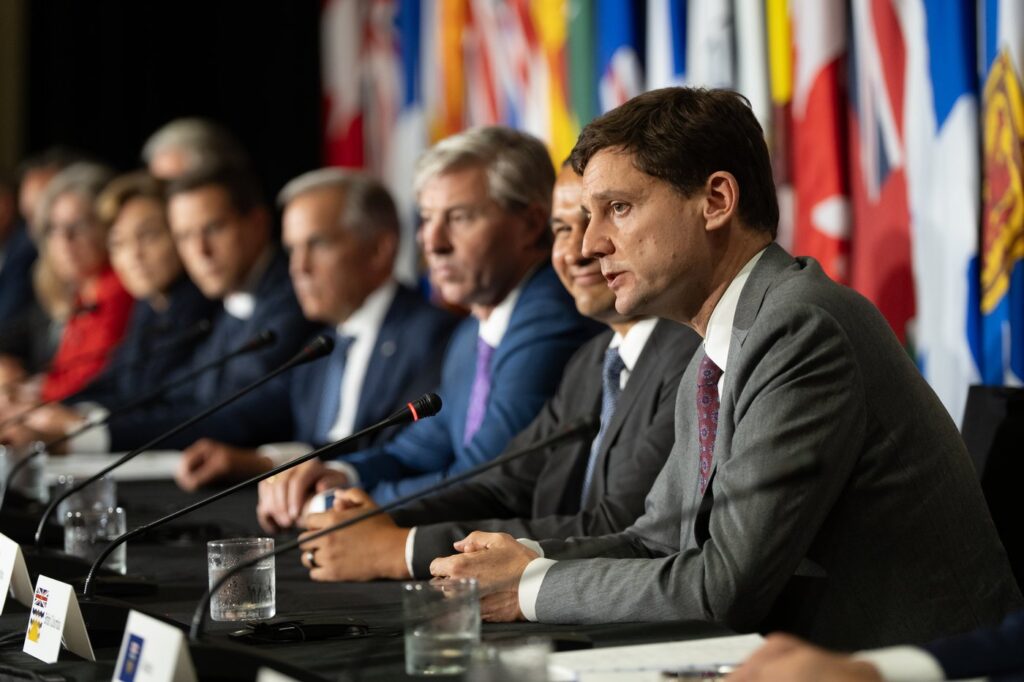
Eby made these comments while attending a meeting in Charlottetown with other first ministers, including Prime Minister Carney. The meeting focused on various strategies to respond to the latest tariff threats and was described as an important opportunity for collaborative discussion on the issue.
One significant topic during the discussions was the management of U.S. alcohol imports in British Columbia. Eby firmly stated that he does not view the option of reintroducing U.S. alcohol into B.C. stores as viable, despite Trump’s demands. He remarked, "I can tell you in terms of the perspective of those provinces and territories that have taken U.S. alcohol off the shelf, there is no desire to put those products back on the shelves."
Furthermore, Eby articulated that the decision to remove U.S. alcohol from stores had become an important negotiating leverage for Canada in ongoing discussions regarding tariffs and trade relations with the United States. He reaffirmed that Canadian provinces remain united in their stance against the return of American liquor to store shelves.
During the meeting, Eby also addressed concerns related to British Columbia's softwood lumber sector. He mentioned that there would be a separate gathering convened with the premiers of other provinces that have significant softwood industries, indicating a coordinated approach to tackling the challenges posed by softwood lumber tariffs.
As this situation evolves, the Premier's statements reflect the complexities of trade relations between Canada and the United States, especially concerning the implications of tariffs on local businesses and industries. Overall, Eby appears determined to protect British Columbia's economic interests while navigating the ongoing tariff threats posed by the U.S. government.