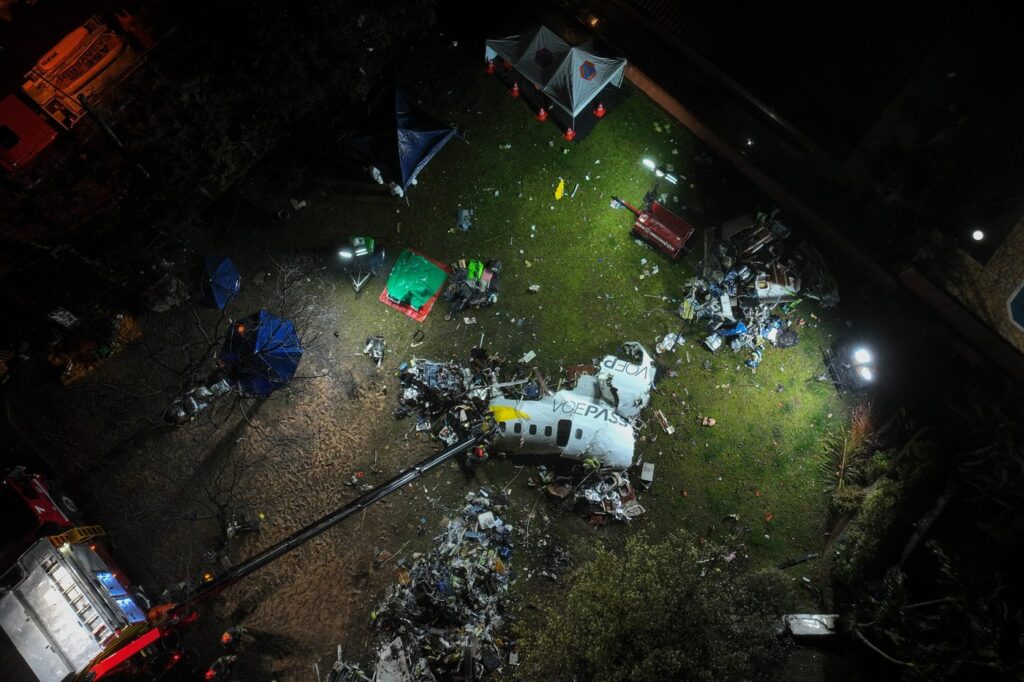
SAO PAULO (AP) — Brazilian air force investigators have released their findings regarding the tragic Voepass airplane accident that occurred in 2024, claiming the lives of 62 people. The crash, which marked Brazil's deadliest air disaster since 2007, happened when the Voepass ATR 72-500 twin-turboprop spiraled into a residential neighborhood in Vinhedo, a city near Sao Paulo, on August 9, 2024.
The investigation revealed that a combination of severe icing conditions, mechanical system failures, and pilot distractions were instrumental in the accident. The Voepass flight, which was en route from Cascavel to Sao Paulo’s international airport, encountered dangerous atmospheric icing while cruising at an altitude of 17,000 feet. This severe icing caused the aircraft to lose lift, leading to an unrecoverable "flat spin."
Flight recorders indicated that the flight crew had noticed significant ice accumulation on the aircraft's airframe. However, the de-icing system of the plane experienced ongoing technical malfunctions, which led the crew to switch it on and off repeatedly during critical phases of the flight. Investigators highlighted a concerning "culture of normalizing deviations" within Voepass, revealing that there were pre-existing mechanical issues, including known de-icing faults, which had been tolerated before takeoff.
Additionally, the probe found that the crew was diverted by routine radio communications and administrative duties during critical moments. This distraction resulted in their failure to execute necessary corrective maneuvers in a timely manner amid severe icing warnings.
The findings were shared with the families of the victims before being made public, underlining the significant implications of this investigation for airline safety and operational protocols within Brazil's aviation industry. The report underscores the urgent need for systemic changes to address both mechanical reliability and crew training to prevent future tragedies.
Mauricio Savarese, The Associated Press