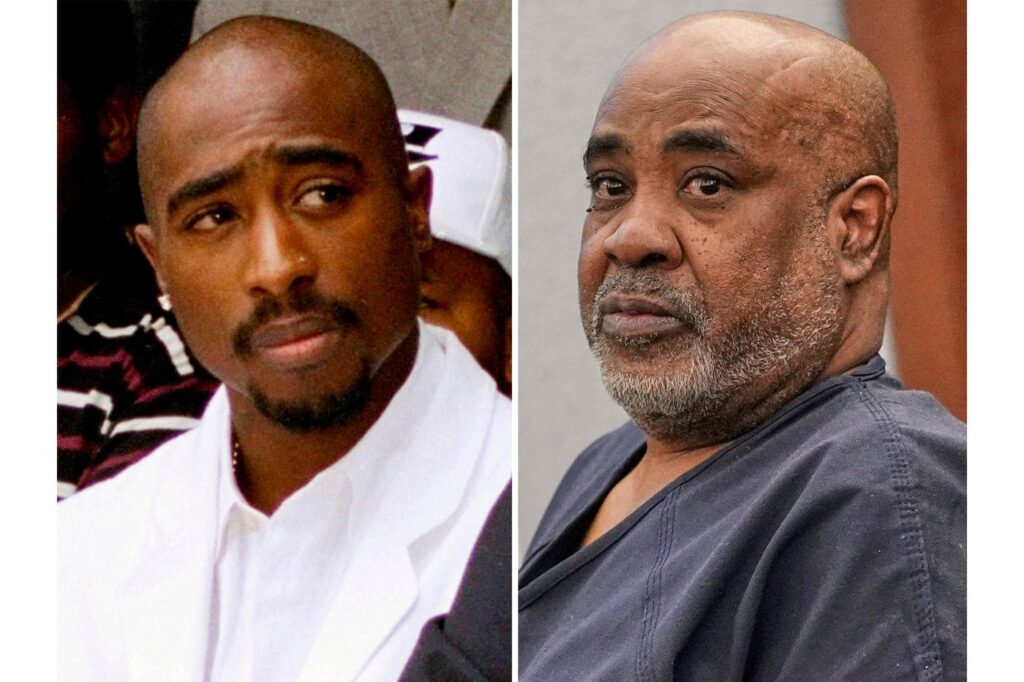
LAS VEGAS (AP) A significant ruling took place on Tuesday as Nevada Judge Carli Kierny declared that an interview recorded in 2008, involving Duane “Keffe D” Davis — the man accused of murdering hip-hop icon Tupac Shakur — can be presented at his forthcoming trial. This trial is set to commence on August 10, 2023.
Duane Davis, aged 63, faces serious charges including murder for the death of Tupac Shakur, which occurred in 1996. If convicted, Davis risks life imprisonment without the possibility of parole. Prosecutors allege that Davis was instrumental in orchestrating the killing, marking Shakur's death as one of the most infamous unsolved murders in American history.
The case cooled down over the years; however, renewed attention emerged when Davis began making public statements concerning the murder. He co-authored a book, detailing his involvement, where he claimed he was present in the Cadillac from which the shots were fired and that he had supplied the weapon used in the killing.
Davis's defense attorney, Michael Sanft, argued that the interview was intended to be confidential, claiming that detectives had explicitly communicated to Davis that his statements in the interview would not be used against him in any legal capacity. Davis himself expressed in his book, “Compton Street Legend,” that he cooperated with law enforcement under the assumption he would not face prosecution.
Prosecutors contended that the interview should not be excluded from the trial, asserting that the information became admissible following Davis's decision to publish the book and publicly discuss the details of his involvement. They argued that the revelations in the book demonstrated a willingness on Davis's part to embrace the narrative surrounding the case, thus invalidating any claims of confidentiality.
The prosecution also made efforts to utilize the content of Davis's memoir in court, but the defense argued that parts of the book were fictionalized for profit, making it challenging to ascertain the veracity of his statements. However, Judge Kierny ruled that Davis did adopt the narrative of the book as his own, referencing his description of the memoir as the “real truth” during an interview.
The 2008 interview, which originally featured in former Los Angeles Police Department Detective Greg Kading's book, “Murder Rap: The Untold Story of the Biggie Smalls & Tupac Shakur Murder Investigations,” has also been referenced in various documentaries. Notably, segments of the recording were showcased in the recent documentary titled “Sean Combs: The Reckoning.”
Tupac Shakur was tragically shot on September 7, 1996, in Las Vegas, Nevada, when he and Marion “Suge” Knight, the founder of Death Row Records, were stopped at a red light. A white Cadillac approached them, and gunfire erupted, resulting in Shakur being shot multiple times. He succumbed to his injuries six days later, while Knight endured only minor wounds.
Supporting evidence emerged that there were three other individuals present in the Cadillac with Davis, including his nephew, Orlando “Baby Lane” Anderson. However, Davis remains the sole survivor among them, as none faced charges related to Shakur’s murder prior to their deaths. Orlando Anderson maintained his innocence at the time and was subsequently killed two years later in a gang-related shooting in Compton, California.
In his memoir, Davis stated that he received a handgun from an associate and disposed of it in the backseat of the Cadillac, but he refrained from identifying who actually fired the fatal shots. During the 2008 police interview, Davis detailed the events of that fateful night, admitting that he and his crew had approached Shakur, with allegations suggesting that Anderson had been the one to initiate the gunfire. A witness for the grand jury later testified that Anderson lacked a clear line of fire, attributing the act to another accomplice, Deandrae “Freaky” Smith.
Davis expressed regret regarding his decision to speak to law enforcement, indicating a sense of remorse for revealing any information. He reflected, “It kills me on the inside to know that I told them anything,” showcasing the emotional turmoil surrounding his admissions.