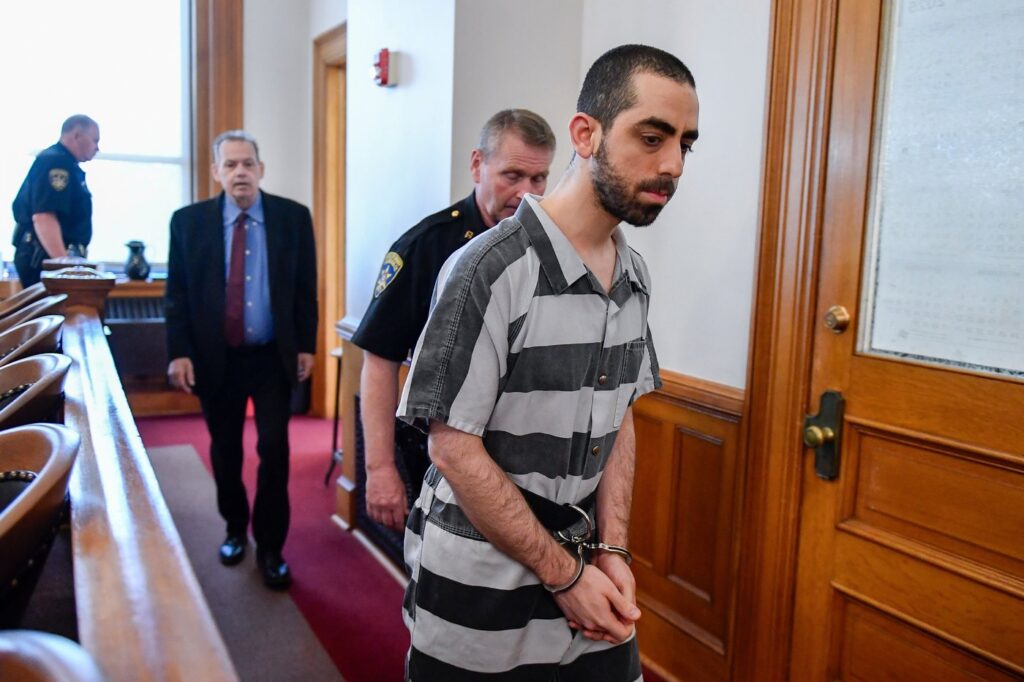
A man named Hadi Matar was convicted on federal terrorism charges on Wednesday in connection with the stabbing of Salman Rushdie, a prominent author who has faced a long-standing death threat linked to his novel "The Satanic Verses." This incident occurred in August 2022 during a public event where Rushdie was set to speak about the safety of writers.
The jury found Matar, 28, guilty on multiple counts, including engaging in an act of transnational terrorism. This conviction underscores the severe implications of his actions and the extent to which they were driven by ideological motivations. Matar's prior convictions include a 25-year prison sentence imposed by New York state for attempted murder as a result of the same attack.
Rushdie, who was attacked on stage at an amphitheater in Chautauqua, New York, suffered serious injuries during the brutal assault, being slashed 15 times. The attack left him gravely injured, and he lost the sight in his right eye, marking a significant blow to both his physical well-being and his literary career.
The guilty verdict in this case reflects the ongoing challenges faced by writers and public figures in the context of free expression and ideological extremism. Matar's actions, fueled by the historical animosities surrounding Rushdie's works, serve as a stark reminder of the risks individuals may encounter when expressing controversial views.
The federal charges against Matar carry a potential life sentence, highlighting the seriousness of the verdict and the broader implications for national security and public safety. This conviction comes as part of a larger discourse on terrorism and the protection of writers and intellectuals in democratic societies.
In conclusion, the proceedings against Matar shine a light on the intersection of literature, freedom of expression, and the violence that can stem from ideological beliefs. Salman Rushdie's experience not only raises questions about the safety of authors but also serves as a pivotal moment in discussions about tolerance and the protection of artistic expression in the face of violent opposition.