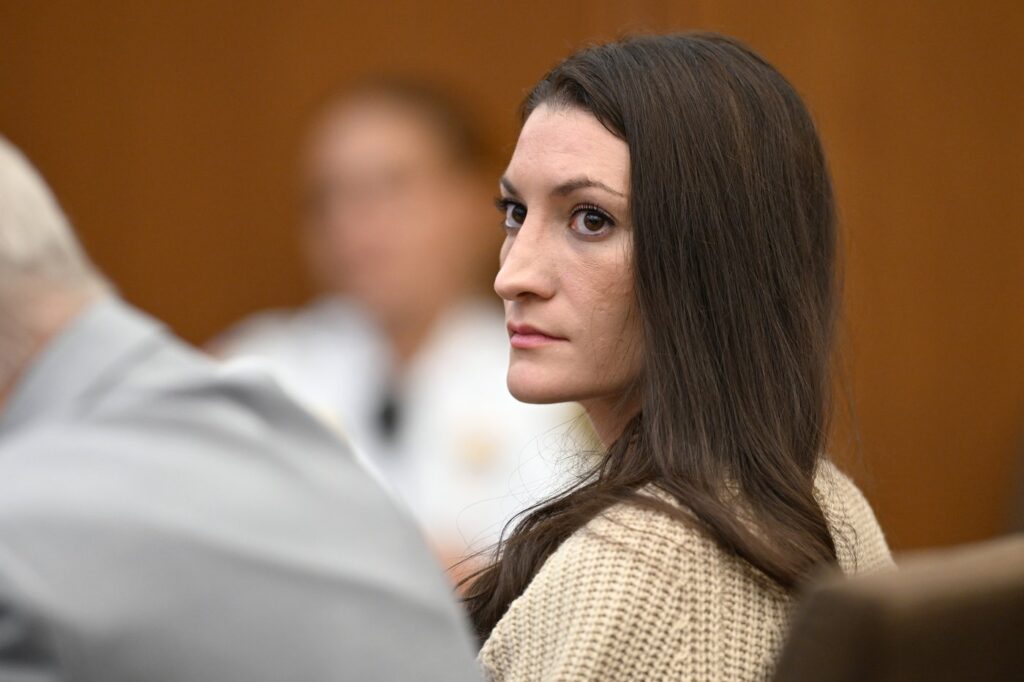
BOSTON (AP) – The defense in the Lindsay Clancy murder trial concluded its case on Friday, following several days of testimony that focused on her mental state prior to and following the tragic event in which she strangled her three children. Clancy, 36, faces multiple murder charges for the deaths of her children, Callan, Dawson, and Cora Clancy, aged between 8 months and 5 years, who were discovered in the basement of their home in Duxbury, Massachusetts.
After the defense rested, prosecutors began presenting rebuttal witnesses, indicating that the trial is nearing its conclusion, with closing arguments anticipated for the upcoming week. Clancy has pleaded not guilty to the charges against her.
The children were found deceased after Clancy, a former labor and delivery nurse, jumped from a second-story window, resulting in her being paralyzed from the waist down. Prosecutors have presented evidence suggesting that Clancy intentionally planned the killings.
Kevin Reddington, Clancy’s lawyer, has not contested the fact that she killed her children but argues that she should not face criminal charges due to suffering from postpartum psychosis, a rare mental illness associated with the stress and hormonal changes of childbirth. To substantiate this defense, Reddington called several family members to testify about Clancy's deteriorating mental health and her efforts to seek psychiatric help prior to the January 2023 incident.
Among the key witnesses was Dr. Phillip Resnick, a forensic psychiatrist who specializes in filicide, the killing of a child by a parent. Resnick testified that Clancy was "clearly psychotic" on the day of the murders, asserting that she was not in control of her actions. He likened her to "a puppet" being manipulated by another force. After interviewing Clancy four months post-killings, he reported that she minimized her symptoms and demonstrated signs of severe depression and potential bipolar disorder, mentioning that she heard a voice instructing her to kill her children.
Resnick suggested that Clancy's motivation stemmed from a delusional belief that if social services took her children away, or if she took her own life, they would suffer, ultimately concluding that they would be better off dying with her. He emphasized that Clancy believed she was acting in her children's best interest.
During cross-examination, prosecutor Jennifer Sprague highlighted Clancy's failure to disclose any violent thoughts to health care providers. Resnick acknowledged this tendency, noting that many people with similar fears generally do not report harmful thoughts due to the fear of their children being removed from their custody. This discussion raised complex questions about Clancy's mental condition and societal perceptions regarding motherhood and mental health.
Prosecutors contend that Clancy was not experiencing psychosis or bipolar disorder at the time of the murders. They argue she specifically staged the incident to exclude her husband from the house on that fateful day. In response, they presented Dr. Avram Mack, a forensic psychiatrist, as a rebuttal witness. Mack recognized that while Clancy was undergoing a major depressive episode, he found no support for diagnoses of mania, hypomania, or psychosis prior to the events of the killings.
Mack recounted Clancy's description of the killings during their discussions, noting that she said she heard a commanding voice instructing her to kill her children. However, he also indicated that her severe mental illness was an extension of long-standing depression, during which she maintained her ability to control impulses and distinguish between right and wrong.
He asserted that psychosis does not inherently prevent an individual from recognizing moral right from wrong. This aspect of the case further complicates the arguments surrounding culpability and mental illness, as both sides continue to present their interpretations of Clancy's state of mind during the critical moments leading up to the tragic events.
As the trial progresses, the complexities of Clancy's case highlight broader themes concerning mental health awareness and the societal challenges that accompany parenting and psychological distress.