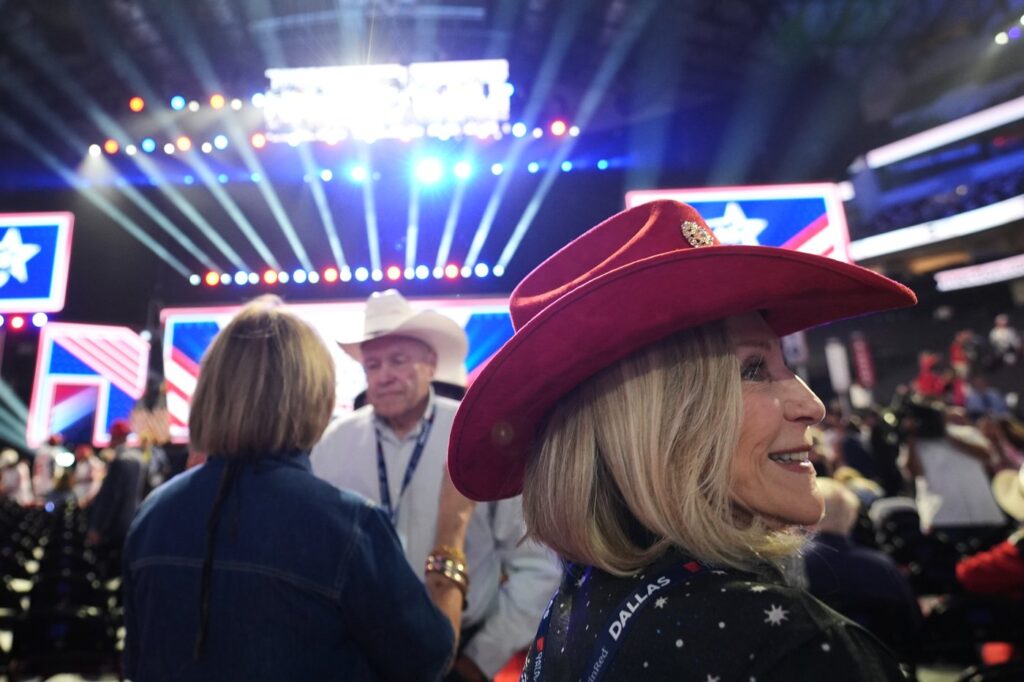
DALLAS – U.S. President Donald Trump addressed his staunch supporters on Wednesday, asserting that Canada "very much wants to make a deal" amidst his escalating trade war. This statement came while he was headlining a unique Republican convention in Dallas, which was organized shortly after his aggressive trade policies garnered attention.
During his speech, Trump proposed a whimsical idea to rename Lake Ontario as "Lake America," but the trade tensions with Canada appeared to be a non-issue for many attendees. Ken Moore, a convention participant, characterized the trade war as an "interfamily spat," expressing confidence in the enduring friendship between Canada and the United States. He noted that most people within his circle are likely unaware of the ongoing tariff disputes.
Throughout the event, Trump received raucous cheers of "U.S.A." as he focused primarily on familiar themes: attacking Democrats, addressing immigration, boasting about attracting foreign investment, and repeating his fondness for tariffs. Titled “Trump-a-Palooza,” the convention served as a fundraiser and a rallying point for Republicans ahead of the midterm elections, despite Trump's currently low approval ratings.
Traditionally, political conventions occur every four years, making this gathering the first midterm convention for the Republicans. Unlike conventional political events, this was a full-fledged celebration of Trump himself. However, linking Trump's stance with Republican candidates could complicate their campaigns, especially as they grapple with issues such as inflation, dissatisfaction with the war in Iran, rising gas prices, and the consequences of Trump’s trade tariffs.
The outcomes of the midterm elections have the potential to shift control of Congress, imposing checks on Trump's significant executive powers for the remainder of his second term. Aware of the election’s implications, Trump pledged that if Republicans retain congressional control, every adult American would receive a $5,000 “Trump dividend.” However, this promise follows other unfulfilled pledges of financial relief based on tariff revenues.
Many convention attendees expressed excitement over Trump's speech and were eager to learn about his administration's strategies to address concerns regarding election integrity and affordability. Despite polling indicating broad unpopularity for Trump's tariffs and his suggestion to rename Lake Ontario, attendees like Brian Becker, president of the Irving Professional Firefighters Association, seemed unconcerned about the relationship with Canada. Becker intended to show his support for Trump’s impact on firefighters, attributing improved benefits and regulatory changes to the administration's influence.
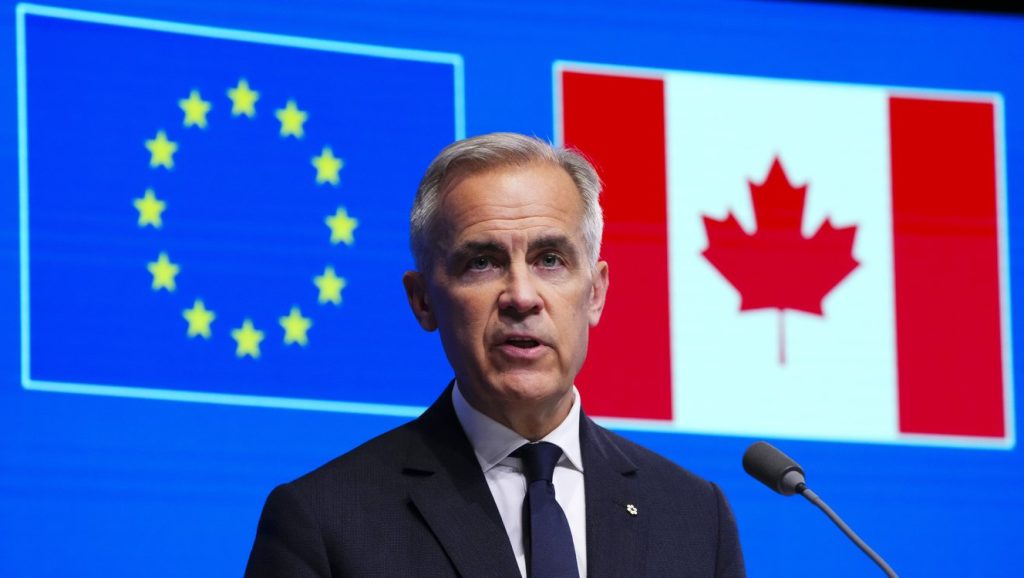
In contrast, the relationship between Canada and the United States has faced significant strain since Trump took office, with Canada becoming a target of tariffs and aggressive rhetoric from a president who seems to view it more as an adversary than a close ally. While Canadians have been acutely aware of the deteriorating relations, Americans, particularly those at the convention, have been less focused on the consequences of the trade war.
Trump briefly commented on Canada’s desire to negotiate but did not delve into the specifics of the trade conflict during his speech. Republicans from border states have voiced concerns about how the trade tensions might jeopardize their electoral chances in the upcoming midterms. Political analysts have predicted a possibility of Democratic gains in the House, while trade issues could also complicate the Republicans' standing in the Senate, especially in states reliant on cross-border commerce like Alaska, Iowa, Maine, Michigan, and Ohio.
Senator Susan Collins of Maine noted that the tariffs complicate her re-election efforts, while some Republican lawmakers in tight races opted to skip the convention due to scheduling conflicts. Among them is Michigan Senate nominee Mike Rogers, who has received praise from Trump, as he prepares for a competitive race against Democrat Abdul El-Sayed, who has made trade with Canada a focal point of his campaign.
El-Sayed criticized Trump's approach, labeling the trade war as a detrimental conflict for Michigan, asserting that it has resulted in higher prices for goods that should cost less.