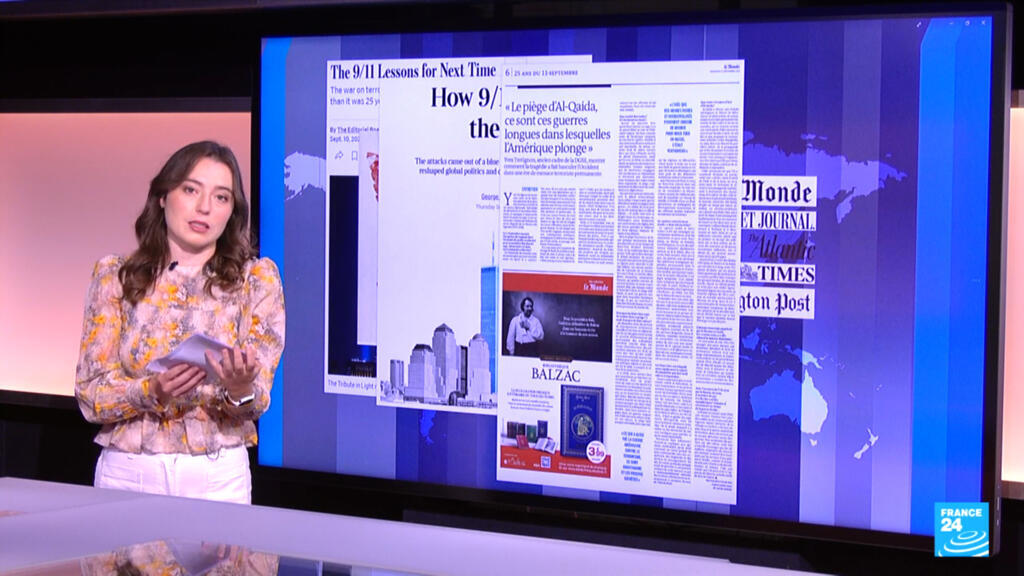
Press Review: Reflections on 9/11 and Its Aftermath
On the occasion of the 25th anniversary of the September 11 attacks, international media outlets are reflecting on the long-lasting implications of the war on terror. The impact of this pivotal event reshaped global politics, security policies, and societal attitudes. Various commentators highlight how the aftermath of 9/11 led to a series of conflicts, notably in Afghanistan and Iraq, where initiatives aimed at combating terrorism also resulted in significant civilian casualties and geopolitical instability. Some analysts argue that the strategies employed during the war on terror have, in some cases, exacerbated the very threats they aimed to eliminate, raising important questions about effectiveness and ethical considerations in global military interventions.
The anniversary serves as a stark reminder of the complex legacy left behind. Many narratives focus on the overt militarization of counter-terrorism efforts, which often prioritized security over civil liberties. Critics note that practices such as surveillance and racial profiling became more normalized post-9/11, while government agencies expanded their power, leading to a pervasive culture of fear and suspicion. Various think tanks and media commentaries emphasize the need for a more nuanced understanding of security, one that addresses the root causes of extremism rather than purely the symptoms.
Meanwhile, in France, political tensions within the far-right National Rally party have come to the fore, following controversial comments made by one of its security officials. The remarks, made while the official was on duty as a police officer, have sparked outrage and put the party in a precarious position as it attempts to distance itself from overtly racist sentiments. Party leaders are navigating a tricky public relations landscape, attempting to reaffirm their commitment to law and order while needing to address the implications of the comments that undermine their political platform. This incident puts the spotlight on broader issues of racism and xenophobia within political discourse, particularly in the context of European politics where nationalist sentiments are on the rise.
In a seemingly unrelated yet equally fascinating development, scientists have made a breakthrough with the discovery of a fossilized feather that may shed light on the evolutionary advantages that allowed birds to survive the asteroid impact that led to the extinction of the dinosaurs. This finding offers a window into prehistoric life and the adaptive characteristics that may have contributed to the resiliency of avian species. Researchers believe that studying such artifacts could provide vital insights into how life rebounded after one of Earth's most significant cataclysmic events. Understanding these adaptations not only enriches our knowledge of biological survival but may also inform current scientific discussions surrounding resilience and adaptation in modern ecosystems amidst climate change and human activity.
The juxtaposition of these headlines illustrates the ongoing interplay of history, politics, and science, revealing how each plays a critical role in shaping contemporary narratives. As the world reflects on events that span decades, the discourse continues to be marked by challenges in addressing racism and xenophobia, as well as our understanding of resilience in both biological and societal contexts. These topics remain central to the dialogues shaping our current social landscape.