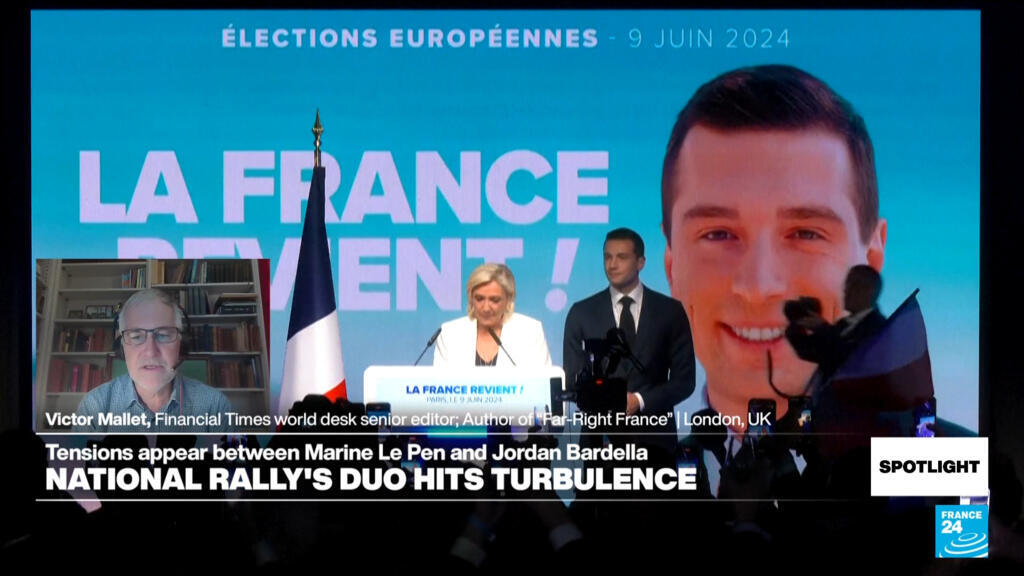
François Picard discusses the evolving dynamics within France's far-right National Rally party, focusing on the tensions between Marine Le Pen and Jordan Bardella. According to Victor Mallet, a Senior Editor at the Financial Times, these tensions signify more than just a personal rivalry; they embody a critical struggle for the party's ideological direction and political future. As the National Rally positions itself for a potential capture of the French presidency, the competition between Le Pen and Bardella highlights significant underlying issues within the party.
Jordan Bardella, currently the official president of the National Rally, has made strides in creating his own political identity, particularly resonating with younger voters and segments of the business community. His ability to connect with these groups represents a crucial demographic that the party aims to cultivate as it seeks broader appeal and increased electoral success. Bardella's leadership style and political vision are thus positioned as fresh alternatives to the more established figure of Marine Le Pen.
However, Mallet points out that despite Bardella's rising prominence, Marine Le Pen continues to wield considerable influence over the party’s ideological framework and strategic decisions. Le Pen has built a solid reputation and a loyal following, which empowers her to maintain a significant role in shaping the party's policies and its overall direction. This duality within the party is emblematic of broader trends in far-right politics, where leadership dynamics can shift yet remain tethered to foundational ideologies.
The current state of affairs within the National Rally is particularly significant as France prepares for future elections, including the presidential race. The party's internal tensions may affect its cohesion and effectiveness as it aims to challenge the existing political establishment. Le Pen's experience and established voter base, combined with Bardella's innovative approach, create a complex interplay that could impact the party's strategies moving forward.
As both figures navigate their roles, the implications for the National Rally could shape the broader political landscape in France. The outcomes of this internal struggle will likely determine how effectively the party can mobilize its supporters and attract new voters in an increasingly competitive political environment. The future of the far-right in France hinges on how these two leaders manage their influence and appeal to differing demographics within the electorate.