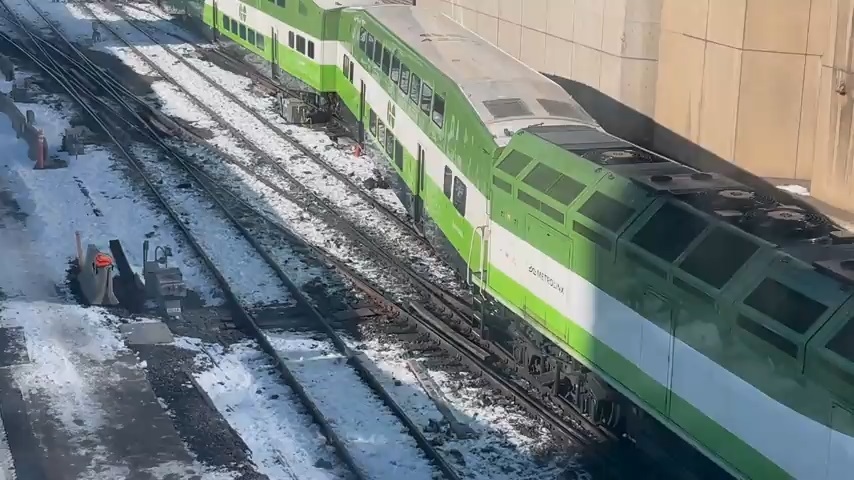
TORONTO A recent report by Metrolinx has revealed that an overreliance on visual inspections may have contributed to the February 2 derailment of a GO Transit train at Toronto's Union Station, which caused significant disruptions in commuter travel for several days. This incident has raised concerns regarding the safety and integrity of railway infrastructure.
The investigation concluded that the derailment resulted from missing screws on a railway track situated just outside the station. Specifically, it was found that only two screws were installed per plate at the location, while four screws were required under new safety standards implemented the previous year. Additionally, screws across nine consecutive timber ties were reported as loose, missing, or degraded, which compromised the fastening system's ability to secure the rail in place. Consequently, the rail shifted by approximately 3.5 centimeters, leading to the derailment.
The report furthermore highlighted shortcomings associated with reliance on routine visual inspections for identifying track infrastructure degradation. It indicated that these inspections cannot reliably determine the remaining holding strength or clamping effectiveness of the screws. With geometry testing currently being conducted on an annual basis, it is challenging to detect fastening degradation that may develop in the interim between tests. Notably, the derailment occurred before the next scheduled geometry inspection cycle.
According to the findings, the combination of visually based inspections, limited inspection prompts, annual geometry testing intervals, and the occasional use of enhanced testing methodologies significantly reduced the chance of identifying track infrastructure irregularities and progressive fastening degradation before it escalated into a derailment risk. Jeff Casello, a professor of transportation planning and engineering at the University of Waterloo, criticized the inspections’ rigor, stating that the oversight suggests that the necessary thoroughness was lacking. The extensive follow-up investigations after the derailment further amplify concerns regarding the widespread nature of the identified deficiencies.
Metrolinx CEO Michael Lindsay addressed the board meeting on this issue, clarifying that no mechanical deficiencies or non-compliant actions by the train crew were involved in the derailment. He described the cause as a legacy infrastructure condition that had gradually developed over time. In response to the incident, Metrolinx has continued to monitor to ensure similar conditions do not exist elsewhere on the railway. The agency has updated its inspection protocols to enhance their thoroughness and effectiveness.
The situation has drawn the attention of Transport Action Ontario and its president Peter Miasek, who expressed concern over the findings. Miasek underscored the importance of conducting similar inspections across the vast network of GO Transit railways to prevent similar incidents. The official opposition in Ontario, led by NDP transit critic Tom Rakocevic, has called for a public inquiry into the derailment, suggesting that there may be further safety concerns yet to be unearthed. Rakocevic emphasized the need for transparency, asserting that taxpayers and transit riders deserve clarity regarding the safety of GO Transit operations.
CityNews has made efforts to contact Ontario's transportation minister for a statement but has yet to receive a response. Fortunately, no injuries were reported during the derailment, and Metrolinx announced that automatic fare refunds would be issued to some GO train passengers affected by the subsequent service disruptions resulting from the incident.