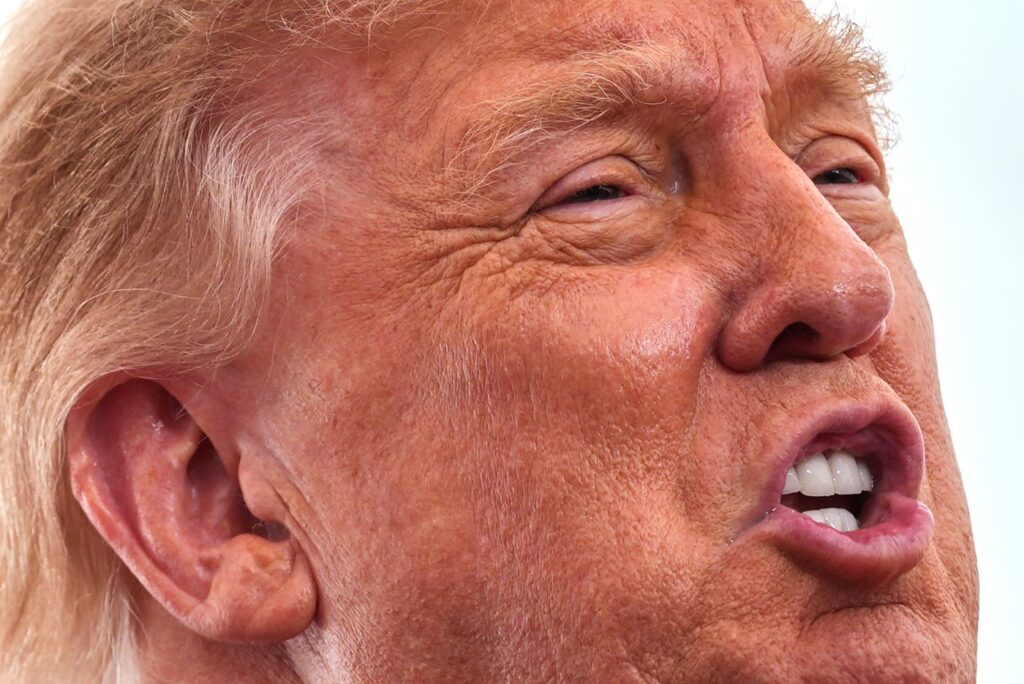
DUBLIN — During a press briefing in Dublin on Saturday, U.S. President Donald Trump made a striking comparison between Canada and Iran, claiming that both nations desire to reach a deal. Trump, who was in Ireland primarily to visit his golf course in western Ireland, addressed questions about potential U.S. withdrawal from the Canada-United States-Mexico Agreement (CUSMA) on trade. His remarks coincided with ongoing tensions between the United States and Iran, particularly in the context of recent conflicts that began when the U.S. and Israel initiated airstrikes against Iran in February.
“Canada wants to make a deal very badly, just like Iran wants to make a deal very badly,” Trump stated. “I just don’t think they’re ready. But Canada wants to make a deal... I hope Canada appreciates being in the same sentence with Iran.” This observation highlights the complexities of international negotiations, as both Canada and Iran navigate challenging political landscapes.
In the context of Canada, U.S. Trade Minister Dominic LeBlanc clarified on Friday that while no formal trade negotiations were planned, discussions between Canadian and American officials have been ongoing. The last formal talks between the two countries concluded on August 21, indicating a significant pause in trade negotiations that have proven to be contentious and multifaceted.
On the issue of Iran, meanwhile, tensions have escalated as Iranian forces have targeted several ships attempting to transit the strategically vital Strait of Hormuz. This area has emerged as a key point of leverage for Tehran amidst the ongoing conflicts. In response to the deteriorating situation and collapsed negotiations, the U.S. government has been implementing new economic sanctions aimed at intensifying the financial strain on Iran. Although Trump has consistently asserted that Iran is seeking to negotiate, the hardline leaders in Tehran have shown a reluctance to compromise, indicating their willingness to maintain a position of strength.
Trump elaborated that it could be possible for both a Canadian and Iranian deal to materialize at the appropriate moment, emphasizing an optimistic outlook despite the complexities involved. “It’s very interesting — Canada and Iran. Canada wants to make a deal and Iran wants to make a deal. At the right time, both of these things could happen,” he remarked during his visit in Ireland.
Additionally, Trump’s trip included meetings with Irish Prime Minister Micheál Martin, during which the president commented on the sensitive issue of Irish reunification, expressing his support for the idea of the Republic of Ireland reuniting with Northern Ireland, which remains part of the United Kingdom.
Although a large protest march occurred in central Dublin, Trump had already left the city and was en route to his golf course in Doonbeg along Ireland's Atlantic coast when the demonstration commenced. The protest reflected the contentious nature of Trump's visit to Ireland, highlighting the polarized opinions surrounding his presidency and policies.
This report provides insight into the diplomatic interactions and ongoing international negotiations involving the U.S., Canada, and Iran, illuminating the complexities that leaders navigate in the pursuit of agreements that satisfy all parties involved.