HILO, Hawaii (AP) — Hurricane Nolo moved further away from the Hawaiian Islands on Sunday, while Hurricane Polo, a significant threat, approached Mexico's Baja California peninsula. Nolo, with maximum sustained winds reaching 105 mph (165 kph), was located well southwest of Hawaii, moving away from the Big Island. Despite the storm's distance, a high-wind warning, wind advisory, and high surf advisory were in effect across parts of the island, lasting through Sunday evening.
As Hurricane Polo, classified as a Category 3 storm, neared Baja California with sustained winds of 125 mph (205 kph), residents prepared for its impact expected on Monday. The U.S. National Hurricane Center in Miami indicated that heavy rainfall from Polo would start affecting the peninsula overnight, leading to potentially life-threatening flooding and mudslides. After crossing Baja California, Polo was anticipated to strike the Mexican mainland, with additional heavy rain and flooding possible across parts of the U.S. Southwest later in the week. At the time, Polo was moving north at 12 mph (19 kph) and was 270 miles (435 kilometers) west of Cabo San Lucas.
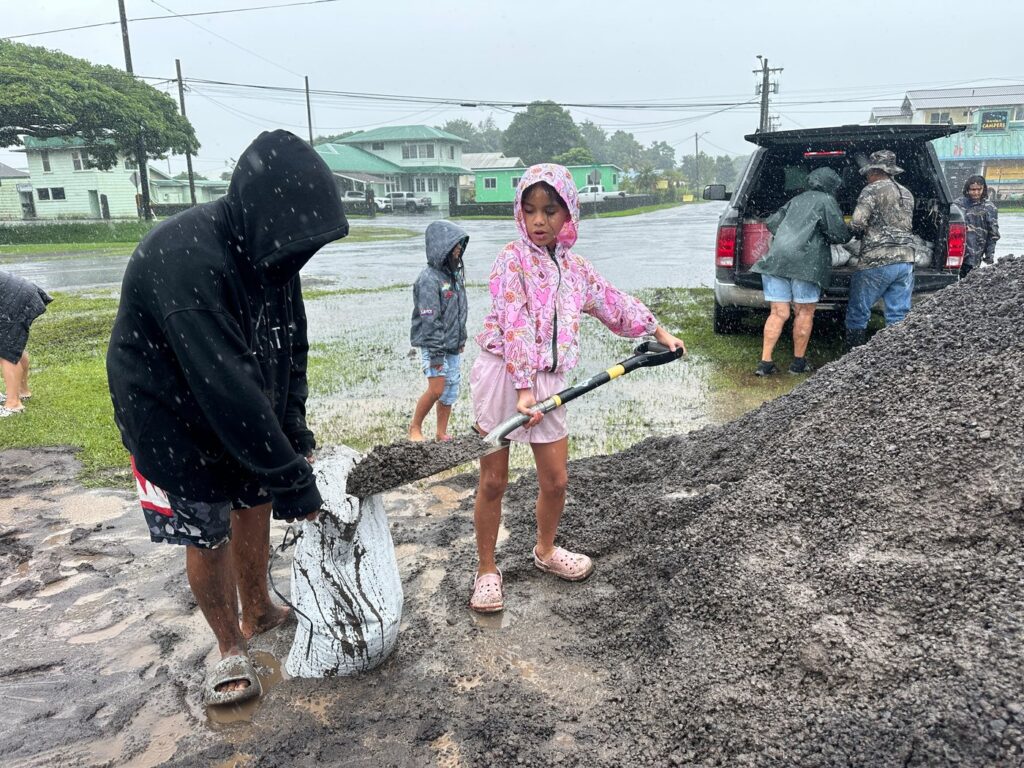
In Hawaii, the aftermath of Nolo posed risks of floods and mudslides, with forecasters warning that the storm's outer bands could deliver up to 20 inches (50 centimeters) of rain to parts of the Big Island. The heavy rains were also expected to affect other Hawaiian islands. An emergency proclamation by the governor activated more than 120 National Guard members, contributing to a total of approximately 400 mobilized statewide. Additionally, President Donald Trump approved an emergency declaration, allowing the Federal Emergency Management Agency (FEMA) to coordinate assistance and provide funding support for recovery efforts.
Hawaii residents were still reeling from the effects of Hurricane Lala, which had previously caused extensive damage on the Big Island, including heavy rain and winds strong enough to displace around 100 homes. In Naalehu, located at the southern tip of the island, local resident Peggy McKibbin surveyed roads covered in silt from Lala, highlighting the destruction of a local bakery, fire station, and hardware store. “Everyone has been very much affected by this,” McKibbin remarked.
The current hurricane season has been notably active, with storm activity surpassing average levels during this peak time. Bob Oravec, a lead forecaster for the National Weather Service, noted that such patterns are consistent with El Niño years, which typically see an increase in tropical storms and hurricanes in the Pacific. As Hurricane Polo approached, the Mexican navy prepared by gathering personnel and humanitarian aid at the ports of Guaymas and Mazatlan. They deployed three vessels aimed at delivering aid to coastal communities that might become isolated due to the storm.
San Juanico, a small fishing community along Baja's Pacific coast, lies in Polo's projected path. The town has only had full-time electricity for a few years, facing frequent outages. Residents expressed concern that washed-out roads could obstruct access to medical facilities. Gloriely Robles Meza, a manager at a local hotel, shared, “Our people are concerned about this event. We haven’t faced such a worrying situation in many years.” In response to the impending storm, army soldiers arrived in San Juanico to help set up a shelter and provide emergency support.
In addition, Tropical Storm Rachel formed off the southwestern coast of Mexico, with maximum sustained winds of 40 mph (65 kph). At that point, Rachel was located about 300 miles (485 kilometers) south of Acapulco, but no coastal watches or warnings were in effect.