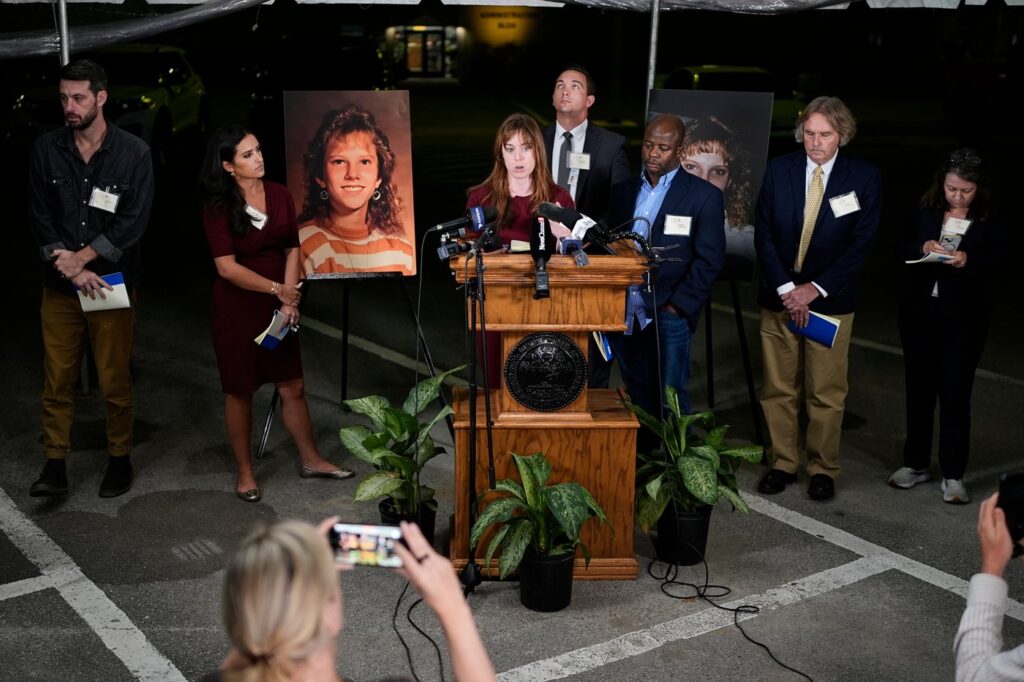
Tennessee's failed execution attempt of Christa Pike has drawn significant attention after she was administered two doses of lethal drugs without succumbing to the procedure, leaving her in critical condition, according to her legal representatives. The 50-year-old Pike remains hospitalized, and her attorneys have expressed uncertainty regarding her long-term recovery prospects. This execution was initially scheduled to occur on Wednesday morning but was delayed by eight hours due to a federal court ruling that temporarily paused the procedure.
According to Robin M. Maher, the executive director of the Death Penalty Information Center, Pike's experience is "singular and unparalleled"; she is reportedly the only individual known to have survived an execution attempt involving lethal injection drugs. This incident raises critical questions about the administration of capital punishment in Tennessee, underscoring the issues regarding the state's execution protocols.
Pike's execution was initially set for 10 a.m.; however, it was halted by a federal appeals court shortly before that time. The state quickly appealed to the U.S. Supreme Court, which took eight hours to allow the execution to proceed. Witnesses observed Pike strapped to a gurney in the execution chamber, where she expressed a desire for freedom and stated, "I'm ready to be free." In a moment of apparent calmness, she even sang a song with her spiritual advisor.
As the execution progressed, Pike reported feelings of pain and discomfort, indicating her arm was hurting or burning after the first dose of the drug was administered. Shortly after transitioning to the second dose of pentobarbital, she seemed to lose consciousness but continued to breathe and audibly snore for an extended period—nearly an hour. The curtain separating the witnesses from the execution chamber was finally closed about 40 minutes later, with attorney Randy Spivey demanding immediate communication with the courts to prevent the continuation of the procedure. After the curtain closed for good at 8:06 p.m., prison officials did not clarify when their efforts shifted from executing Pike to providing life-saving assistance.
Following the controversial events of the execution attempt, Tennessee Governor Bill Lee canceled the state's final execution of 2026, which had been scheduled for December 3, and called for a comprehensive third-party investigation into the incident. Lee emphasized the need for a thorough examination of what transpired, highlighting that the integrity of the lethal injection process must be upheld in the future.
The governor's investigation is prompted by a history of execution issues in Tennessee, including a review that found the state had previously not adhered to its own protocols. Notably, in April 2022, an execution was halted due to mishandling of drugs and a failed attempt at executing Tony Carruthers led to another procedural pause. Pike's legal team has since pressed for her life to be spared, arguing that she has faced a level of suffering unprecedented in the history of the American death penalty.
Pike's attorneys have argued that her medical history, particularly a condition known as thrombocytosis, would amplify the pain and difficulties associated with lethal injection. They noted that her veins posed significant challenges for medical personnel trying to establish intravenous lines, leading to multiple unsuccessful attempts. Attorney Stephen Ferrell stated that Pike's biggest fear was not death itself, but the prospect of a drawn-out, painful demise—an outcome she ultimately experienced.
Pike was convicted for the 1995 murder of Colleen Slemmer, a fellow 19-year-old Job Corps student. Prosecutors contended that Pike killed Slemmer out of fear that she was a romantic rival, leading to a brutally violent confrontation. The case received widespread media attention due to its horrific nature, the young age of those involved, and the appearance of a satanic symbol on the victim’s body. Pike herself has alleged that her history of abuse contributed to her actions, raising questions about the fairness of her trial and sentencing.
As the fallout from this failed execution continues, witness accounts reveal both the horror of what took place and the enduring impact on those affected, including Slemmer's mother, who lamented that justice was not served. The subsequent investigation into Tennessee's execution procedures will likely face intense scrutiny in light of these grievous developments.