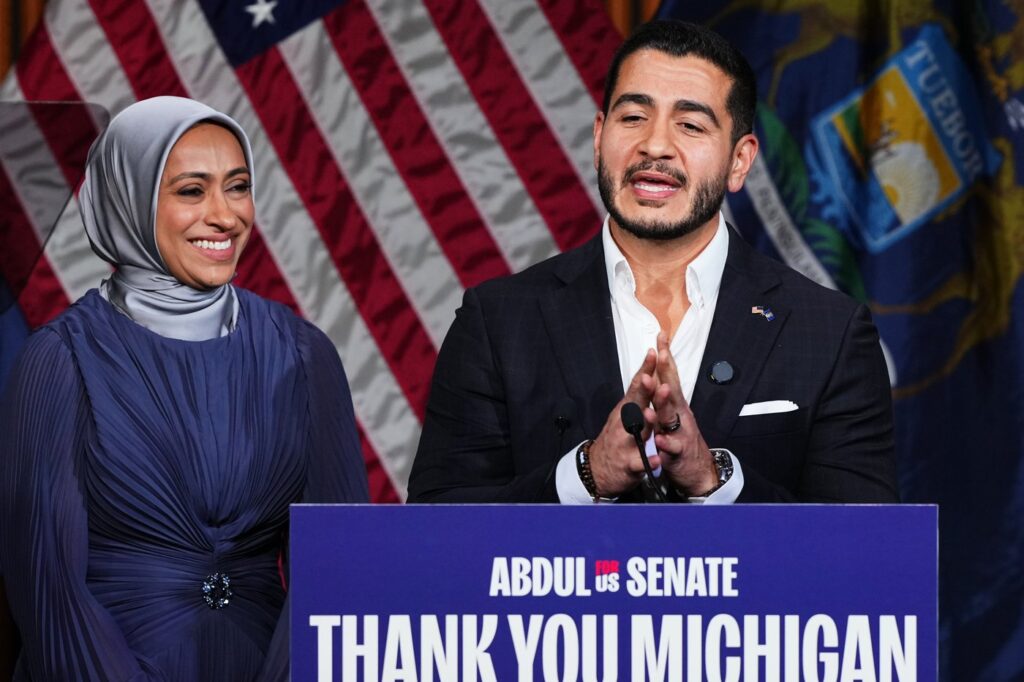
BEIRUT (AP) - From Michigan to the Middle East, Arabs are celebrating Abdul El-Sayed's election win and delighting in his introduction of Arabic terms like “habibi” and “inshallah” to the American political lexicon. El-Sayed's victory marks a significant milestone as he will become the first Muslim American U.S. senator.
During his campaign, El-Sayed faced Islamophobic rhetoric, particularly from critics on the right. However, he has embraced his faith and Egyptian heritage while championing the Palestinian cause. In a notable moment from his victory speech, El-Sayed addressed U.S. Vice President JD Vance directly, saying, “JD, habibi,” referencing Vance's previous warnings that the candidate would incite violence in Detroit. He added, “There is this delicious irony in the fact that you’re constitutionally obligated to swear me in in January.”
The term “habibi,” which translates to “my beloved,” is commonly used in Arabic vernacular to denote affection among friends or loved ones. Supporters of El-Sayed have embraced this term, wearing shirts printed with “Habibi for Abdul.” The senator-elect has also popularized the phrase “inshallah” (God willing) into “hamdulillah,” meaning “thank God,” further integrating Arab culture into his political narrative.
El-Sayed's light-hearted approach to his critics has resonated with many across the Arab world, sparking a joyful response online. In a region often marred by conflict and negative stereotypes, his victory has prompted an outpouring of happiness. For instance, one social media user shared a video of Egyptian diva Shireen Abd El-Wahab dancing to one of her hit songs, humorously suggesting that El-Sayed would make it the new national anthem.
Egyptians, known for their humor even in challenging times, have responded with memes and jokes inspired by El-Sayed’s speech. One notable meme features a scene from an Egyptian film in which a man laughs uncontrollably during a funeral. The caption read, “I came here to crack jokes,” highlighting the light-heartedness prevalent in Egyptian culture.
Academic Khalil al-Anani expressed his appreciation for El-Sayed’s impact on social media, stating, “’Habibi’ is the sweetest word,” and thanking the senator-elect for bringing joy to Egyptians. This response reflects a broader sentiment among Arab and Muslim Americans, who have historically faced prejudice, particularly as media portrayals often depict them as terrorists.
El-Sayed's ascent in American politics symbolizes a potential shift in the narrative surrounding Arabs and Muslims in the U.S. Decades of prejudice have been exacerbated by political figures who have exploited fears about the imposition of sharia, or Islamic law. Notably, during the campaign, former President Donald Trump labeled El-Sayed a “jihadist,” evoking sensitive historical events like the September 11 attacks and mispronouncing his name deliberately.
The backlash to Trump’s remarks has been met with creativity on social media, where users have countered negativity with humor, sharing clips of Lebanese diva Haifa Wehbe belly dancing and young women in hijabs breakdancing. El-Sayed, maintaining his humorous approach, said in his victory speech, “Donald, look, I know you’ve struggled with my name. So after JD swears me in in January, you can just go on and call me ‘senator.’”
This mixture of cultural pride and political engagement signifies a promising new chapter for Arab and Muslim Americans, as their representation grows stronger and more visible in national politics.