LIV Golf has announced its decision to wind down operations after five tumultuous years that significantly changed the landscape of professional golf. The company's plans were shared in a bankruptcy court hearing, indicating a shift from pursuing the "LIV 2.0" initiative due to insufficient support from players. Attorney Matthew Williams of Gibson Dunn stated that LIV is opting for a "value-maximizing wind-down" instead.
Initially launched in June 2022, LIV Golf sought to gain traction by offering multi-million dollar signing bonuses to high-profile players, enticing them away from the established PGA Tour. However, the organization suffered a considerable setback when it lost financial backing from Saudi Arabia in April after expending over $5 billion on events and player compensation. Following this financial crisis, LIV filed for Chapter 11 bankruptcy on September 8, 2023, hoping to transition into a more sustainable version of the league with an investment of $300 million from BC Partners Credit.
Despite the potential lifeline from BC Partners, key players such as Jon Rahm, Sergio Garcia, Tyrrell Hatton, and Louis Oosthuizen showed little interest in supporting the new plans. BC Partners expressed disappointment that "mutually acceptable terms could not be reached among the various stakeholders," which ultimately led to LIV Golf's liquidation phase instead of transitioning to a reformed version by 2027.
In a noteworthy development, Jon Rahm has already agreed to relinquish claims against LIV estimated at around $100 million in order to exit his contract. Rahm has since returned to compete on the European Tour, with aspirations of being readmitted to the PGA Tour, which currently enforces a one-year ban on players who participated in LIV events.
Amid the financial turbulence, LIV Golf paid $15.6 million to retain seven of its executives, including $6.375 million to CEO Scott O'Neil, in the months leading up to the bankruptcy filing. These compensation packages, although substantial, are not uncommon during bankruptcy proceedings. The future of these payments remains uncertain as the company navigates its wind-down phase.
CEO Scott O'Neil, who took over from Greg Norman at the beginning of 2025, reflected on the organization's mission, stating it aimed to build a global platform to engage a younger and more diverse audience in the sport of golf. He described the experience as "fun, demanding, inspiring," yet acknowledged the challenges faced by the organization.
LIV Golf encountered multiple obstacles throughout the year, including a significant loss of funding when the Public Investment Fund of Saudi Arabia revised its investment strategy, deciding not to continue supporting the league beyond its fifth season. Additionally, the Asian Tour chose to renew its alliance with the PGA Tour and Euro-based DP World Tour, further isolating LIV Golf.
European Tour CEO Guy Kinnings added to the challenges by stating that players signing with LIV would jeopardize their eligibility for membership on the European Tour, which could exclude them from future Ryder Cup participation. His comments underscored the protective measures implemented to safeguard the integrity of traditional tours against LIV’s perceived ambitions.
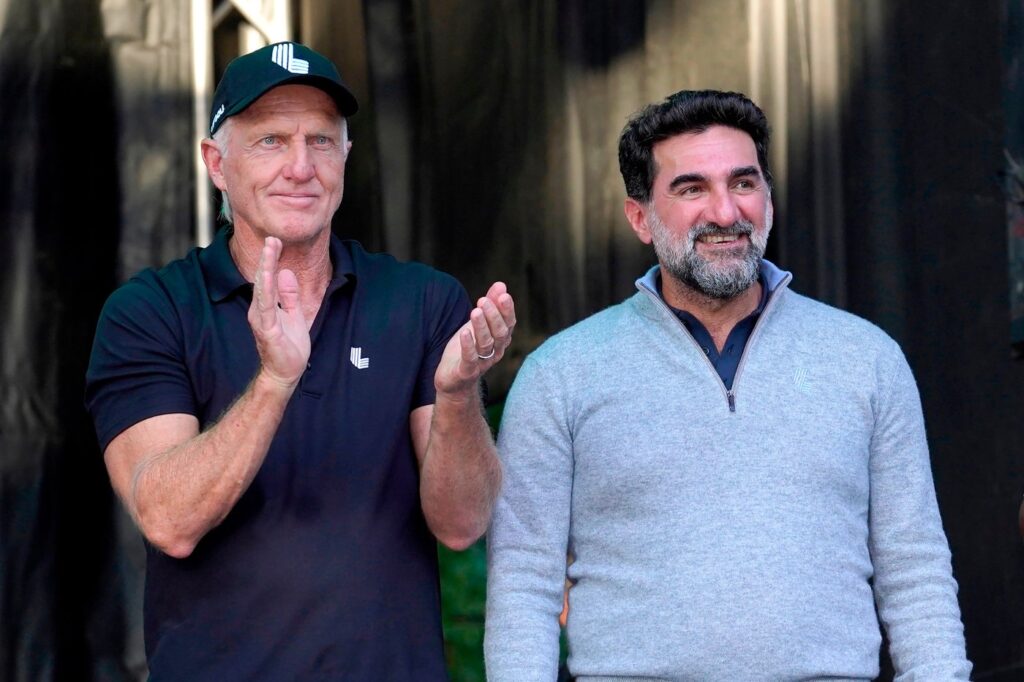
Initially helmed by Greg Norman, LIV Golf endeavored to revolutionize the game by introducing formats such as 54-hole shotgun starts, along with lucrative prize funds at each tournament. Despite its efforts, the fledgling league struggled to secure a broadcasting deal initially, incurring significant production costs before eventually aligning with CW Network for coverage in 2023 and Fox Sports by 2025.
A successful revival hinged on gathering a "critical mass" of player support, but negotiations failed to yield a sufficient roster to sustain the envisioned LIV 2.0. Ultimately, Williams noted, "despite everyone’s best efforts, we just couldn’t get to the level of combined financial and player support necessary for a viable LIV 2.0 within the required timeline."
Throughout its brief history, LIV Golf hosted 62 tournaments across five continents, excluding South America. It witnessed notable moments, such as Anthony Kim's return from a lengthy hiatus and Bryson DeChambeau shooting a remarkable 58. As players like Brooks Koepka and Patrick Reed maneuver to rejoin the PGA Tour, the path back to traditional golf for those associated with LIV remains precarious.
In conclusion, the tight timeline and lack of player commitment ultimately sealed LIV Golf's fate, leaving behind a reflective moment for the sport as it considers its future without the controversial league.