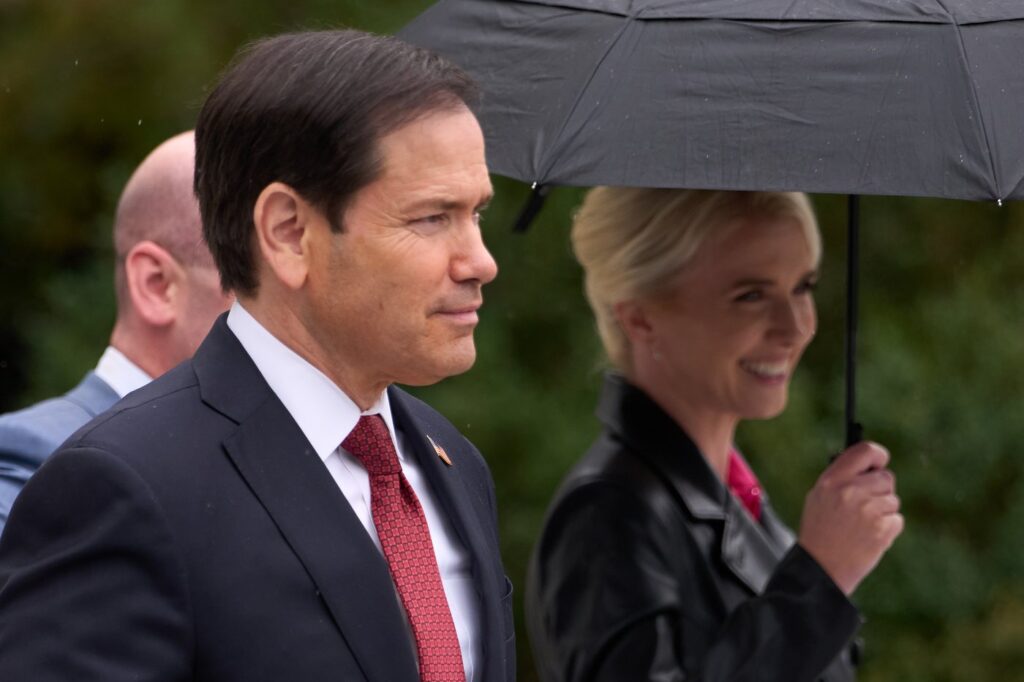
WASHINGTON (AP) Secretary of State Marco Rubio is set to embark on his first international trip following the midterm elections, which dealt a significant blow to Republicans and raised questions about the responses of the Trump administration after policies such as the Iran war contributed to Democratic gains in Congress. Rubio will travel this weekend to attend a Group of 7 (G7) foreign ministers meeting in France.
The State Department announced that during the G7 meeting, Rubio will have ample opportunities to communicate whether President Donald Trump will modify his often-aggressive policy approach toward both allies and adversaries in light of substantial Republican losses in the recent elections. The Secretary is perceived by many as presenting a more diplomatic perspective compared to Trump's hardline stance, leading to speculation about his potential early departure from the administration to prepare for a possible presidential run in 2028.
The upcoming G7 meetings will follow a recent diplomatic gathering that Rubio hosted in Atlanta, which brought together G20 foreign ministers. That meeting resulted in minimal consensus on major global issues, and ended without a joint communique, instead producing only a chairman’s statement issued by Rubio. The G7 comprises the world's leading industrialized democracies—Britain, Canada, France, Germany, Italy, and Japan—all of which are U.S. allies. Nonetheless, the differences that emerged in Atlanta are likely to resurface and hinder broad agreement among diplomats in Paris, particularly regarding global security matters.
At the G7, foreign ministers will address several ongoing global crises, including the Iran and Russia-Ukraine wars, alongside concerns over energy and food security. Preliminary indications suggest that a joint communique may again not be produced from this meeting, mirroring the outcomes of previous discussions. The French hosts have extended invitations to Brazil, Egypt, Saudi Arabia, and Ukraine to join some portions of the discussions, with various priorities, including the situations in Ukraine and Iran, freedom of navigation in the Strait of Hormuz and the Red Sea, and broader Middle Eastern issues, among others.
In addition, the French government plans to facilitate discussions on artificial intelligence and sessions specifically focused on support for Ukraine. Tensions between Trump’s administration and its G7 partners have been prevalent on a range of issues, such as military support for Ukraine, NATO commitments, defense spending, trade tariffs, and the ongoing situation regarding the International Criminal Court (ICC).
Trump’s administration has reportedly calmed concerns regarding U.S. military aid to Ukraine amidst its defense against Russia, yet Trump has raised doubts about America’s willingness to defend NATO allies unless they meet agreed-upon defense expenditure levels. Furthermore, there have been suggestions from Trump about reducing the U.S. military presence in Europe, altering long-standing reassurances that have been maintained since World War II. This military presence also factors into ongoing efforts by the Trump administration to challenge the ICC, the planet's first war crimes tribunal, to which nearly all G7 members adhere, except the U.S.
The administration has enacted severe sanctions against the ICC, targeting its staff and indicating potential subsequent penalties against countries, businesses, and individuals working with the court. The European Union is considering a “blocking statute” aimed at protecting EU institutions from U.S. secondary sanctions—a move that the Trump administration has warned could harm U.S.-EU relations.
As Rubio prepares for the G7 meeting, the outcomes regarding critical topics of international concern will be closely monitored amidst the shifting political landscape and challenges posed by the Trump administration’s global approach.