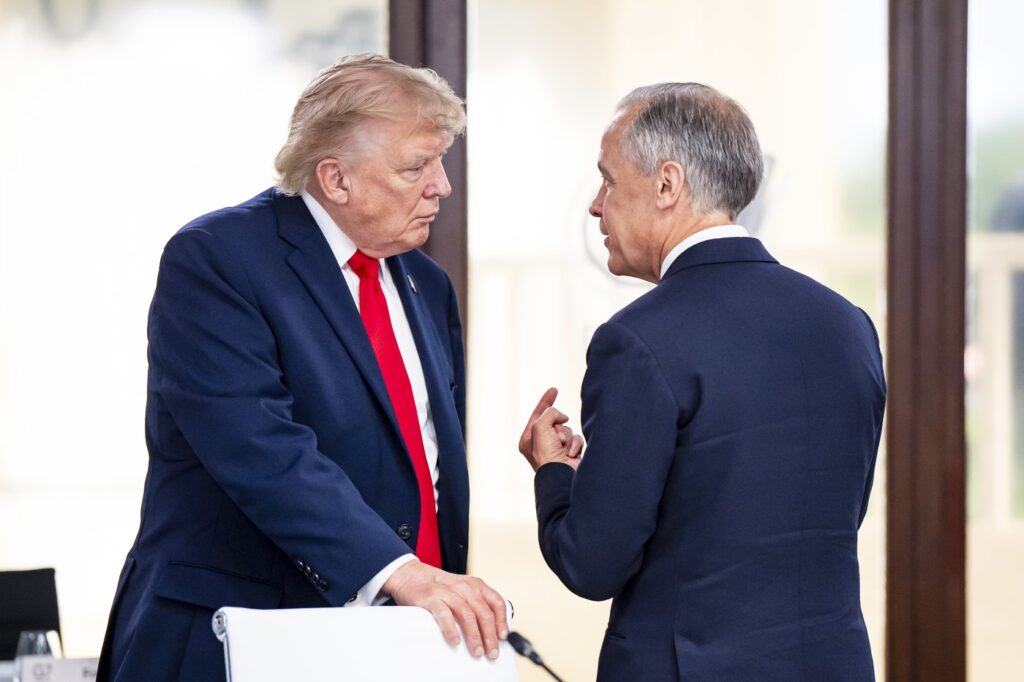
OTTAWA - Prime Minister Mark Carney has expressed his government's readiness to welcome any initiatives aimed at restoring free trade between Canada and the United States. This statement comes in the wake of the U.S. midterm elections, where the Democratic Party gained substantial control by winning both the House of Representatives and the Senate. Several Democratic officials have indicated that repealing the tariffs imposed by President Donald Trump on Canadian products is a legislative priority.
Notably, Senator Ron Wyden from Oregon, who is expected to take the reins of the Senate finance committee when the new Congress convenes in January, has been vocal about his discussions with colleagues regarding potential legislation to roll back Trump’s tariffs, including those affecting Canada. While there are possibilities for a bill to be introduced, it is important to note that Trump retains veto power over any such legislation. Overriding a presidential veto would require a two-thirds majority vote in both chambers of Congress, a challenging task for the Democrats.
The Democrats will need to garner more than 20 votes from House Republicans and 10 to 12 Senate Republicans to successfully override a veto from Trump, especially as some Republican lawmakers have acknowledged that the tariffs played a role in their party's recent electoral losses. Texas Senator Ted Cruz, a longtime Republican, remarked that "tariffs have made everything too expensive," pointing to growing dissent within the party regarding the trade war.
Prior to the midterm elections, certain Republican candidates had demonstrated their opposition to Trump's trade strategies, with Michigan Senate candidate Mike Rogers changing his stance on the tariffs as the elections approached. His opponent, Abdul El-Sayed, has made it clear that eliminating the tariffs on Canada is one of his key priorities. During a news conference on Friday, Prime Minister Carney stated he had yet to engage in discussions with Democrats concerning proposed legislation to terminate the tariffs.
Carney emphasized the mutual benefits of a free-trade agreement for both Canadians and Americans. He expressed the government’s commitment to working with Washington to secure a deal favorable to Canada, highlighting that “it’s in the interests of American families struggling with affordability” and “American workers looking for good, high-paying jobs.”
In the lead-up to the midterm results, Carney noted that formal discussions with U.S. officials were to resume following a call with Trump, suggesting a potential softening of the U.S. administration's position, with Americans "asking less" and "offering more."
Conservative MP Jamil Jivani, who has traveled to Washington to advance Canada-U.S. trade negotiations, echoed Carney's sentiments and indicated a desire to resolve trade issues. He remarked on the importance of addressing domestic concerns, stating, “This whole U.S. thing has become a massive distraction from a lot of our own domestic issues.”
Trade negotiations between Canada and the U.S. faced significant turmoil when talks collapsed in August, resulting in Trump imposing 50 percent tariffs on several Canadian goods, alongside various import bans and an executive order that controversially renamed Lake Ontario as Lake America. In retaliation, Canada implemented its own tariffs on specific American products, escalating the trade tensions further when Trump added tariffs to numerous new Canadian exports a month later.
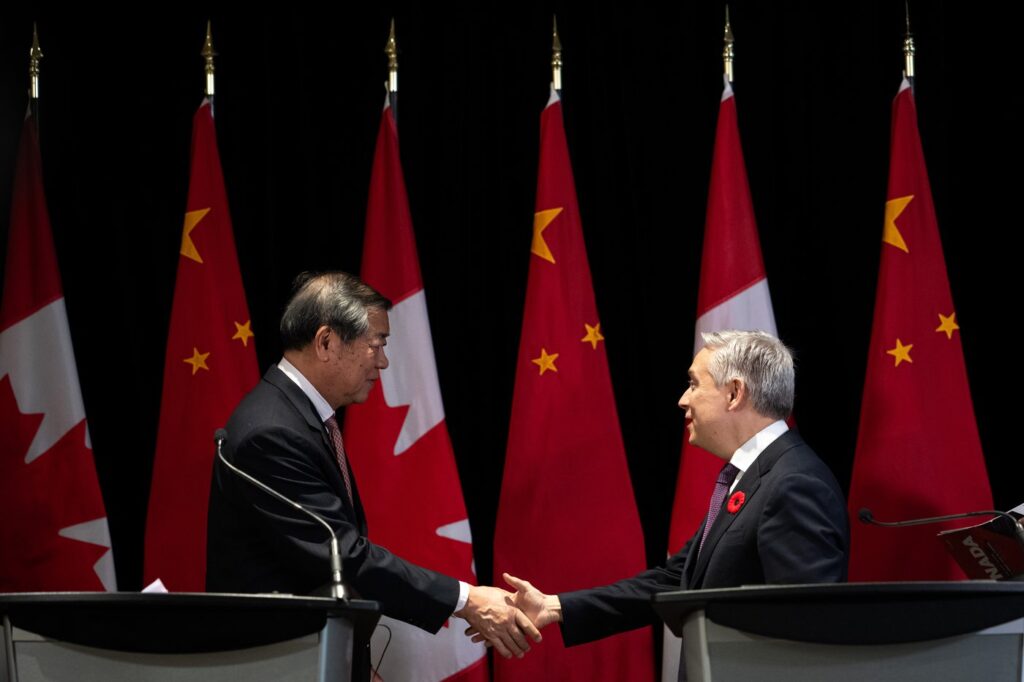
Despite these tensions, politicians from both sides of the border are viewing the midterm results as an opportunity to mend the Canada-U.S. relationship. Canada’s Trade Minister Dominic LeBlanc stated that the Liberal government's commitment to diversifying trade remains unchanged, expressing optimism about productive recent discussions with the Trump administration and anticipating more interactions with American counterparts shortly.
Meanwhile, Trump announced Stephen Miller as the new White House chief of staff, a significant move considering Miller's known influence over Trump's policy decisions, particularly in immigration. Foreign Affairs Minister Anita Anand highlighted the urgent need to address tariffs that have severely affected Canadians, especially those targeting steel and aluminum imports.
Anand reinforced the idea of asserting Canadian interests, pointing to the need for maintaining Canadian sovereignty and economic resilience in the face of ongoing trade negotiations.