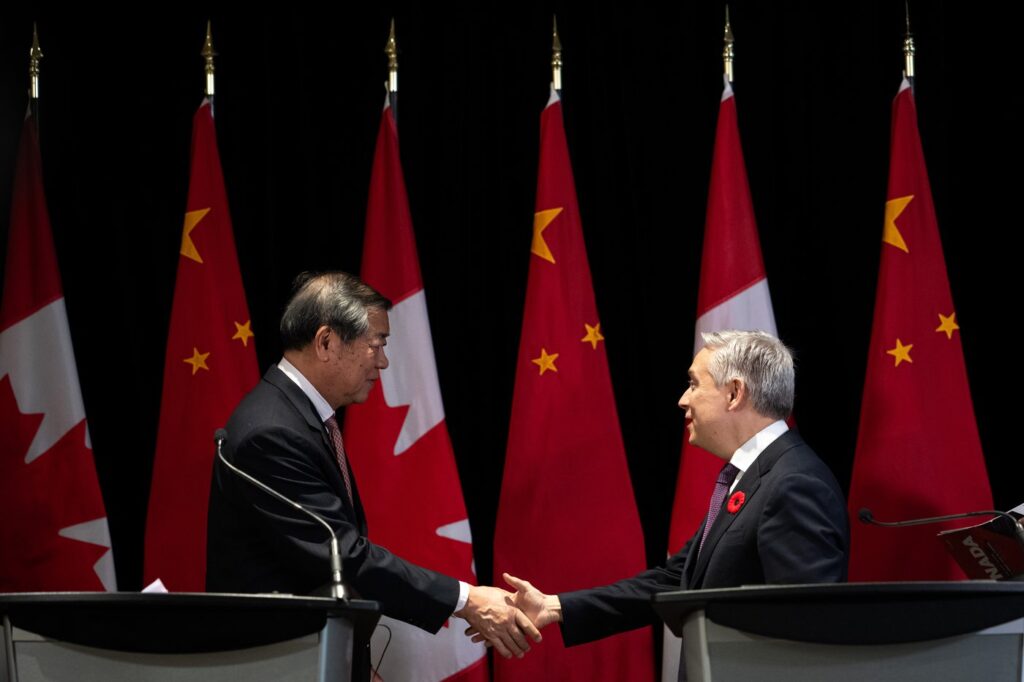
VANCOUVER – In a significant move to bolster economic relations, Canada and China have reached an agreement aimed at enhancing collaboration within their financial systems. The announcement comes amidst a framework of increasing interest in fostering closer economic ties between the two countries.
This development was marked by the meetings hosted by Canadian officials, specifically Finance Minister François-Philippe Champagne and International Trade Minister Maninder Sidhu, who welcomed He Lifeng, the Vice-Premier of China, to Vancouver over the past two days. The direct dialogue between the officials highlights a mutual interest in strengthening financial partnerships.
Following the discussions, Finance Canada released a joint statement that emphasized a commitment to “enhance financial sector co-operation.” This agreement signifies an intention to grant greater market access for financial services on both sides and to foster a productive dialogue between the regulatory authorities of Canada and China. Such cooperation is intended to smoothen the complexities involved in financial operations and create a more robust framework for bilateral business transactions.
In addition to deepening financial collaboration, the joint statement reiterated both countries’ commitment to multilateralism and the pursuit of “a transparent and predictable environment” for trade and investment. This aspect is particularly significant in the context of global economic dynamics, as it reflects a commitment to uphold shared standards in international trade processes.
The strengthening of financial ties occurs as Prime Minister Mark Carney is scheduled to visit China for the Asia-Pacific Economic Cooperation (APEC) forum in the upcoming week. This visit is likely to further highlight the commitment of Canada to engage constructively with Chinese leadership on economic matters, particularly in the financial sector.
The agreement to enhance cooperation between Canada and China marks a pivotal moment in their economic relationship. The initiatives outlined in the joint statement could potentially open doors for increased investment and trade opportunities, benefiting both economies in the long run. As both nations navigate the complexities of a shifting global landscape, this alliance could serve as a model for future engagements with other nations looking to strengthen financial ties.
In conclusion, the recent meetings in Vancouver and the resulting agreement underscore the importance of international collaboration in finance, particularly between Canada and China. As these two countries work together to foster a more integrated financial environment, their proactive approach may encourage similar dialogues and partnerships across borders, reinforcing the value of multinational cooperation in a rapidly evolving economic landscape.