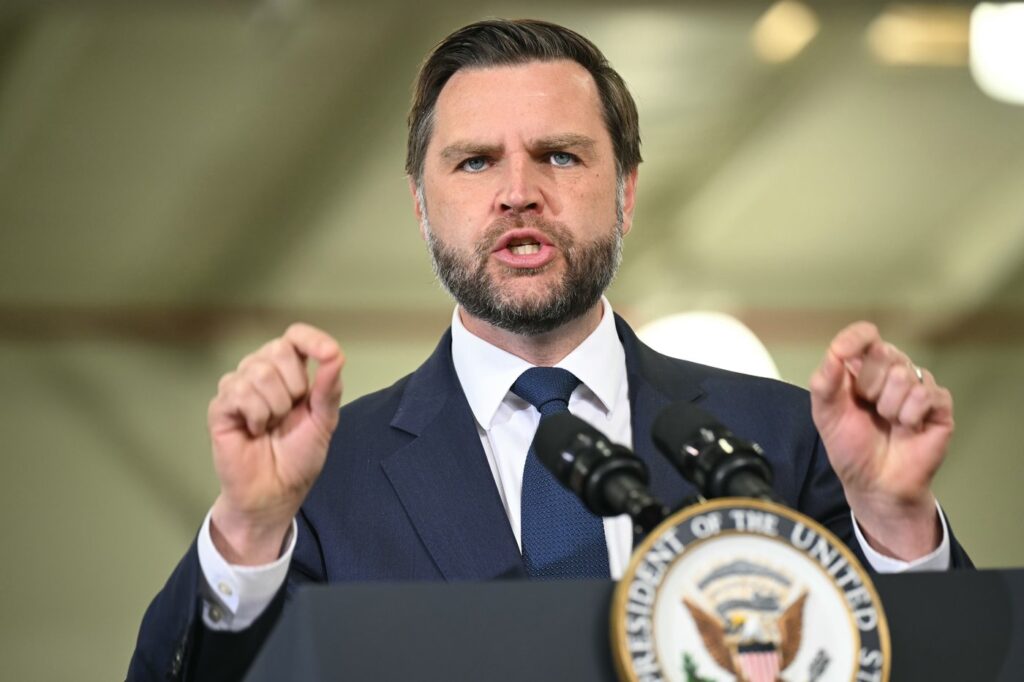
On Thursday, President Donald Trump announced a direct shift in focus for Vice President JD Vance. Trump instructed Vance to redirect his attention from the ongoing Iran war to addressing what Trump describes as corruption and crime in Democratic-controlled cities and states. This directive comes in light of the Republican Party's significant losses in the recent midterm elections, which Vance attributes to the war and its economic consequences.
Vance, previously engaged as the primary negotiator in a failed truce during the eight-month conflict, openly expressed his belief that the war—and its associated economic fallout—contributed to the GOP's electoral defeats. Following the elections, Trump took to social media, emphatically stating that there is no longer a need for a deal with Iran, insisting that "those days have long since passed." He claimed, “We’ve got their money, Hundreds of Billions of Dollars, and we’ve got their Strait!”
The president's comments reflect a keen awareness of the shifting political landscape, especially as Democratic lawmakers prepare to exert "intense oversight" on Trump’s business dealings once they assume control of Congress in January. The Democrats' focus on corruption dovetails with earlier reports surrounding Vance’s consideration of new negotiations with an Iranian governmental official.
The vice president's office has remained silent following the president's directive; however, the White House highlighted Trump's intention to avoid further negotiations with Iran. Vance, who has historically advocated against American military interventions abroad, faced challenges in defending the Iran conflict following Trump's initiation of hostilities. His campaign efforts were seen as inadequate in light of the electoral results, prompting him to issue a candid acknowledgment of the situation on social media: "If you’d like to argue it was worth it, that losing the Senate for the next 6 years was worth it, then do so." This reflection captures the tension surrounding potential presidential aspirations Vance has for 2028, a period when voter dissatisfaction with Trump's Iran policy could prove detrimental to his ambitions.
Amidst discussions about the war, Trump also alluded to ongoing military strategies, suggesting that he remained prepared to escalate strikes if necessary. In an interview, he expressed confidence in the effectiveness of Qatar-led mediation efforts, while simultaneously maintaining the option to resume military action if relations deteriorate.
Meanwhile, the broader context of the Iran conflict continues to develop with both maritime and military tensions persistent in the region. After several months of disruptions, oil shipments from the Strait of Hormuz have approached prewar levels; however, U.S. Navy escorts have become essential for international tankers. Recent reports indicate these vessels have faced attacks, prompting increased caution among maritime operations.
In the arena of international negotiation, Iranian officials have asserted that the U.S. sought assistance from Russian President Vladimir Putin to facilitate direct talks, highlighting a complex geopolitical dynamic. Iranian negotiator Mohammad Bagher Qalibaf suggested that this request was made during a recent visit to Moscow, further complicating the narrative surrounding U.S.-Iran relations.
Citing ongoing conflicts with Iranian-backed Houthi rebels in Yemen and recent maritime attacks, Qalibaf remarked on the potential for dialogue but emphasized Iran’s readiness for further hostilities if necessary. His commentary reflects the precarious balance of diplomacy and military posturing in the region.
In summary, the shifting priorities outlined by Trump and the implications for Vance, paired with the evolving situation in Iran and the geopolitical complexities at play, underscore the ongoing challenges facing U.S. foreign policy and the Republican Party as they navigate a politically fraught landscape.