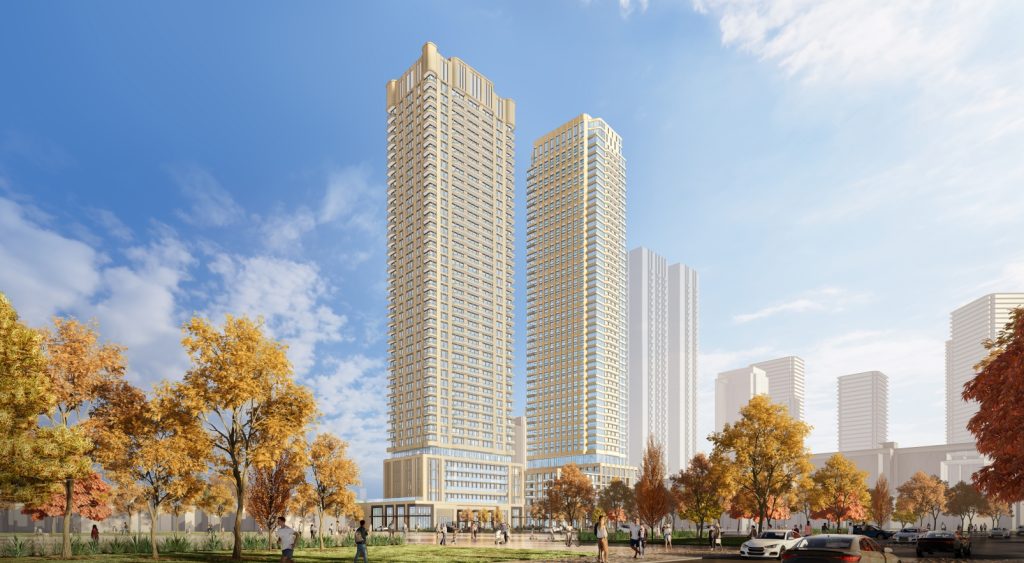
The City of Toronto, in collaboration with the Toronto and Region Conservation Authority (TRCA), is opposing a significant development project in Flemingdon Park. This proposed development aims to replace the Flemingdon Park Golf Club, located near Eglinton Avenue and the Don Valley Parkway, with four condominium towers ranging from 42 to 56 stories high, accommodating approximately 2,200 residential units. The plan includes the construction of a public park comparable in size to Trinity-Bellwoods Park.
The construction site is notably located on flat land at the base of several slopes within a ravine, an area that the TRCA has classified as hazardous. Floyd Ruskin, a prominent advocate for ravines and parks, expressed strong reservations, stating, “There’s lots of other suitable places to put a development like this, not in our protected ravine. Fully 100 percent in the ravine goes against everything the city, the TRCA, and citizen science has done for 70 years.” He further highlighted the risks posed by the area, explaining that the TRCA designates all land below the stable top of slope as hazard lands, which could be at risk of erosion or landslide.
Earlier this year, the TRCA presented their concerns to the Ontario Land Tribunal, but in October, the tribunal sided with the developers. Following the tribunal's decision, the TRCA released a statement indicating their lack of support for the intensified development below the top of ravine banks. They raised concerns that the development might pose accessibility challenges for future residents and emergency services during slope erosion events.
The development team, composed of Cityzen Development Group in partnership with Greybrook Realty Partners and Tercot Communities, contends that the area selected for the construction is safe. They assert that the condo towers would occupy only about five percent of the entire 40-acre parcel, with the remaining 95 percent being dedicated to a new large park, which would be gifted to the city. Supporters of the project likened this park donation to the historical transfer of High Park to the city in 1873.
Ruskin challenged the developers’ statements, asserting that the area intended for the park could not have been built upon due to its classification as being within a regulatory flood zone. He remarked, “Down at the bottom, it is in the regulatory flood zone, so they can’t build there. They’re giving away something they have no use for.”
However, the concerns voiced by conservationists extend beyond just the proposed towers in Flemingdon Park. They warn that this development could set a troubling precedent for similar projects throughout the city. Ruskin noted that many golf courses are situated within ravines in Toronto, raising fears that, if this development is approved, it could pave the way for other developments that would exploit these ravine slopes for condominiums and other real estate projects.
In response to the tribunal's ruling, Toronto City Council voted at their November meeting to appeal the decision, signifying that the battle over the property will shift to Divisional Court. The TRCA echoed this sentiment, stating their belief that the tribunal “erred in its findings,” and they too have submitted a motion to appeal to the Divisional Court. This ongoing conflict highlights a critical intersection between urban development, environmental conservation, and community advocacy in Toronto.