MEXICO CITY (AP) — The Mexican army achieved a significant milestone by killing Nemesio Oseguera Cervantes, also known as "El Mencho," the notorious leader of the Jalisco New Generation Cartel (CJNG) and one of the United States' most wanted fugitives. This operation took place on Sunday in Jalisco state and marks the most high-profile victory against drug cartels in Mexico since the recapture of Joaquín “El Chapo” Guzmán, the former Sinaloa cartel leader, a decade ago.
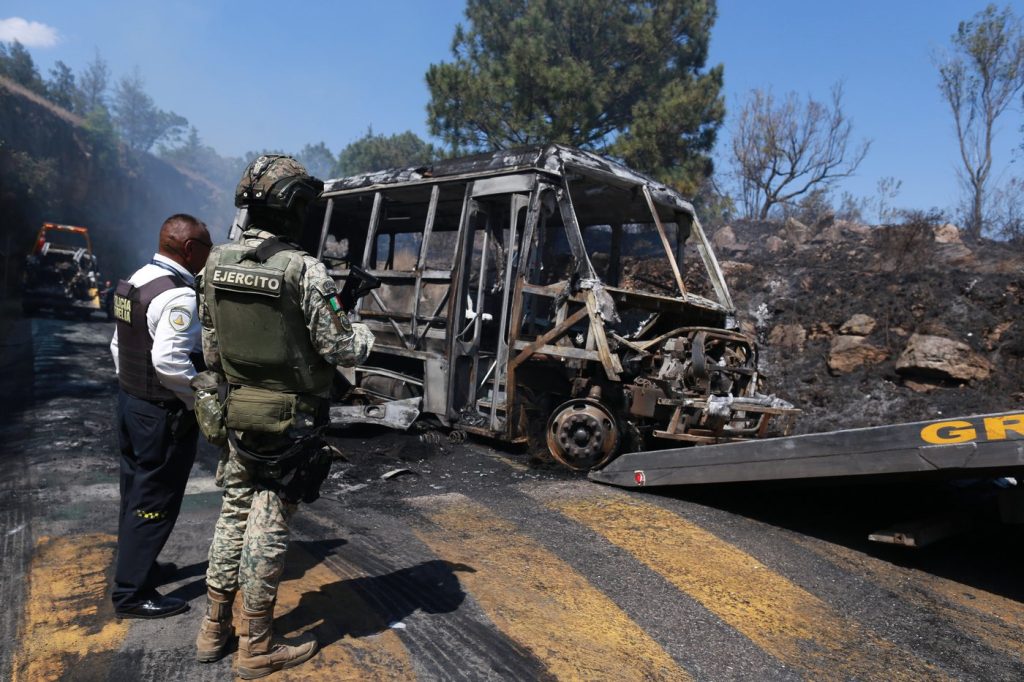
Oseguera Cervantes' death triggered a violent response from cartel members throughout Mexico. Reports indicate that gunmen unleashed chaos across the country, setting cars ablaze and blocking roads in 20 states, including Guadalajara, Mexico's second-largest city and the capital of Jalisco. The violence prompted people to lock themselves inside their homes, while schools across several states were canceled and security forces were put on high alert. Even neighboring Guatemala bolstered security measures along its border with Mexico in response.
The Mexican government is hopeful that the killing of "El Mencho" will strengthen its position in discussions with the United States, especially since the Trump administration had been threatening tariffs and potential unilateral military action unless Mexico demonstrated effective results against drug cartels. However, the long-term impact on Mexico's security landscape remains uncertain.
Oseguera Cervantes, 59 years old and originally from Michoacán, has been linked to organized crime for over three decades. His criminal career began in earnest in 1994 when he was imprisoned in the U.S. for heroin trafficking. After his release, he quickly ascended through the ranks of Mexico's drug trafficking underworld. In 2009, he founded the CJNG, which evolved into Mexico's fastest-growing criminal organization, trafficking cocaine, methamphetamines, fentanyl, and migrants to the United States, and introducing innovative violent tactics using drones and improvised explosive devices.
The cartel earned notoriety for its brazen assaults on Mexican security forces, including the downing of a military helicopter in 2015 and an unsuccessful assassination attempt on Mexico City Police Chief Omar García Harfuch. The CJNG aggressively recruited new members, capitalizing on social media and generating revenue through various illegal activities such as fuel theft and extortion.
The confrontation that led to Oseguera Cervantes' death occurred during an army operation aimed at capturing him. The Mexican Defense Department reported that a coordinated assault involving the Air Force and special forces was launched in southern Jalisco. The cartel retaliated, resulting in a gunfight that claimed the lives of four cartel members and injured Oseguera Cervantes, who subsequently died during transport to Mexico City. Three soldiers were also injured in the conflict, and military personnel confiscated advanced weaponry at the scene.
The capture of Oseguera Cervantes is expected to bolster the Mexican government’s efforts to demonstrate progress in the fight against drug cartels, particularly to the United States, which had been pressuring Mexico for stricter actions against these organizations. The U.S. State Department had previously offered a $15 million reward for information leading to his arrest and had designated his cartel a foreign terrorist organization.
The death of "El Mencho" leaves a significant leadership vacuum within the CJNG, which is known to operate in at least 21 of Mexico's 32 states and across the United States. The immediate future of the cartel is now uncertain, as experts debate who will succeed him: will it be a relative, maintaining the existing modus operandi, or a new leader who may pivot toward de-escalation? Security analysts stress the importance of Mexican and U.S. cooperation to capitalize on this moment, but they caution that Oseguera Cervantes' absence may not eliminate drug-related violence. There is concern that if the cartel falls into chaos, it could unleash a wave of indiscriminate violence reminiscent of the violent era in Colombia during the 1990s.