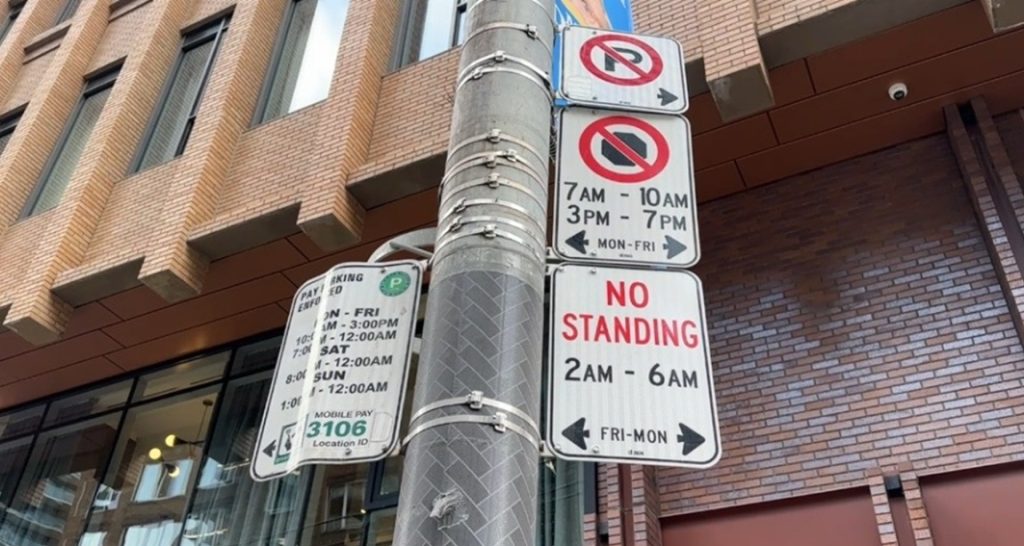
Parking regulations on many streets in Toronto can often be confusing for drivers, prompting municipal staff to propose a pilot project aimed at simplifying the messaging around these regulations. The city is seeking to make parking rules clearer and more understandable through a series of improvements to street signage.
According to a report scheduled for discussion at the infrastructure and environment committee meeting on Thursday, the proposed pilot project is set to commence in the spring of 2026 and may last for up to 18 months, with an estimated cost of $150,000. The initiative was prompted by ongoing complaints from the public regarding the complexity of street signage.
Nazzareno Capano, a manager within the City of Toronto's transportation services department, emphasized that the city is responding to persistent feedback from residents about the difficulties they face when interpreting parking signs. He noted that many motorists find existing signs challenging to read, particularly when numerous parking restrictions are displayed on a single pole. “It's somewhat confusing for a lot of motorists out there when they look to see whether they can park at the curbside or not,” he stated. To address this issue, Capano explained that the city aims to consolidate these restrictions into more user-friendly signage.
In 2024, over 1.8 million parking tickets were issued to drivers violating curbside regulations, including no parking, no stopping, and no standing. Although it is unclear how many of these offenses stem from confusing signage, city staff highlighted examples like those found on Richmond Street West, where multiple signs create ambiguity regarding parking allowances.
CityNews interviewed several drivers regarding their interpretations of the existing signs. One resident expressed confusion, stating, “It says paid parking and no parking, so I don’t know,” while another questioned: “Are you not allowed to stand there?” This lack of clarity demonstrates the pressing need for improved signage.
The proposed new signage would combine all no stopping, no parking, and no standing regulations into one large sign, supplemented by a separate sign detailing Green P paid parking information. These revised signs are designed to be larger and feature bigger text, making them more visible and easier to read.
However, some city residents remain skeptical about the effectiveness of the proposed changes. While acknowledging the enhanced clarity provided by the new sign designs, one resident highlighted the issue of reading such information while driving, pointing out that drivers often do not have the luxury of time to decipher detailed regulations. “I think it’s just too much. I think people will just move on,” another commented.
Aside from the signage modifications, additional proposals include updating information signs, such as those relating to Green P parking, and introducing electronic signs capable of displaying real-time updates regarding snow routes and towing operations.
If approved, the pilot project will see the city finalize specific locations across downtown Toronto for the implementation of the new signage and will publish that list in early 2026. Capano also noted that the project's success will be evaluated based on various metrics, including a potential decrease in ticketing at pilot locations, which would indicate better public understanding and compliance with parking regulations.
The projected budget for the pilot project encompasses the costs of the new signage, labor for installation, ongoing monitoring of the designated areas, and public consultation to gather community feedback throughout the initiative.