Diplomats are faced with the challenge of bridging the "red lines" between Russia and Ukraine as a renewed U.S.-led initiative to resolve the ongoing conflict gains momentum. Ukrainian officials engaged in talks in the U.S. over the weekend, and U.S. representatives are anticipated to visit Moscow early this week.
Last month, U.S. President Donald Trump's peace plan was unveiled, raising concerns that it disproportionately favored Moscow. After discussions in Geneva between U.S. and Ukrainian officials a week ago, this plan was revised. Ukraine's President Volodymyr Zelenskyy has stated that the updated plan could be "workable," while Russian President Vladimir Putin described it as a potential "basis" for future peace negotiations. Trump remarked that "there's a good chance we can make a deal."
Despite these optimistic statements, officials from both sides acknowledge that significant obstacles remain unresolved, particularly regarding whether Kyiv will concede territory to Moscow and how to secure Ukraine's future.
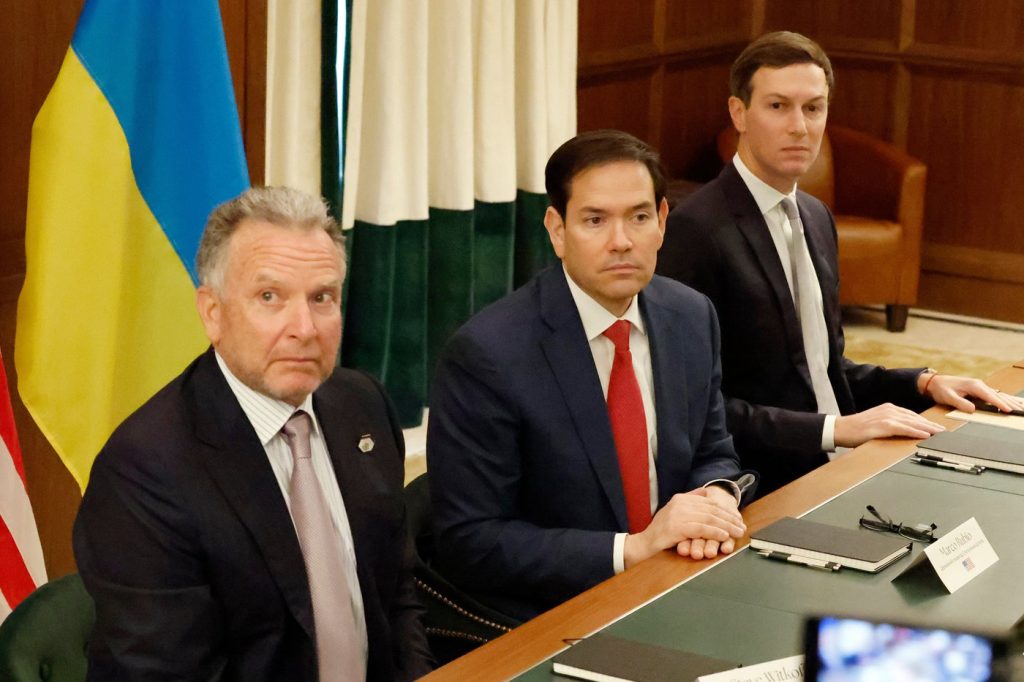
The United States held discussions with representatives from Ukraine before preparing for talks in Moscow. This past weekend, Trump’s representatives met with high-ranking Ukrainian officials, includingRustem Umerov, the head of Ukraine's national security council, and military chief Andrii Hnatov, for approximately four hours. U.S. Secretary of State Marco Rubio characterized the talks as productive, though he acknowledged that more work is needed. Umerov expressed gratitude for U.S. support but did not divulge specific details.
Notably, Zelenskyy’s former chief of staff and chief negotiator, Andrii Yermak, resigned amid a corruption scandal and has stepped back from the negotiating team, which some analysts view as a setback for Zelenskyy's administration. A week prior, Rubio met with Yermak in Geneva, which led to the peace plan’s revision. Trump has indicated that his envoy, Steve Witkoff, will travel to Russia, and Kremlin spokesperson Dmitry Peskov confirmed that Putin would meet with Witkoff on Tuesday.
There seems to be a mutual interest in the peace plan from both Kyiv and Moscow; however, Russia has persisted in its military assaults on Ukraine while reiterating its uncompromising demands, signaling that an agreement is still distant. Putin hinted that he intends to continue military operations until Ukraine withdraws from the four regions annexed by Russia in 2022, asserting that negotiations must involve "serious discussion" of the plan but emphasizing that it is not yet finalized.
Zelenskyy has focused on the need for Europe to be more involved in the discussions, emphasizing that NATO membership is crucial for Ukraine’s security. The initial version of Trump's plan included provisions for Ukraine to relinquish territory to Moscow, which Zelenskyy has consistently ruled out. Additionally, he has maintained that NATO membership is vital for guaranteeing Ukraine's safety and has noted that NATO’s 32 member countries have affirmed Ukraine's "irreversible" path toward membership.
In contrast, Russia opposes the presence of a Western peacekeeping force in Ukraine and has prioritized preventing Ukraine from joining NATO, which it views as a fundamental aim of the war.
While the situation remains tense, discussions in Europe are ongoing. NATO and the EU are convening multiple meetings this week focused on providing further assistance to Ukraine. Zelenskyy is scheduled to meet French President Emmanuel Macron in Paris, and NATO Secretary-General Mark Rutte is hosting Ukraine's Defense Minister Denys Shmyhal and European defense and foreign ministers in Brussels to discuss military support for Ukraine and the continent's defense preparedness.
A lingering issue for Europe pertains to the status of frozen Russian assets in Belgium, which the preliminary version of Trump's peace plan proposed using for post-war investment in Ukraine. However, Belgium's Prime Minister has expressed reluctance due to potential legal ramifications and fears of Russian retaliation.
In summary, although the diplomatic effort stemming from Trump's peace initiative has highlighted European vulnerabilities, it remains to be seen how the discussions will evolve amidst the ongoing conflict and the discord in the negotiations between Russia and Ukraine.