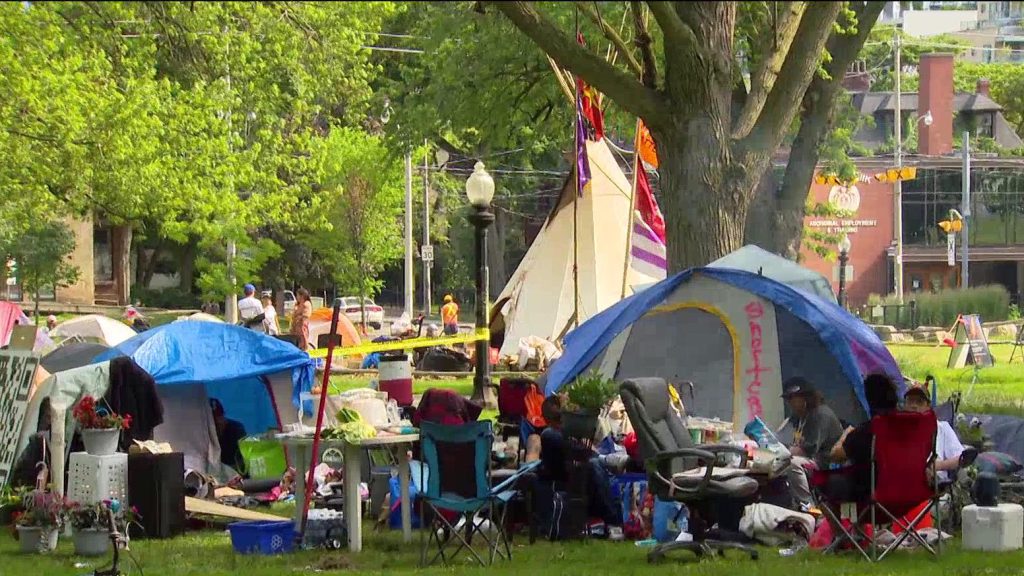
The mayors of Ontario’s 29 largest cities are urging the provincial government to declare a state of emergency in response to what they describe as a “community safety and humanitarian crisis” tied to homelessness, mental health, and addiction issues. This call to action comes amidst growing concerns over the challenges faced by municipalities in addressing these pressing social issues.
During a motion passed unanimously on Friday, the Ontario Big City Mayors group emphasized the need for increased funding and more proactive engagement from the province with cities and relevant stakeholders. Their collective voice highlights the strain on municipal resources, as local governments have been covering over 50 percent of the $4.1 billion spent on homelessness and housing programs in 2024.
Marianne Meed Ward, the mayor of Burlington and chair of the mayors’ caucus, articulates the unsustainable nature of the current funding model. She asserts that municipalities should not bear the burden of addressing homelessness through property taxes alone. “It is simply unacceptable for us as leaders in our community who care for everyone to let those people suffer on the streets,” she stated, underlining the urgency of the situation.
A spokesperson for the provincial Minister of Municipal Affairs and Housing, Michael Minzak, responded by outlining the various initiatives the Ontario government has currently in place to combat homelessness. He noted that the province is allocating $75.5 million to enhance supportive and affordable housing, as well as create additional shelter spaces. Furthermore, he mentioned a substantial investment of $1.7 billion provided to municipalities to support housing improvements, including allocations through the Homelessness Prevention Program.
In addition, the Ontario government is committing nearly $550 million to establish 28 homelessness and addiction recovery treatment hubs, commonly referred to as HART hubs. Minzak emphasized that the government is undertaking “historic action” to equip municipalities with the necessary tools to address these issues.
However, the mayors argue that the financial resources and initiatives from the province are insufficient for a comprehensive solution. Citing a report published by the Association of Municipalities of Ontario earlier this year, the mayors assert that a total investment of $11 billion is needed over the next decade to effectively address and eradicate homelessness in the province.
Toronto’s Deputy Mayor Paul Ainslie echoed the concerns raised by the mayors’ caucus, stating, “This is a growing crisis. Although we’ve seen some support from the provincial government, it’s not enough. Municipalities cannot solve this alone.” This sentiment reflects a burgeoning consensus among city leaders regarding the urgency of collaborative efforts between provincial and municipal authorities to tackle the escalating crisis.
As the situation continues to evolve, the call for a state of emergency aligns with the mayors' goal to raise awareness of the critical need for funding and resource allocation to adequately address the pressing issues of homelessness, mental health, and addiction within Ontario’s urban communities.