KYIV, Ukraine (AP) — Ukraine's military intelligence agency expects more complex strikes against Russian forces in 2024, following the success of Kyiv’s uncrewed fleet in limiting the operations of Russia’s previously dominant Black Sea navy. The commander of sea-drone operations, identified only by the call sign “13th,” stated in an interview that Ukraine's maritime drone unit, known as Group 13, has driven the Russian navy to adapt its tactics, decreasing the frequency of major Black Sea strikes that were more common earlier in the conflict.
The commander remarked, “Today, we’ve likely reached a plateau,” explaining that while Ukrainian forces are effectively constraining enemy movements, the high-profile attacks have diminished due to Russia's adaptations to the changed maritime landscape. He noted that Russian naval vessels now rarely operate beyond 25 miles (40 kilometers) from port and are primarily using missile strikes before retreating, demonstrating a level of caution influenced by Ukraine's ongoing naval capabilities.
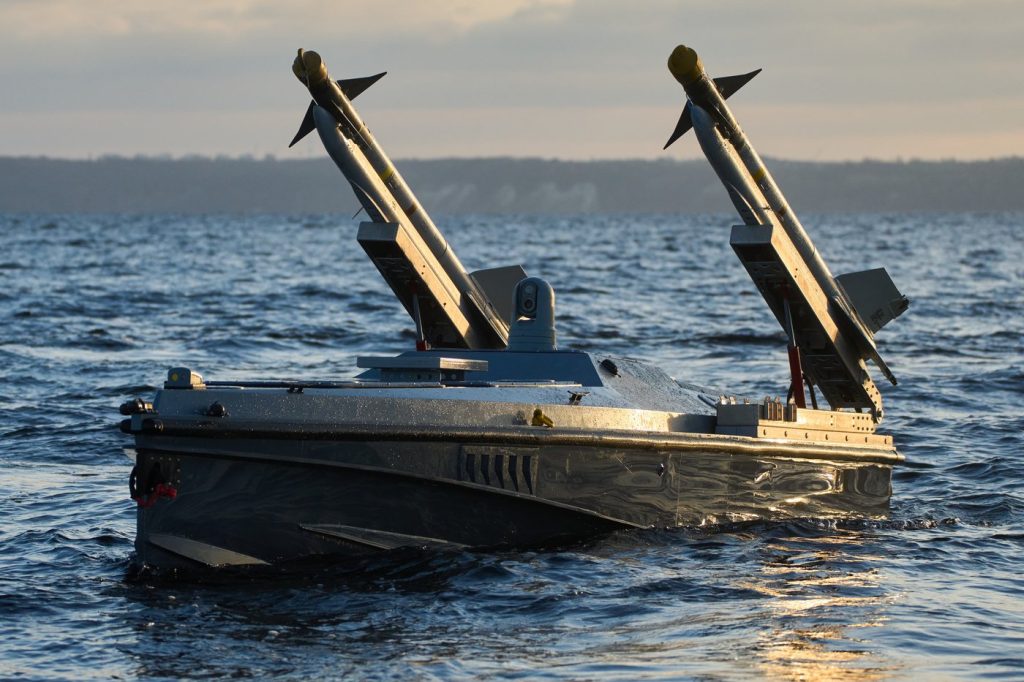
The officer, who spoke while obscured for security reasons, highlighted the significance of drone technology for Ukraine's military as a cost-effective means for reconnaissance and strikes amid the ongoing invasion. He elaborated on Group 13's two-systems operation, which includes the Magura family of sea drones, crucial in executing multiple operations against Russian ships. The unit utilizes two key variants: the smaller V5 drone, designed for ramming, and the larger V7, a platform equipped for carrying weapons.
In a recent demonstration, the V7 drone was showcased with adaptations to carry U.S.-made Sidewinder air-to-air missiles, marking a significant evolution in maritime warfare capabilities. The intelligence agency previously reported that a Magura drone successfully shot down a Russian fighter jet, a development the commander referred to as a “breakthrough.” Both variants are remotely controlled with specialized consoles that include joysticks and safety features, underscoring the technological advancements in Ukraine’s drone operations.
Looking towards the future, the officer indicated that the next phase of Ukraine’s drone evolution aims for deeper integration of artificial intelligence (AI) to enhance operational effectiveness. This AI will utilize a growing repository of operational videos and sensor data to optimize targeting processes and minimize the workload for operators. He explained that the current method of target identification involves a hybrid approach of human input and AI assistance, with aspirations to develop drones capable of autonomously searching for targets while differentiating between civilian and military vessels.
While specific development plans were undisclosed, the commander mentioned ongoing efforts to collaborate with NATO countries to co-produce drones, aimed at bolstering Ukraine’s capabilities in maritime unmanned aerial vehicle (UAV) technology. During President Volodymyr Zelenskyy’s recent visit to Athens, Ukraine and Greece announced intentions for collaborative projects involving maritime UAVs, alongside initiatives for expanded training, exercises, and intelligence-sharing regarding maritime threats.
Despite the adjustments made by Russian forces, the commander expressed confidence in the effectiveness of Ukraine’s sea-drone program, affirming that efforts are underway to change the current balance and reach a turning point in the conflict. He stated, “We haven't lost effectiveness. We've simply reached a point where we're holding the enemy in check,” encapsulating the ongoing dynamic of naval warfare in the Black Sea region.