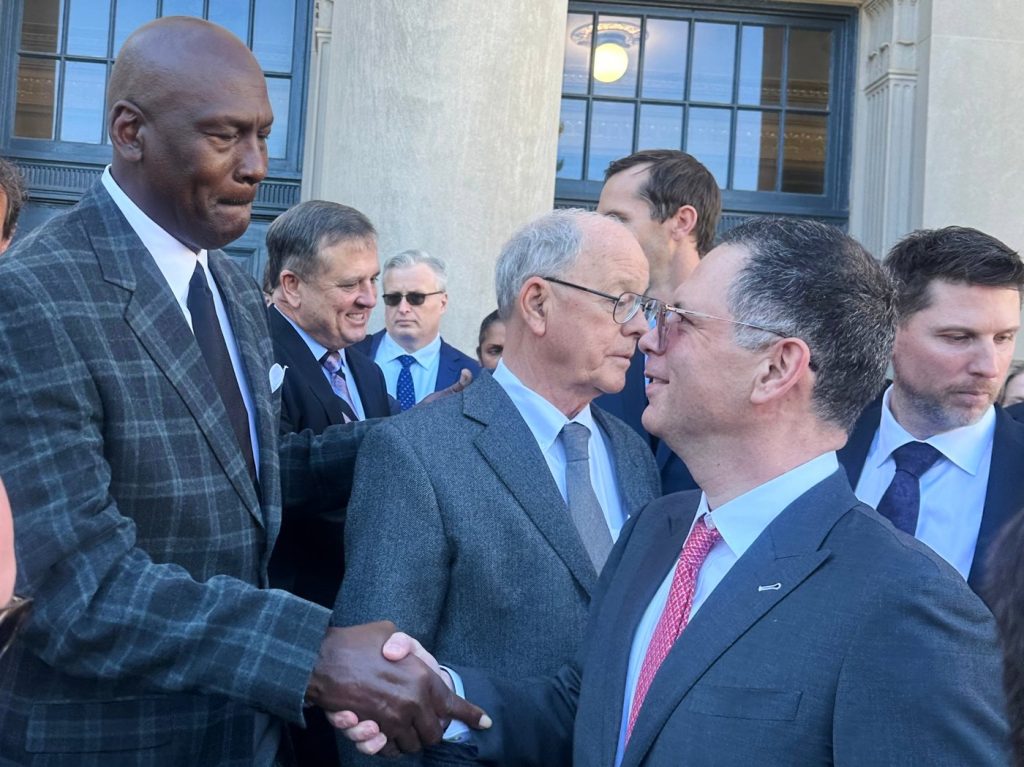
CHARLOTTE, N.C. (AP) — A significant development unfolded on Thursday when Michael Jordan, the legendary basketball icon, and NASCAR chairman Jim France appeared together at a federal courthouse after reaching a settlement in a contentious antitrust lawsuit. The lawsuit highlighted accusations by Jordan and his co-plaintiffs against NASCAR, claiming that the racing organization operated as a monopolistic entity. This coalition included notable figures like Denny Hamlin, a three-time Daytona 500 champion, and Curtis Polk, co-owner of 23XI Racing alongside Jordan.
The culmination of an eight-day trial saw NASCAR concede to demands for permanent charters for all its teams, a critical aspect of the settlement that marks a transformative step for the racing series. Jordan expressed his satisfaction with the outcome, stating, “The only way this sport is going to grow is we have to find some synergy between the two entities.” He acknowledged the lengthy negotiation process, which spanned 16 months, emphasizing the importance of collaboration for the sport’s future.
Jim France mirrored Jordan's sentiments, expressing relief that they could realign their focus back on racing, stating, “I feel like we made a very good decision here together and we have a big opportunity to continue growing the sport.” The concept of charters in NASCAR functions similarly to franchise models in other sports; they guarantee 36 teams a guaranteed spot in each top-level cup race while providing a fixed percentage of the revenue stream. Initially implemented in 2016, teams had argued for two years that these charters should be made permanent, as they were previously revocable by NASCAR.
In the past, NASCAR had seemingly refused to consider the request for permanent charters. Following extensive negotiations, they had presented a “take-it-or-leave-it” final offer in September 2024, which resulted in a split among teams, with some signing under pressure due to fears of losing their charters.
Jordan, who entered the NASCAR arena by launching 23XI in 2021, felt empowered to challenge NASCAR’s stance. The trial presented a challenging scenario for NASCAR, indicated by their focus on minimizing damages rather than defending their actions against antitrust allegations. The settlement signifies a pivotal moment where NASCAR plans to rectify its revenue-sharing model while guaranteeing that charters become permanent for all teams, including restoring six combined charters to 23XI and Front Row Motorsports by 2026.
During the proceedings, an economist testified that NASCAR owed 23XI and Front Row Motorsports approximately $364.7 million in damages, highlighting financial losses for charter teams amounting to $1.06 billion from 2021 to 2024. As Jordan awaited the settlement’s announcement, he expressed optimism, declaring, “Today’s a good day.” U.S. District Judge Kenneth Bell, who presided over the case, noted the settlement's positivity, declaring it beneficial for NASCAR’s future and its fans.
The resolution followed dramatic court moments, including a public call from Bass Pro Shops founder Johnny Morris for NASCAR Commissioner Steve Phelps’ removal. Internal communications revealed derogatory remarks by Phelps about renowned team owner Richard Childress, intensifying the lawsuit's tension. Childress, along with other Hall of Fame team owners, had previously voiced concerns about NASCAR's charter practices, which they found detrimental to the teams financially.
Following the announcement of the settlement, team owners, including Rick Hendrick and Roger Penske, expressed gratitude for the resolution, emphasizing the renewed opportunity to collaborate for NASCAR’s growth. Hendrick noted that the outcome empowers all stakeholders to concentrate on the sport's future moving forward.
The settlement materialized unexpectedly during the trial process, illustrating the complexities and stakes involved in the negotiations. Ultimately, parties from both sides agreed that their shared passion for the sport served as a cornerstone for the agreement, leading to an optimistic outlook for NASCAR’s trajectory.