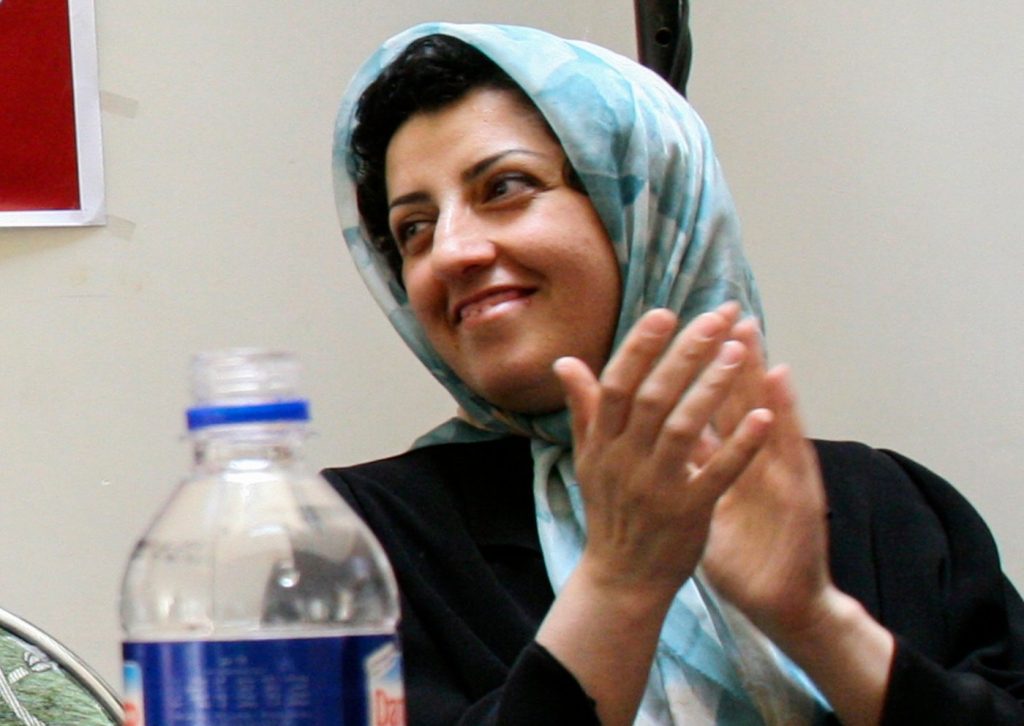
DUBAI, United Arab Emirates (AP) – Iran has detained Nobel Peace Prize laureate Narges Mohammadi, as confirmed by her supporters on Friday. According to a foundation established in her name, Mohammadi was apprehended in Mashhad, located 680 kilometers (420 miles) northeast of Tehran, while attending a memorial for Khosrow Alikordi, a human rights lawyer who recently passed away under mysterious circumstances.
A local official has acknowledged that arrests were made during the memorial, although he did not specifically name Mohammadi, who is 53 years old. It remains uncertain whether authorities will return her to prison, as she had previously been serving a sentence until her temporary release for medical reasons in December 2024.
This arrest occurs amid Iran's ongoing crackdown on intellectuals and activists at a time when the country is grappling with the challenges of heavy sanctions, a struggling economy, and concerns of potential conflict with Israel. The arrest of Mohammadi could lead to heightened pressure from the West, especially since Iran has signaled a desire for renewed negotiations with the United States regarding its nuclear program, negotiations that have yet to materialize.
The Norwegian Nobel Committee expressed "deep concern" regarding Mohammadi's detention, calling on Iranian authorities to clarify her whereabouts, ensure her safety, and release her unconditionally.
Supporters detailed that Mohammadi was "violently detained" by security and police forces during the memorial ceremony. Several other activists were also arrested while gathering to honor Alikordi, who was 46 and based in Mashhad. The Narges Foundation has called for the immediate and unconditional release of all those who were detained, asserting that these arrests constitute serious violations of fundamental freedoms.
Alikordi's death, described by provincial officials as a heart attack, raised suspicions, especially amid a tightening security environment. More than 80 lawyers have publicly demanded additional information regarding the circumstances of his death. Hadi Ghaemi, the executive director of the Center for Human Rights in Iran, remarked that the events illustrate the Iranian government's broad assault on basic human rights, where even the act of mourning has become a target for suppression. He emphasized that when citizens can’t mourn peacefully without facing violence, it highlights a regime that is fearful of accountability.
Footage from the memorial purportedly shows Mohammadi addressing the crowd without a hijab and leading chants for Majidreza Rahnavard, a man publicly executed by authorities in 2022. Iranian state television reported that security officials detained several participants at the ceremony after the chanting of "norm-breaking" slogans, although the city governor of Mashhad did not address allegations of violence during the arrests.
Mohammadi had been on medical furlough for several months after being detained in 2021 for collusion against state security and propaganda against the Iranian government. Her previous sentence was to last for 13 years and nine months, but her release was extended amid pressure from activists and Western powers. Mohammadi continued her activism during her furlough, participating in public protests and speaking to international media.
Supporters highlight her critical health challenges, noting that Mohammadi has suffered multiple heart issues while imprisoned and underwent emergency surgery in 2022. Recent medical assessments indicated a potential cancerous bone lesion that was subsequently removed. Medical professionals have advised that returning her to prison could significantly worsen her health due to inadequate medical facilities available in detention.
In total, Mohammadi has faced imprisonment 13 times and has been convicted five times, accumulating over 30 years in sentences. Her current incarceration began following her arrest at a memorial for a victim of protests ignited by the death of Mahsa Amini in 2022, prompting widespread actions against mandatory hijab laws.
Mohammadi's enduring dedication to human rights issues in Iran demonstrates her resilience and commitment to advocating for freedoms, putting her at significant risk in an increasingly repressive environment.