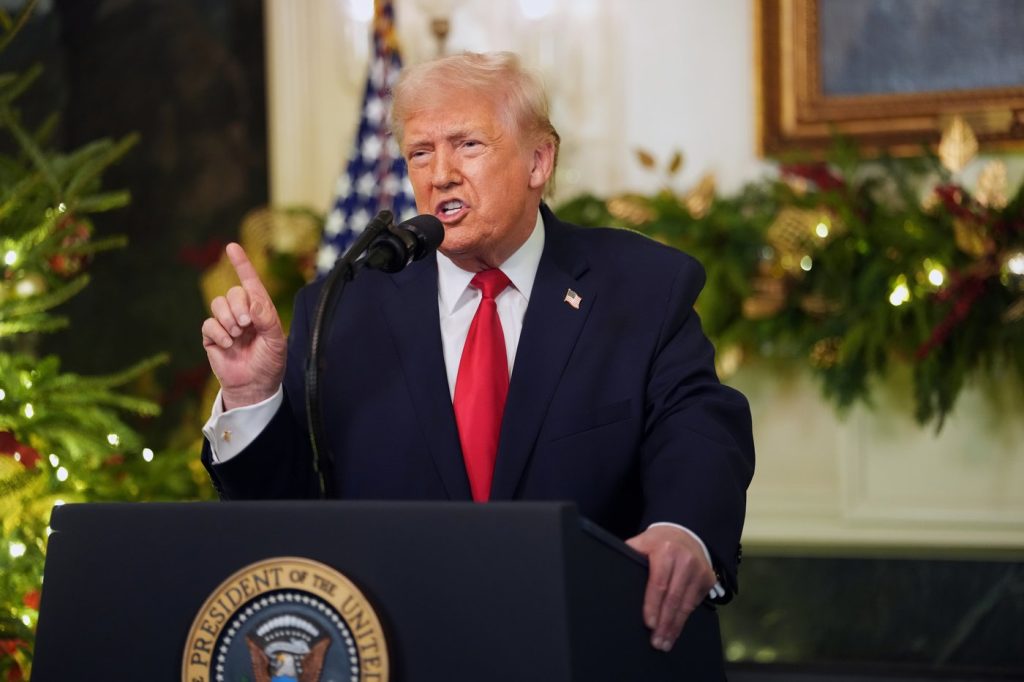
On Wednesday, December 17, 2025, President Donald Trump delivered a highly charged political speech that was broadcast live during prime time on network television. In his address, he aimed to attribute the current economic challenges facing the nation to Democrats, while also announcing a $1,776 bonus check for U.S. troops as a Christmas gift. The referenced amount of $1,776 symbolizes the upcoming 250th anniversary of the Declaration of Independence.
While the nation is gearing up for the holiday celebrations, Trump’s speech was notably focused on the existing divisions within the country rather than promoting unity. His remarks echoed recent messaging that has failed to alleviate the public's growing anxiety over the rising costs of groceries, housing, utilities, and other essential goods. Although he has promised an economic boom, inflation remains high, and the job market has deteriorated significantly since the introduction of his import tariffs.
Trump suggested that his tariffs, which have been partly responsible for escalating consumer prices, would finance a new initiative dubbed the "warrior dividend." This program is expected to benefit approximately 1.45 million military personnel, potentially providing some relief from the economic pressures many households are facing. He emphasized that the bonus checks were already in transit, with the total expenditure estimated to be around $2.6 billion.
Historically, presidential addresses are less partisan than rally speeches; however, Trump maintained a tone consistent with his usual political rhetoric. Positioned between two Christmas trees and with a portrait of George Washington behind him in the White House’s Diplomatic Reception Room, Trump attempted to shift the economic narrative away from his own administration’s decisions, placing blame on his predecessor, Joe Biden. He stated, "Eleven months ago, I inherited a mess, and I’m fixing it," asserting that the country is poised for an unprecedented economic boom.
This speech came at a crucial juncture for Trump, as he seeks to recover from a decline in his approval ratings. Public opinion polls indicate overwhelming frustration among U.S. adults regarding his handling of the economy, especially as rising inflation correlates with his tariffs, which have increased prices while job growth has slowed. With the midterm elections approaching in 2026, the ability of Trump and his party to maintain control of the House and Senate hangs in the balance.
Despite the challenges presented by recent Republican losses, Trump used this prime-time address as an opportunity to regain momentum. He diverged from tradition by adopting a more political approach, contrasting with the reluctance of television networks to air similar addresses from Democratic leaders, such as President Biden, in the past due to perceived partisanship.
Trump spoke at a rapid pace, at times expressing frustration with the public's perception of the economy. He made bold predictions regarding mortgage rates dropping and hinted at forthcoming aggressive housing reforms. He presented charts to illustrate his points, claiming that the economy is experiencing growth, inflation is subsiding, and that foreign leaders view the U.S. as a leader in global investment opportunities. However, this narrative starkly contrasts the public's understanding of economic realities, highlighting the complexities of the current economy.
While metrics such as increased stock market performance and lowered gasoline prices may paint a positive picture, inflation has started to rise again following a period of decline, a trend Trump’s tariffs have contributed to. Job growth has also been weak, averaging only 17,000 new jobs per month since Trump's tariff announcement in April, with the unemployment rate climbing to 4.6% from 4% earlier in the year.
In addition to economic matters, Trump faces challenges in other policy areas, particularly regarding immigration and health insurance premiums. His hardline stance on immigration has not resonated well with certain voter demographics, despite him being credited for reducing border crossings. Efforts to address the expiring subsidies under the 2010 Affordable Care Act have been met with limited progress, as Trump has not provided specific legislative solutions to the rising premiums.
As the broadcast concluded, Trump sought feedback from his aides regarding the effectiveness of his address. They reassured him that his performance was commendable. Trump's chief of staff, Susie Wiles, had advised him to deliver a national address, a directive that he followed with keen interest.