Private snow removal companies in Ontario are facing a significant road salt shortage as rationing of supplies reportedly began before the winter season officially commenced. Alex Ferrante from Gateway Landscape group articulated the challenge, stating, “It’s a tough winter we’re going through right now. It started early in November, and we just have to use it wisely.”
The demand for rock salt, essential during winter, has led to difficulties for private contractors to secure adequate supplies. Christopher Arnts of Arnts The Landscaping Supplier in Whitby emphasized this issue in an Instagram post, where he informed customers about the escalating demand for rock salt amid a dwindling supply. “We were salting on November 9 this year, which is the earliest day that we’ve been salting since I’ve been in the industry,” he noted.
With suppliers announcing in early December that they could no longer provide them with salt, contractors like Arnts found themselves scrambling for alternative sources to meet customer needs. This has raised concerns over potential shortages in retail stores as well, with consumers likely to witness diminishing road salt supplies on store shelves. Home Depot acknowledged the situation, indicating that they are actively managing their inventory of rock salt and ice melt, while encouraging customers to consider other products like sand, gravel, shovels, and snowblowers for winter management.
Historical context suggests that this isn’t the first time private snow removal contractors have grappled with salt shortages; Ontario experienced a notable road salt deficit in February 2025, primarily due to frequent winter storms from the preceding year. Arnts commented, “We had a salt shortage last February, so that wiped out a lot of the reserve supplies in the area.”
The Executive Director of Landscape Ontario Horticultural Trades Association, Joe Salemi, explained that salt production is often based on weather patterns from prior winters. He noted that last winter saw many snow events, contrasting with the relative dryness of the four winters prior. This inconsistency results in production fluctuations, leaving contractors ill-prepared for unanticipated demand spikes.
Moreover, the wholesale price for road salt has surged dramatically due to the high demand and limited supply, climbing from approximately $65-$70 per ton to nearly $190 per ton, according to Salemi. He observed the pressure this situation places on private snow contractors, who may feel compelled to apply more salt than necessary out of fear of liability.
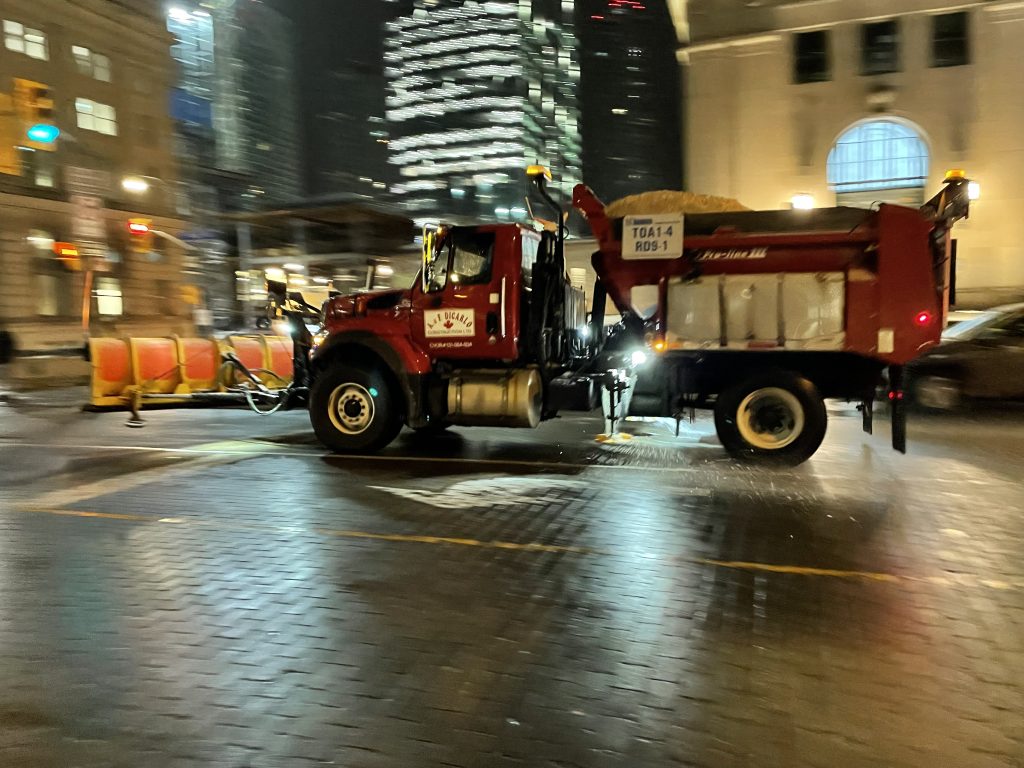
The City of Toronto, however, has managed to avoid being affected by the road salt shortage. City officials confirmed that they maintain three exclusive suppliers who consistently deliver sufficient quantities of salt to ensure public infrastructure remains safe. “The problem is the municipalities and the regions that salt the roadways are using so much salt they have to keep that salt available in priority for them in order to keep the roads safe for everybody. This comes to the detriment of contractors salting private properties,” Arnts explained.
Arnts further pointed out that municipal governments usually have priority over salt deliveries compared to private contractors, as they tend to purchase more salt to maintain public roadways. However, he underscored the importance of addressing the needs of private properties, stating that there are as many private parking lots and walkways as there are roadways that require salting.
As the winter progresses, private contractors like Ferrante remain hopeful that they can obtain sufficient salt to navigate the upcoming challenges as storms are expected in the forthcoming months. “Our worry is it’s only January. We still have a good two and a half months of winter. We hope it’s an early spring,” Ferrante concluded.