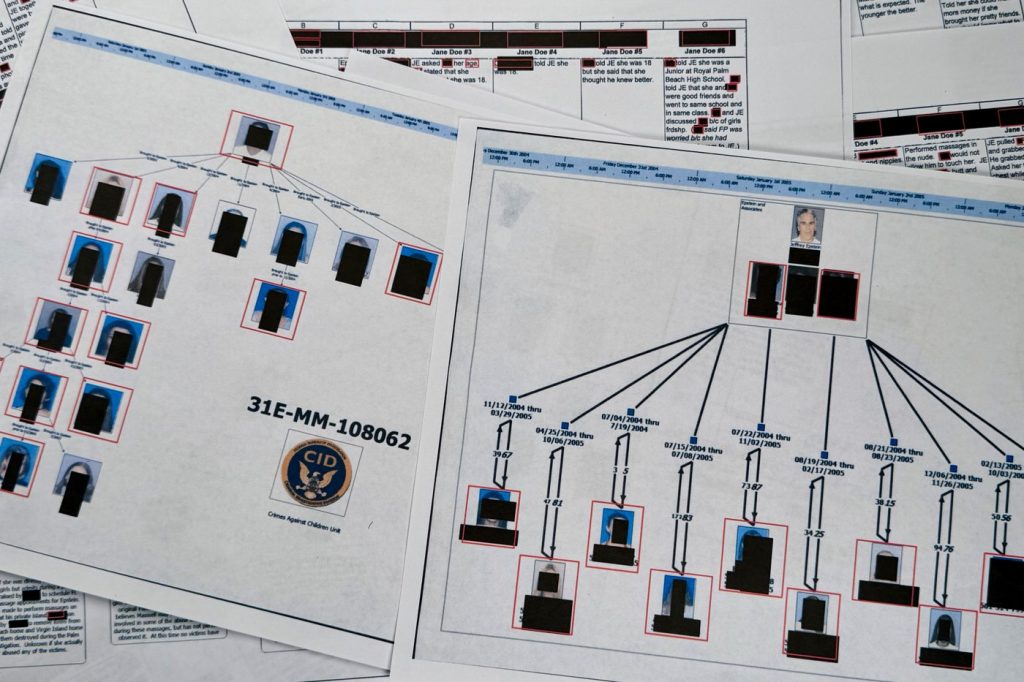
After extensive investigations spanning nearly two decades, the Justice Department has publicly released millions of documents related to allegations surrounding Jeffrey Epstein's sexual abuse of underage girls. This extensive archive provides the most comprehensive examination to date of the various investigations into Epstein and his close associate, Ghislaine Maxwell.
The released documents include early police reports from Palm Beach, Florida, recordings of victims speaking to investigators, and internal Justice Department emails from as recently as a few months prior. This collection lays bare the intricate details of the investigations and the legal proceedings that followed.
The timeline of events begins in March 2005, when Palm Beach police launched an investigation after the family of a 14-year-old girl reported that she had been molested at Epstein's mansion. Numerous underage girls, many of whom were high school students, subsequently told authorities that Epstein had hired them to provide sexual massages. By May 2006, police had gathered enough evidence to charge Epstein with multiple counts of unlawful sex with a minor, although State Attorney Barry Krischer decided to present the case to a grand jury.
In July 2006, Epstein was arrested after the grand jury indicted him on a minor charge of soliciting prostitution, leading to criticism from Palm Beach police who accused Krischer of affording Epstein special treatment. This prompted an FBI investigation. Throughout 2007, federal prosecutors worked on an indictment, but Epstein's legal team engaged in negotiations with U.S. attorney Alexander Acosta to secure a deal that would avert federal prosecution. During this time, Epstein's attorneys characterized his accusers as unreliable.
In June 2008, Epstein pleaded guilty to state charges: one count of soliciting prostitution and another for soliciting prostitution from a minor, resulting in an 18-month jail sentence. A highly controversial secret deal with the U.S. attorney’s office granted him immunity from federal charges, allowing Epstein to spend most of his incarceration in a work-release program. By July 2009, Epstein was released from jail, and his accusers began a lengthy legal battle to nullify his federal non-prosecution agreement.
Interest in the case resurfaced when Virginia Roberts Giuffre, one of Epstein's accusers, filed a lawsuit in May 2009, alleging that Epstein and Maxwell had arranged for her to engage in sexual encounters with high-profile individuals. In March 2011, Giuffre's interview with the Daily Mail detailed her interactions with Prince Andrew, heightening scrutiny of the royal family. However, all allegations against named individuals, including foreign leaders, were denied.
Following a series of articles by the Miami Herald in 2018 questioning the handling of Epstein's case, a new investigation led by the FBI and the U.S. attorney’s office in Manhattan resumed in December 2018. Epstein was arrested again on new sex trafficking charges in July 2019, just days before he committed suicide in his jail cell. Subsequently, in July 2020, Maxwell was charged with sex crimes related to her assistance in recruiting and abusing Epstein's victims, culminating in her conviction for sex trafficking in December 2021 and a 20-year prison sentence in June 2022.
In 2024, renewed public interest emerged as additional court records were made public. Following the election of Donald Trump in January 2025, discussions around making government files on Epstein public intensified. By February 2025, Attorney General Pam Bondi hinted at the existence of an Epstein "client list." However, subsequent Justice Department statements asserted that no such list existed and that no additional files would be released.
Amidst ongoing political implications, Reps. Ro Khanna and Thomas Massie introduced the Epstein Files Transparency Act in July 2025, aiming to ensure the release of the investigation's files. Later that month, Maxwell was interviewed and denied any wrongdoing involving Trump. In October 2025, Giuffre's posthumous memoir was published, reviving claims against high-profile men, including Prince Andrew, who subsequently lost his royal titles.
As legal and political battles continued, Congress passed the Epstein Files Transparency Act in November 2025, which was signed into law by Trump the following day. The Justice Department began releasing records in December, including personal snapshots Epstein had saved. However, after initially releasing a limited number of documents, the department halted further disclosures, citing the need for additional review. By January 2025, the Justice Department made public over three million pages of documents, alongside thousands of images and videos, marking a significant point in the ongoing scrutiny surrounding Epstein and his associated figures.