Lunar New Year is approaching, and businesses are preparing for an increase in customers celebrating the occasion. Due to a recent rise in counterfeit cash circulating in the city, many restaurants are proactively training their staff to identify fake bills. This precautionary measure has become increasingly relevant as previous experiences have shown the prevalence of counterfeit currency during busy shopping seasons.
Kelvin Chung, the owner of Dim Sum King Seafood restaurant located in Chinatown, recounted that two years ago, his establishment faced a surge of customers attempting to pay with counterfeit currency. He noted significant instances of fake $100 and $20 bills being used. In response, Chung mandated that his staff become vigilant in identifying fraudulent money to protect the business.
Tonny Louie, Chairman of the Chinatown Business Improvement Area (BIA), stated that while there is a heightened awareness regarding counterfeit banknotes among local businesses, reports of fake currency have not yet surged in the early part of the festival season this year. However, Louie expressed an understanding that as Lunar New Year draws closer, the likelihood of encountering counterfeit money could increase, leading to a more extensive examination of incoming bills by cashiers.
Detective David Coffey from the Toronto Police Service’s Financial Crime Unit elaborated on the complexities surrounding counterfeit bills, indicating that perpetrators often target businesses during peak hours. "They come to businesses during rush hour where there’s a line of anxious, impatient people," he explained. As a result, cashiers may be overwhelmed and less attentive, which can lead to them unwittingly accepting counterfeit cash. Coffey highlighted the significant financial impact of fake currency, stating that in all of 2025, approximately $90,000 in counterfeit money was reported by businesses to the Toronto Police Service. Alarmingly, in just the first 35 days of 2026, about $80,000 in counterfeit cash has already been reported.
The types of businesses most commonly affected by counterfeit currency include variety stores, grocery stores, and online sellers. To combat this issue, police recommend that employees take their time and scrutinize the details on banknotes carefully. Detective Coffey emphasized the importance of quality assessment, advising staff to "slow down, look at the bills, you will determine it." This approach not only helps in identifying counterfeit notes but also fosters a safer transaction environment for both businesses and customers.
Furthermore, the York Regional Police issued a warning to local businesses after a 20-year-old man was apprehended for allegedly utilizing fake $100 bills at multiple locations within an East Gwillimbury plaza. This incident underscores the continuous threat posed by counterfeiters during busy shopping periods.
In an effort to educate consumers and businesses about counterfeit money, law enforcement has released a series of tips for identifying fake banknotes. These include:
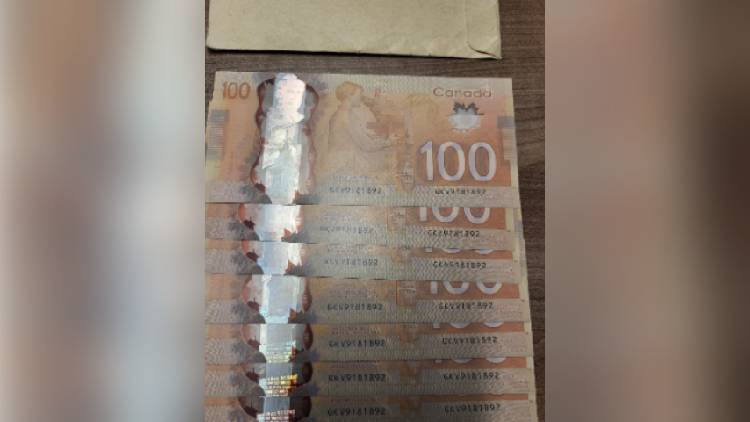
- Every bill has its unique serial number, so it's important to check these numbers when given multiple bills.
- Inspect the window on the bill, ensuring that the tiny numbers visible in it match the denomination.
- Verify that the portrait in the window corresponds with the main portrait of the bill.
- Check that the image in the window changes color when viewed from different angles.
- Run your finger over the main portrait; the ink should have a raised texture.
- Use a small, bright light source to check the maple leaf window, which should reveal tiny numbers visible only under such lighting conditions.
By implementing these tips and fostering awareness, businesses and consumers can work towards reducing the circulation of counterfeit currency, particularly during significant economic periods such as the Lunar New Year.