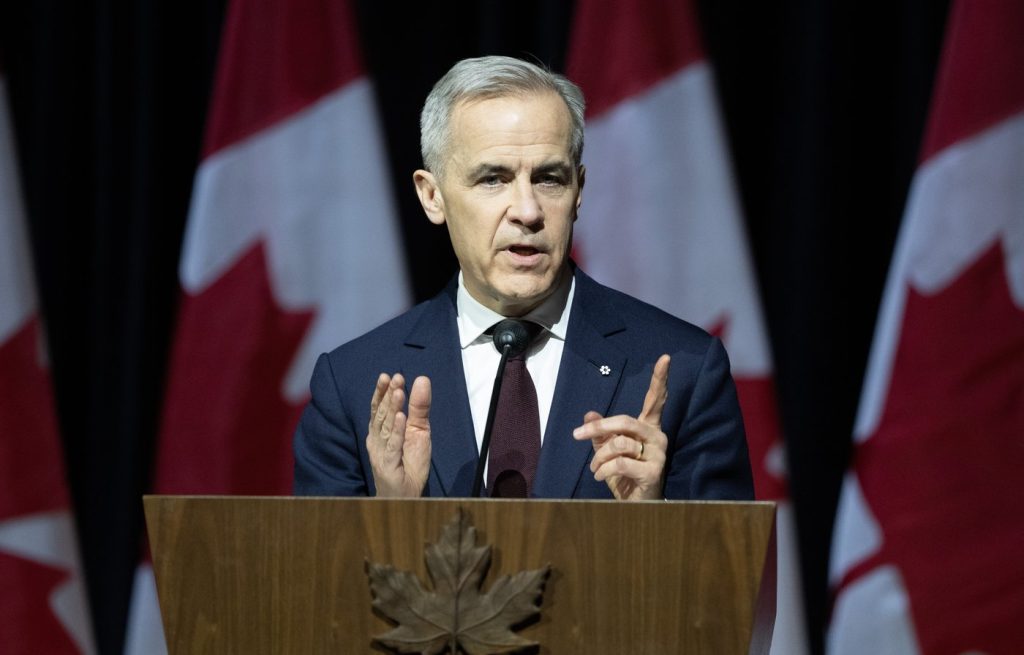
OTTAWA – Prime Minister Mark Carney highlighted the complex history of Black Canadians during an event commemorating 30 years of Black History Month in Canada. Speaking at the Canadian Museum of History in Gatineau, Quebec, on February 4, 2026, Carney emphasized that the narrative of Black Canadians is characterized by “injustice met with resilience.”
In his address, Carney acknowledged that Canada’s historical principles of celebrating diversity have not always been reflected in practice. He pointed out the existence of slavery in Canadian colonies and the continued segregation that persisted even after this dark chapter ended. “It’s a story that must reckon with both the shadow and the light. The challenges of Black history are not chapters we can consign to another country’s past,” he stated.
Carney took the opportunity to honor notable Black Canadian figures, such as activist Kay Livingstone and journalist Carrie Best, who have played significant roles in challenging societal barriers and shaping Canada's narrative. He also noted the ongoing inequalities faced by Black Canadians, including the underrepresentation of Black entrepreneurs and the alarming statistic that one in three Black Canadians experiences food insecurity.
The Prime Minister conveyed the federal government's commitment to empowering Black Canadians by highlighting spending measures included in the fall budget, which focus on supporting Black entrepreneurship and mental health programs tailored for the Black community. He rallied the audience by quoting Livingstone, saying, “Thank you for including me in this mission, this mission we take together. Onwards, upward, together we climb,” prompting cheers from the attendees.
Prior to Carney's speech, Jean Augustine, who made history as Canada’s first Black female member of Parliament, addressed the gathering. Augustine was instrumental in introducing the legislation that established February as Black History Month. She urged attendees to “carry forward the legacy of inclusion and justice,” asserting the importance of the month as more than a symbolic gesture. “A country’s calendar is a statement of values,” Augustine remarked as she reinforced the significance of recognizing Black history within the broader narrative of Canada.
Augustine emphasized that marking February as Black History Month sends a vital message to everyone involved in education, public service, arts, and history—all children and adults—that Black stories are integral to Canada’s collective identity. “Black history is Canadian history; it is not only for Black people, and it should not be celebrated only in February but 365 days a year,” Augustine concluded, underscoring the need for continuous recognition and celebration of Black contributions to the nation.
This event marks a significant moment in recognizing and discussing the complexities of Black history in Canada, reinforcing the notion that understanding and celebrating this history is essential for all Canadians.