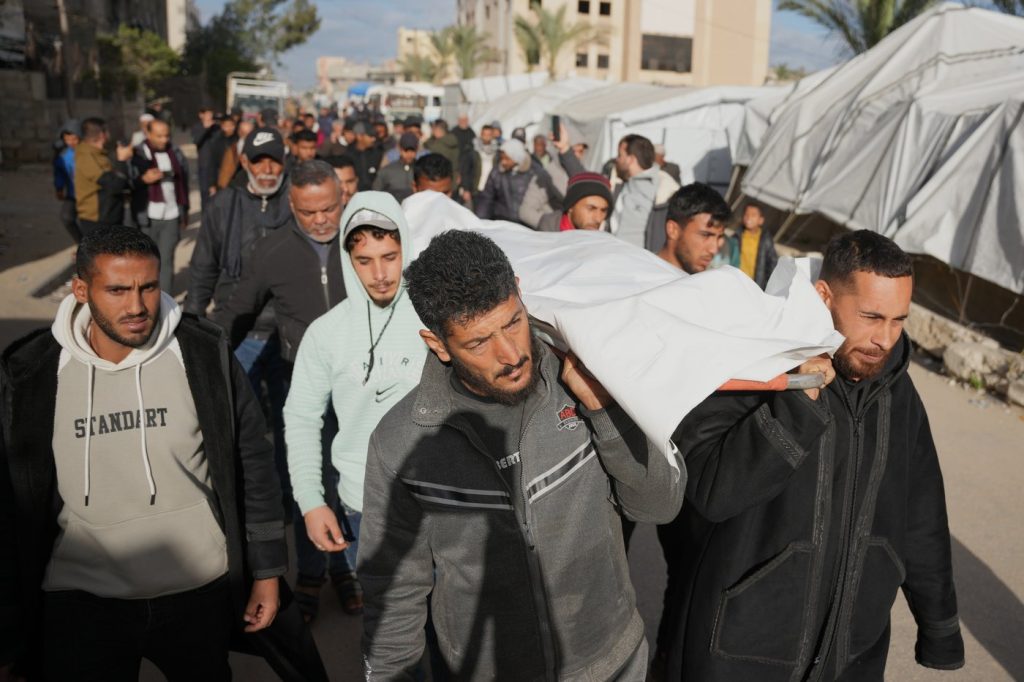
DEIR AL-BALAH, Gaza Strip (AP) – On Wednesday, Israeli airstrikes targeted various locations within Gaza, resulting in the deaths of at least 24 Palestinians, including two infants, according to health officials. This escalation of violence is straining a fragile ceasefire that took effect on October 10, 2023. Israel asserts that the strikes were aimed at eliminating three militant leaders and addressing threats to its forces, citing a Hamas attack that severely injured one of its soldiers as a catalyst for the assaults.
Despite the intended truce, Israeli strikes have persistently interrupted the ceasefire, contributing to ongoing violence in the region. Since the ceasefire began, health officials in Gaza report that a total of 556 Palestinians, half of whom were women and children, have been killed, compared to four Israeli soldiers lost during the same period. Many residents of Gaza feel as if the war is ongoing, despite the official ceasefire.
Among the casualties from the recent strikes were five children, seven women, and a paramedic. Dr. Mohamed Abu Selmiya, the director of Shifa Hospital in Gaza City, lamented the situation on social media, questioning the effectiveness of mediators in the alleged ceasefire agreement.
The current conflict stems from a conflict that erupted on October 7, 2023, following a surprise attack by Hamas, which led to 1,200 Israeli casualties, primarily civilians. Although the most intense fighting has subsided, violent flare-ups continue to plague the area.
The Israeli military stated that their attacks were in direct response to Hamas' ceasefire breaches and other aggressions aimed at soldiers. Subsequent strikes included a significant attack in the Tuffah neighborhood of northern Gaza, where 11 individuals from the same family died, including two young children—a 10-day-old girl and a 5-month-old girl.
In Khan Younis, a separate strike on a tent claimed the lives of three people and injured ten, including a paramedic on duty. The Israeli military insisted they targeted a Hamas commander who had previously orchestrated an attack on Israeli territory. Additionally, a strike at the Al-Shati Refugee Camp resulted in one fatality and injuries to another.
The toll of Wednesday's strikes amounted to 38 Palestinians wounded, according to the Gaza Health Ministry. In the wake of these developments, the international community's calls for mediation have intensified, yet significant diplomatic efforts appear stalled.
Despite some outreach from humanitarian organizations, the ongoing conflict hampers the passage of aid and individuals through the Rafah border crossing. Following its recent reopening, Palestinian movement through the crossing has been severely limited by complications, including extensive delays and interrogations. Reports indicate that over half of the scheduled patients and their relatives were denied passage to Egypt on Wednesday.
While some elements of the ceasefire appear to be progressing, such as the release of hostages by Hamas and subsequent Israeli releases of Palestinian detainees, key aspects such as the disarmament of Hamas and the establishment of an international security force remain unresolved.
As of now, the Gaza Health Ministry has reported that since the war's onset, over 71,800 Palestinians have perished, a figure that includes both combatants and civilians. Detailed casualty records from the ministry are generally considered reliable by UN agencies and independent observers.