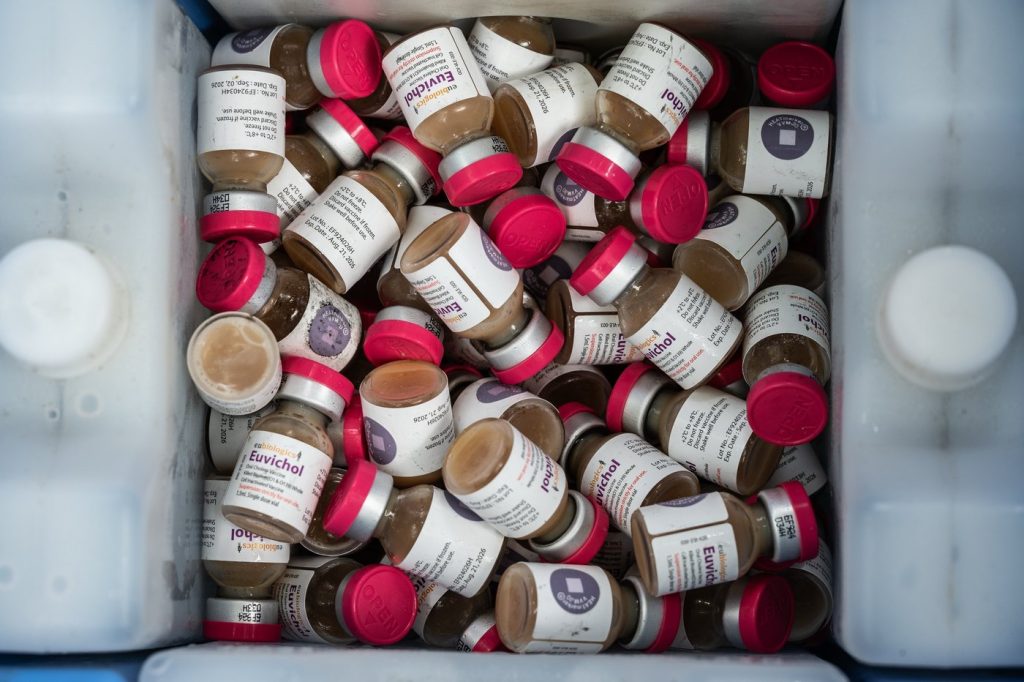
CAPE TOWN, South Africa (AP) - Global preventive cholera vaccination programs are set to resume after being paused for almost four years due to a vaccine shortage, as announced by the World Health Organization (WHO) on Wednesday. This development is expected to make significant progress in combating cholera outbreaks worldwide.
According to a joint statement from WHO, the vaccine alliance GAVI, and the United Nations Children’s Fund (UNICEF), the global stockpile of oral cholera vaccines has improved to nearly 70 million doses as of last year. These vaccines are provided free of charge to countries in need, but prior to this announcement, they could only be used reactively during outbreaks due to the shortage which was highlighted in 2022. During that period, stock levels dwindled to 35 million doses, and countries experiencing cholera outbreaks were unable to get enough doses to respond effectively.
The latest update from WHO, GAVI, and UNICEF indicates that a first allocation of 20 million doses is now being deployed, with specific distributions of 3.6 million doses to Mozambique, 6.1 million doses to Congo, and 10.3 million doses scheduled for delivery to Bangladesh. This allocation signifies a critical step in breaking the cycle of responding to outbreaks rather than preventing them, as stated by WHO Director-General Tedros Adhanom Ghebreyesus.
Cholera, a diarrheal disease caused by waterborne bacteria, often thrives in conditions of poverty, conflict, and climate crises that disrupt health facilities and clean water access. Recent devastating flooding in Mozambique, which affected around 700,000 people, has raised acute concerns over potential cholera outbreaks, making it a priority for vaccine distribution.
WHO has noted that while persistent global drivers such as poverty and conflict contribute to cholera prevalence, climate change has exacerbated the upsurge in cases since 2021 due to increased and more severe storms. In response to the vaccine shortage, WHO had previously recommended a one-dose vaccination strategy instead of the traditional two doses. This one-dose strategy will remain standard moving forward, with two-dose campaigns considered on a case-by-case basis.
Despite these efforts, the data indicates a troubling trend, as over 600,000 cholera cases and nearly 7,600 deaths were reported to WHO last year. While global cholera cases have risen continuously year after year since 2021, a decline is anticipated in 2025. Nevertheless, cholera-related deaths have continued to increase, underscoring the urgent need for effective preventive measures and timely responses to outbreaks.
Overall, the renewed focus on preventive vaccination in response to the cholera crisis reflects a burgeoning commitment among global health organizations to mitigate the disease's impact, particularly in regions hardest hit by outbreaks. With the deployment of new vaccine doses, there is cautious optimism for improved public health outcomes in affected countries.