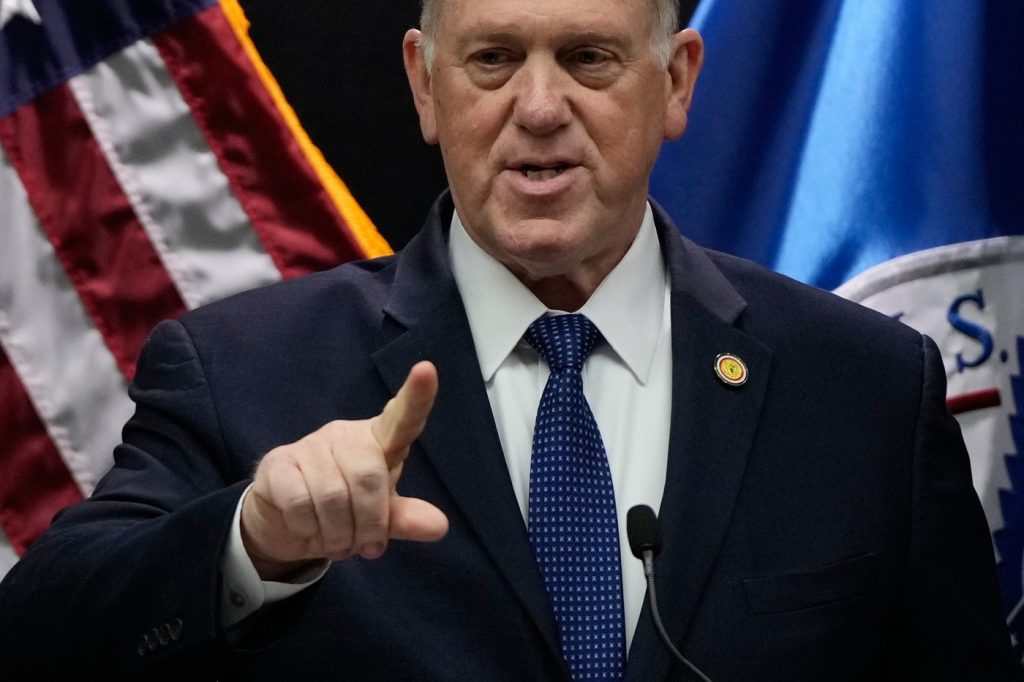
MINNEAPOLIS (AP) — The Trump administration announced a reduction in the number of immigration officers stationed in Minnesota, although it will maintain its controversial immigration enforcement operation that has led to weeks of tensions and violent confrontations. Tom Homan, the border czar, revealed this decision during a news conference on Wednesday.
Approximately 700 federal officers, accounting for about a quarter of all immigration agents deployed in Minnesota, are set to be withdrawn. This reduction follows agreements by state and local officials to cooperate with federal authorities by transferring arrested immigrants. However, Homan did not specify when the operation that has become a significant topic of discussion concerning President Donald Trump’s mass deportation agenda might be concluded, particularly after the fatal shootings of U.S. citizens Renee Good and Alex Pretti in Minneapolis.
After the withdrawal, around 2,000 immigration officers will remain in Minnesota, a number consistent with those deployed during a surge initiated back in January, which the Department of Homeland Security labeled as its "largest immigration enforcement operation ever." Homan emphasized that this reduction in personnel was made possible due to increased cooperation from local jurisdictions, although he did not disclose which areas had agreed to collaborate with the Department of Homeland Security.
The operation has seen heavily armed, masked federal officers face resistance from local residents, who have criticized their aggressive tactics. Homan noted that any further significant withdrawal of federal officers would only occur when cooperation improves and protests against federal agents conducting arrests cease. President Trump indicated he had ordered the reduction, suggesting that the situation in Minnesota had highlighted the need for a "softer touch" while still maintaining a strong enforcement stance.
Local leaders, such as Governor Tim Walz and Minneapolis Mayor Jacob Frey, both Democrats, viewed the pullback of 700 officers as a positive initial move but strongly advocated for an expedited cessation of the overall operation. Walz, through social media, emphasized the necessity for a more significant and quicker reduction of forces as well as state-led investigations into the fatalities of Good and Pretti, denouncing what he described as a "campaign of retribution."
Meanwhile, Vice President JD Vance clarified that the withdrawal of officers primarily aimed to safeguard those carrying out arrests in Minneapolis and stressed that this does not equate to a reduction in immigration enforcement activities. Homan has taken charge of the operation in Minnesota since late January, following heightened political backlash due to the killings involving federal officers.
Within the enforcement framework, Homan stated that a boost in collaboration had led to a decrease in the need for a larger federal presence, which he argued enhances public safety. In contrast, criticisms arose regarding how certain county jails in the Minneapolis area had not previously met ICE’s cooperation standards, although both had complied with handing over inmates upon the issuance of judicial warrants.
Tensions escalated further when two Minnesota school districts and a teachers union filed a lawsuit seeking to prohibit federal immigration enforcement around schools, claiming that such actions disrupted educational activities and compromised student safety. The lawsuit contends that recent enforcement actions represent a policy shift that has lifted long-regarded protections for "sensitive locations," including educational institutions. In response, a Homeland Security spokesperson asserted that ICE does not target schools for student arrests but instead focuses on protecting children.
Homan characterized the Minnesota operation as successful, claiming that it effectively removed individuals wanted for violent crimes from the streets, despite acknowledging that the operation was not without flaws. He reiterated that the withdrawal of federal officers should not be perceived as a retreat from enforcement objectives, warning that ongoing protests would only exacerbate community tensions.