SAN JUAN, Puerto Rico (AP) – The U.S. government announced an additional $6 million in humanitarian aid for Cuba amidst a deepening crisis and escalating tensions between the two nations. Cuban President Miguel Díaz-Canel has accused the U.S. of imposing an “energy blockade” on the island.
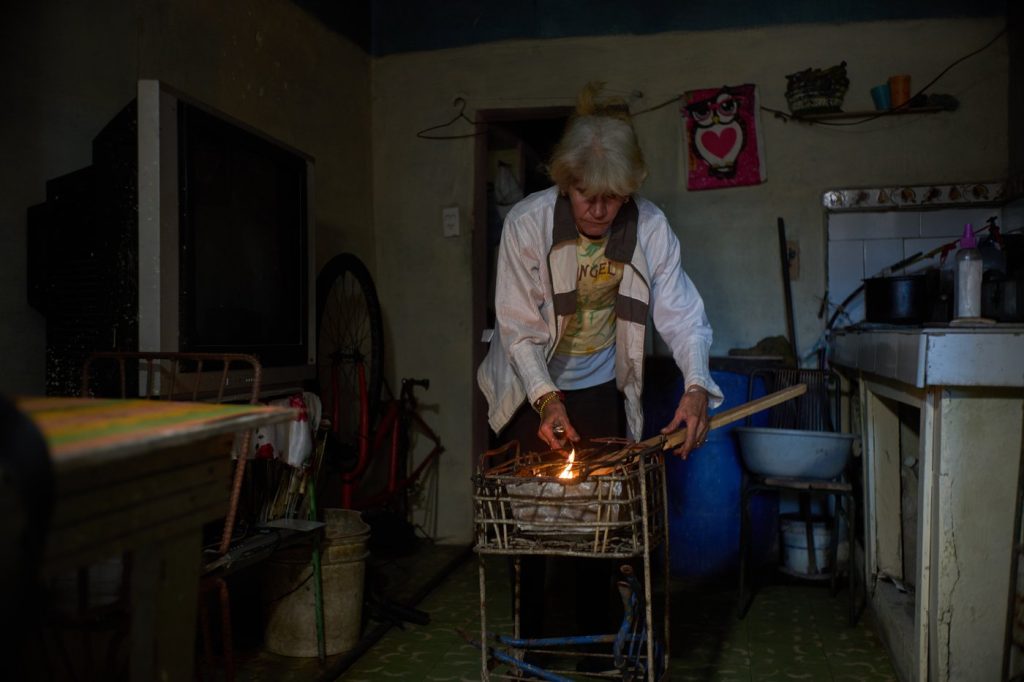
The newly allocated aid is aimed primarily at residents of Cuba’s eastern region, which was severely impacted by Hurricane Melissa late last year. The State Department specified that the assistance will include essential supplies such as rice, beans, pasta, canned tuna, and solar lamps. These provisions are set to be distributed through the Catholic Church and the charity organization Caritas.
U.S. Department of State Senior Official Jeremy Lewin emphasized that officials from the U.S. embassy in Cuba will be monitoring the distribution to ensure that the aid reaches the intended recipients without interference from the Cuban government. He pointed out that this comes after an earlier aid package of $3 million was sent for disaster relief in response to Hurricane Melissa.
Rejecting claims that a halt in oil shipments from Venezuela—following U.S. intervention in that country—has contributed to the humanitarian situation in Cuba, Lewin asserted that the Cuban government has long misallocated resources. He accused Cuban leaders of prioritizing their own interests while neglecting the needs of ordinary citizens, stating, “They can’t put food on the shelves.” He linked the government’s failures to broader issues, including unauthorized foreign engagements such as their involvement in Venezuela.
Díaz-Canel’s recent press conference focused on the alleged psychological warfare waged against Cuba by the U.S. He characterized President Donald Trump’s threats of tariffs against countries selling oil to Cuba as an “energy blockade,” arguing that these actions significantly impact transportation, healthcare, education, and food production. Cuban officials claim increased U.S. sanctions under Trump cost the country over $7.5 billion between March 2024 and February 2025.
During his remarks, Díaz-Canel acknowledged the challenging times ahead, urging unity and resilience among the Cuban people while promising that his government would confront these difficulties. He noted the severe lack of oil shipments since the U.S. began its blockade on Venezuela in December, which has exacerbated Cuba's fuel shortages for electricity generation and other essential services.
Díaz-Canel indicated that he would provide further updates on the island’s situation within a week, expressing awareness of the public’s fears and reluctance to endure additional sacrifices. “If we don’t sacrifice, and if we don’t resist, what are we going to do?” he questioned rhetorically, highlighting his government’s commitment to overcoming the crisis.
Lewin further suggested that if the Cuban government were to demonstrate willingness to cooperate with the U.S. in facilitating aid, there could be potential for additional support. He emphasized the primary responsibility of any government to provide for its citizens and criticized Díaz-Canel’s rhetoric relative to addressing local needs.
Reflecting on the complex U.S.-Cuba relationship, Díaz-Canel stated his government's openness to dialogue, contingent upon mutual respect for Cuba's sovereignty and the exclusion of sensitive internal affairs from discussions. He underscored that the Cuban people do not harbor animosity toward Americans and reiterated that Cuba poses no threat to the United States.