The Israeli security cabinet has recently approved measures aimed at expanding Israeli control over the occupied West Bank and further diminishing the already restricted authority of the Palestinian Authority. This announcement came from the office of far-right Finance Minister Bezalel Smotrich, who indicated that the actions taken would facilitate Jewish settlers in compelling Palestinians to relinquish land, declaring a commitment to "bury the idea of a Palestinian state."
Yonatan Mizrachi, a researcher with the anti-settlement group Peace Now, emphasized the significance of this decision, noting that it still requires approval from Israel's top military commander for the West Bank. This news was met with rebuke from Palestinian President Mahmoud Abbas, who labeled the decision as "dangerous" and described it as an "open Israeli attempt to legalize settlement expansion and land confiscation." He urged immediate intervention from the United States and the United Nations Security Council.
Moreover, Jordan's foreign ministry condemned the measures, characterizing them as an effort to impose illegal Israeli sovereignty and entrench existing settlements. The new measures permit the cancellation of the prohibition on sales of West Bank land to Israeli Jews, simplify the acquisition of land by declassifying West Bank land registry records, and transfer construction planning in sensitive areas, particularly in Hebron, to Israeli authorities. Additionally, it would empower Israeli enforcement of environmental and archaeological regulations in areas administered by Palestinians.
These measures also propose the revival of a committee to facilitate proactive land purchases by the Israeli state in the West Bank, aimed at ensuring land reserves for settlements in future generations. According to Peace Now, this decision is focused on overcoming every barrier to a substantial land grab in the region. The organization underscored that Israeli authorities would now have the power to demolish Palestinian constructions deemed harmful to cultural heritage or the environment.
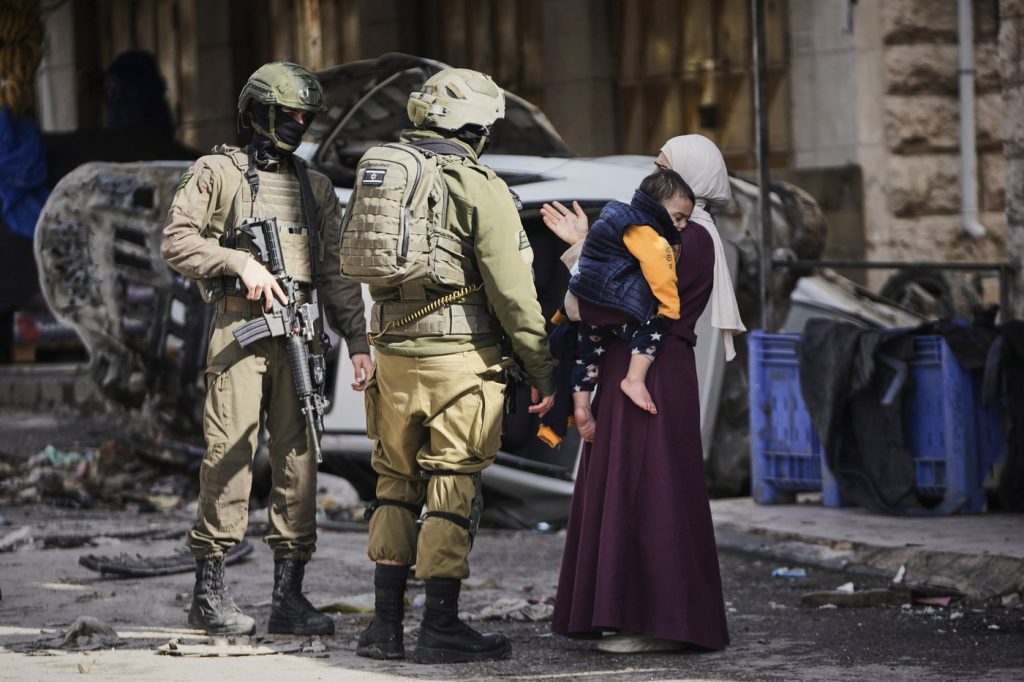
The scenario in the West Bank is complex, being divided among Israeli-controlled sections with settlements and Palestinian Authority-controlled areas that comprise around 40% of the territory. Palestinians are restricted from privately selling land to Israelis, although settlers can purchase homes on lands under Israeli governmental jurisdiction. Mizrachi highlighted that the prevailing system in the West Bank discriminates against Palestinians, who are denied voting rights in Israeli elections and face military crackdowns and travel limitations.
Currently, over 700,000 Israelis reside in the occupied West Bank and East Jerusalem, territories that Israel captured during the 1967 war and that Palestinians aspire to incorporate into a future state. The international community widely views Israeli settlement construction in these regions as illegal and a major hurdle to peace negotiations. Bezalel Smotrich, who has been granted cabinet-level authority over settlement policies, has expressed ambitions to double the settler population in the West Bank.
The settler group Regavim praised the recent decision, asserting that it would preserve heritage sites in the West Bank and render land registry records transparent and accessible. Earlier in December, the Israeli Cabinet approved a proposal for 19 new Jewish settlements in the West Bank, as the government intensifies its construction efforts, which further jeopardize the potential for a viable Palestinian state. Israel has also cleared the final approvals necessary to commence a controversial settlement project near Jerusalem, which could effectively bisect the West Bank, as reported in January.