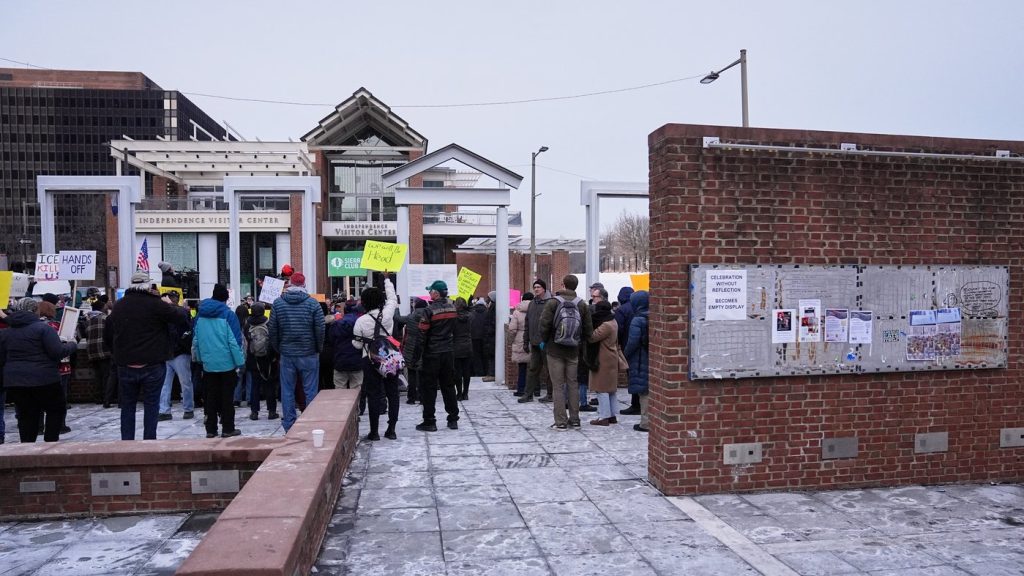
On Tuesday, conservation and historical organizations initiated a lawsuit against the Trump administration in Boston, challenging National Park Service policies that allegedly obscure historical facts and scientific knowledge from America's national parks. The lawsuit contends that directives from President Donald Trump and Interior Secretary Doug Burgum have compelled park service staff to remove or censor exhibits that accurately portray U.S. history and science, particularly topics like slavery and climate change.
In a separate legal action, LGBTQ+ rights advocates and historic preservationists have also sued the National Park Service regarding the removal of a rainbow Pride flag from the Stonewall National Monument, a significant site in New York that commemorates a pivotal moment in the modern LGBTQ+ rights movement.
The changes to park exhibits reportedly stem from an executive order issued by President Trump aimed at "restoring truth and sanity to American history" within the country's museums, parks, and landmarks. This executive order mandates that the Interior Department ensure that these sites do not present content that "inappropriately disparages Americans past or living." Following this, Burgum directed the removal of "improper partisan ideology" from federally controlled museums and monuments.
The groups behind the lawsuit argue that this federally initiated review of interpretative materials has intensified in recent weeks, leading to the removal of various exhibits discussing crucial aspects of American history, including slavery, civil rights, Indigenous peoples’ treatment, and climate change. The suit includes a coalition of organizations such as the National Parks Conservation Association, the American Association for State and Local History, the Association of National Park Rangers, and the Union of Concerned Scientists.
The urgency of this lawsuit is underscored by a recent ruling from a federal judge, who ordered the restoration of an exhibit about nine enslaved individuals who lived with George Washington at his former home in Philadelphia. This ruling reinforces the plaintiffs' stance that the removal of key historical content is both damaging and unacceptable.
Specific instances highlighted in the lawsuit include the removal of explanatory panels from Independence National Historical Park and interpretative items at locations like the Selma to Montgomery National Historic Trail in Alabama and the Brown v. Board of Education National Historical Park in Kansas. The removal of signage that discussed the displacement of Native American tribes during the establishment of Grand Canyon National Park and materials about climate change's impact on Glacier National Park were also noted.
Alan Spears, the senior director of cultural resources at the National Parks Conservation Association, articulated the threat that censoring scientific and historical content poses to the integrity of national parks. He emphasized that these parks serve as vital educational platforms for the public and should present both the triumphs and challenges of American history.
The Interior Department responded by stating that it has appealed the court ruling from the Philadelphia case and suggested that enhanced interpretative materials detailing the history of slavery at Independence Hall were forthcoming had the court not intervened. White House spokeswoman Taylor Rogers dismissed the new lawsuit as "premature" and based on "inaccurate and mischaracterized information," asserting that the Department of the Interior is in the process of reviewing historical exhibits in accordance with the executive order.
The judge overseeing the Philadelphia case emphasized the need to restore the exhibit to its original condition while legal challenges regarding the removals are ongoing. In her written order, U.S. District Judge Cynthia Rufe referenced George Orwell’s “1984,” drawing parallels between the Trump administration's actions and the Ministry of Truth's manipulation of historical records.
In the case regarding the Stonewall Flag, the lawsuit claims the removal reflects ongoing discriminatory practices targeting the LGBTQ+ community under the Trump administration. Although the Pride flag was first installed in 2022 at federal land and symbolized significant progress for LGBTQ+ representation, it was recently removed based on a memo limiting the types of flags that could be displayed on federal property.
Amidst these legal disputes, former Glacier National Park Superintendent Jeff Mow expressed concerns regarding the impact of Trump’s orders on the narrative and educational value of national parks, calling for a balanced portrayal that includes the complexity of America's history. Skye Perryman, president of Democracy Forward, reaffirmed that one cannot fully understand the story of America without acknowledging both its achievements and its struggles.