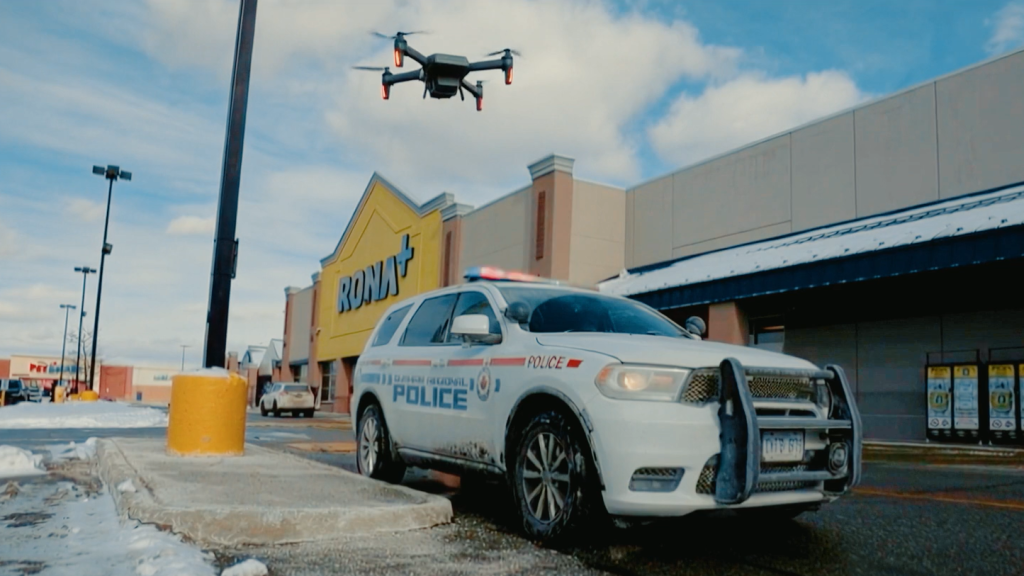
The Durham Regional Police Service (DRPS) has introduced a new first responder to enhance emergency response capabilities—a drone that can arrive at a scene within 60 seconds. This initiative, announced on February 26, 2024, as part of the Drone First Responder (DFR) pilot project, aims to support a quicker, safer, and more informed response to emergencies throughout the region.
The pilot project involves launching a drone from a fixed location in response to designated 911 calls or emergency incidents. A trained and certified pilot will operate the drone remotely, capturing real-time video to assist emergency responders in assessing the situation before they arrive at the scene. According to the DRPS, the use of drones can significantly enhance operational efficiency by identifying potential hazards, understanding the scene layout during complex incidents, improving coordination among police, fire, and emergency services, locating individuals in distress, and enhancing overall safety.
Certain cases qualify for the DFR services, which include scenarios such as missing persons, high-risk or uncertain danger calls, natural disasters, large or complicated incidents, situations with heightened risks for responders, and significant events requiring rapid situational awareness. The use of drones is not intended for general surveillance and will only be deployed for specific emergency responses.
In a promotional video shared on social media and the DRPS website, one case highlighted the DFR’s potential effectiveness. It followed the search for a missing vulnerable elderly man. While officers navigated treacherous icy roads toward the man’s residence, a drone was dispatched to survey the surrounding area. The drone pilot quickly ruled out the man’s home as a location and successfully directed officers to a nearby plaza where the individual was ultimately found.
Importantly, the DRPS emphasizes that the DFR program will not involve general surveillance nor routine public monitoring. The drones are not equipped with facial recognition technology or automated identification tools, and they lack the capability to record audio. The program adheres to Transport Canada regulations and existing privacy legislation, alongside internal accountability processes and independent oversight. The video footage captured by the drones is accessible only to authorized personnel, with clear logging and auditing of access. The DRPS has stated that data will be retained only as necessary, in accordance with police data retention policies and privacy regulations.
To engage the community and provide more insight into the program, the DRPS plans to hold a public information session on February 26, 2024, at the Audley Recreation Centre in Ajax. Attendees will have the opportunity to view a live drone demonstration, meet the drone pilots, and inquire about the operational aspects of the system and the measures taken to protect privacy.
The DRPS pledges to continuously evaluate the DFR pilot throughout the year, collecting data on response times, safety impacts, operational effectiveness, and feedback from the community. This evaluation will help determine the overall success and future implementation of the drone program as a valuable asset in emergency response strategies.