WASINGTON (AP) — President Donald Trump faced increasing criticism on Monday concerning his lack of explanation regarding the necessity to initiate a war with Iran and his vision for a potential resolution to the escalating conflict. Critics are not only from the political left but also from his core supporters in the “Make America Great Again” (MAGA) movement, especially as the situation intensifies, energy prices rise, and casualties in the Middle East increase amidst what the administration suggests might only be the conflict's early stages.
Trump indicated that he was not dismissing the possibility of expanding U.S. military involvement when he spoke to the New York Post, suggesting that he was not afraid to consider deploying "boots on the ground." This statement came on the same day that Defense Secretary Pete Hegseth remarked that the administration would not engage in publicly outlining their military plans. Trump stated, “I don’t have the yips with respect to boots on the ground... I say ‘probably don’t need them,’ or ‘if they were necessary.’”
As Iran responds by launching drones and missiles at Israel and U.S. bases in the region, Trump and his advisees defended the current approach. Disturbingly, tensions escalated further as Israel and Hezbollah, an Iranian-backed militia in Lebanon, exchanged strikes. Some within Trump’s base are expressing discontent, leading to frustrations regarding whether the U.S. would become embroiled in another prolonged Middle Eastern conflict.
Trump returned to office last year with an “America First” promise promising to avoid the “forever wars” that had plagued past presidents. Throughout his political career, he has consistently advocated abandoning the “failed policy of nation-building,” and even echoed such sentiments during his visit to Saudi Arabia last year. However, the current conflict poses contradictions to Trump's anti-interventionist stance. Erik Prince, a longtime ally of Trump, voiced his displeasure concerning the war, implying it contradicted the MAGA philosophy. Prince believes it could lead to significant chaos in Iran and expressed disappointment over the decision.
Others who share Prince's concerns include various allies of the Trump administration, such as influencer Andrew Tate and commentator Tucker Carlson, who have been vocal about their reluctance regarding military action against Iran. Trump, however, assured supporters that his actions were consistent with MAGA ideals, explaining that confronting Iran was necessary for national security.
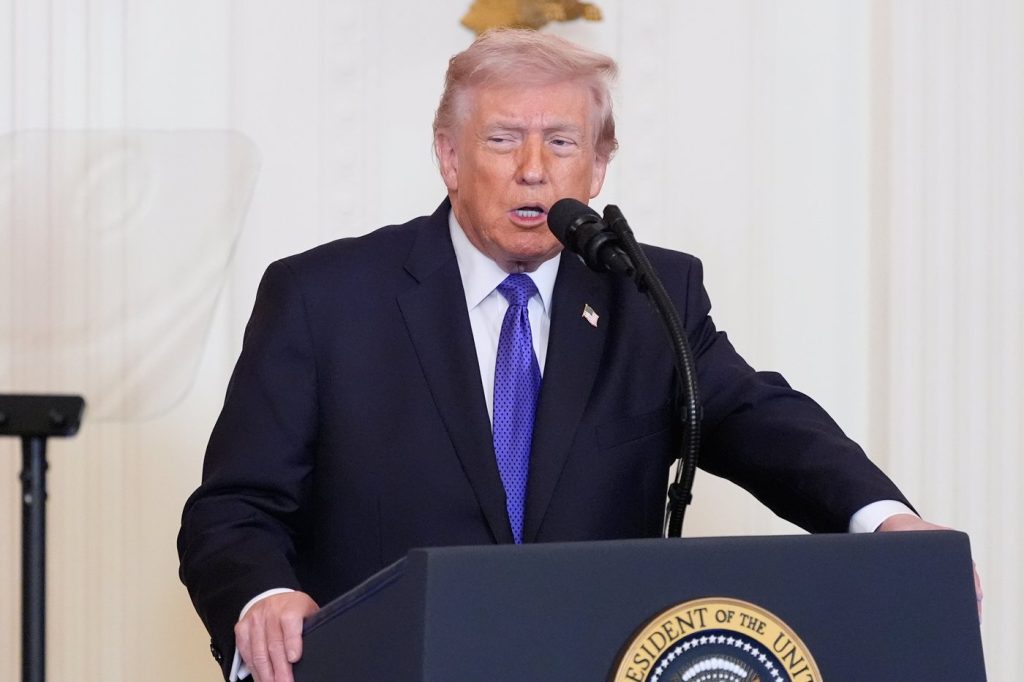
During a White House event, Trump remarked that the military operation with Israel was “substantially ahead of schedule,” estimating that it might reach its objectives in four to five weeks, although he acknowledged it could extend beyond that timeline. Hegseth offered a vague outlook on the timeframe, emphasizing President Trump’s discretion regarding military duration.
As of Monday, U.S. military operations have already resulted in the deaths of six service members with more injuries as a consequence of Iranian counterattacks. The administration has yet to articulate the desired outcome for Iran following significant military strikes that took place after the killing of Iranian Supreme Leader Ayatollah Ali Khamenei.
Trump has called for the Iranian Revolutionary Guard Corps to disarm but has yet to publicly support opposition groups in Iran that could emerge after the conflict concludes. Trita Parsi from the Quincy Institute speculated that Trump may aim for a “regime collapse” rather than a traditional regime change, as this would allow the administration to distance itself from ensuing consequences.
While Israel appears to be pushing for a more sustained military operation against Iran to ensure a decisive outcome, questions remain regarding the rationale behind Trump’s military actions. U.S. officials privately informed congressional staff that intelligence did not indicate an imminent threat from Iran, yet Trump continued to assert that actions were necessary to prevent Iran from developing ballistic missiles capable of reaching the U.S. The Defense Intelligence Agency had reported that Iran could feasibly develop intercontinental ballistic missiles by 2035.
Furthermore, Trump reiterated unwarranted claims regarding the revival of Iran’s nuclear program, despite evidence suggesting that Iran's ambitions do not currently include the pursuit of nuclear weapons. Kelsey Davenport, an expert at the Arms Control Association, highlighted that military actions cannot effectively eliminate Iran's nuclear knowledge and capacity.