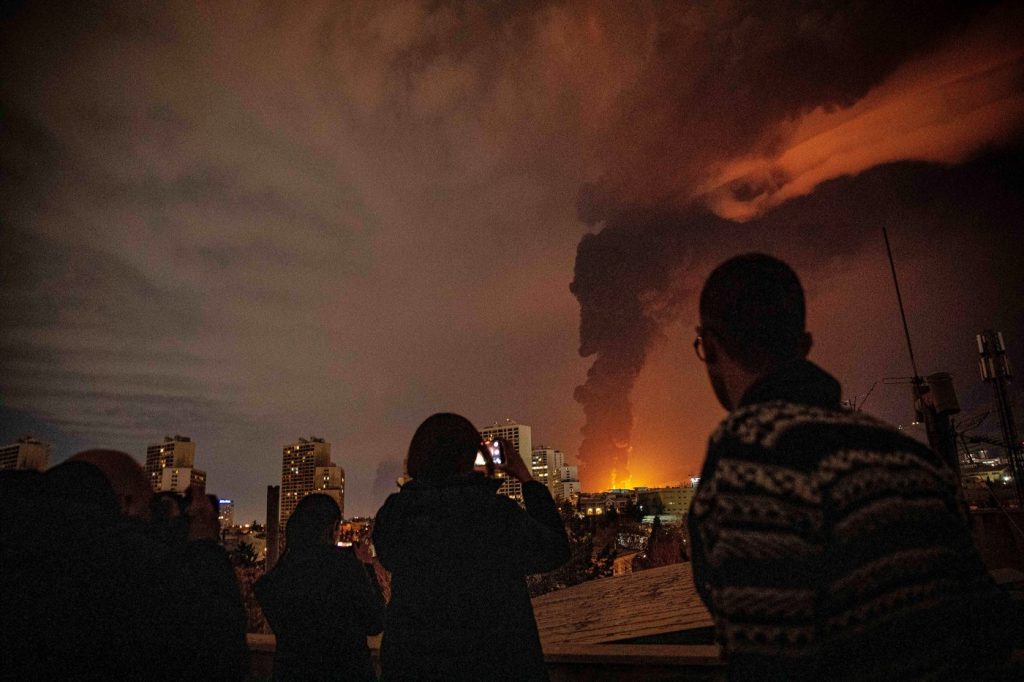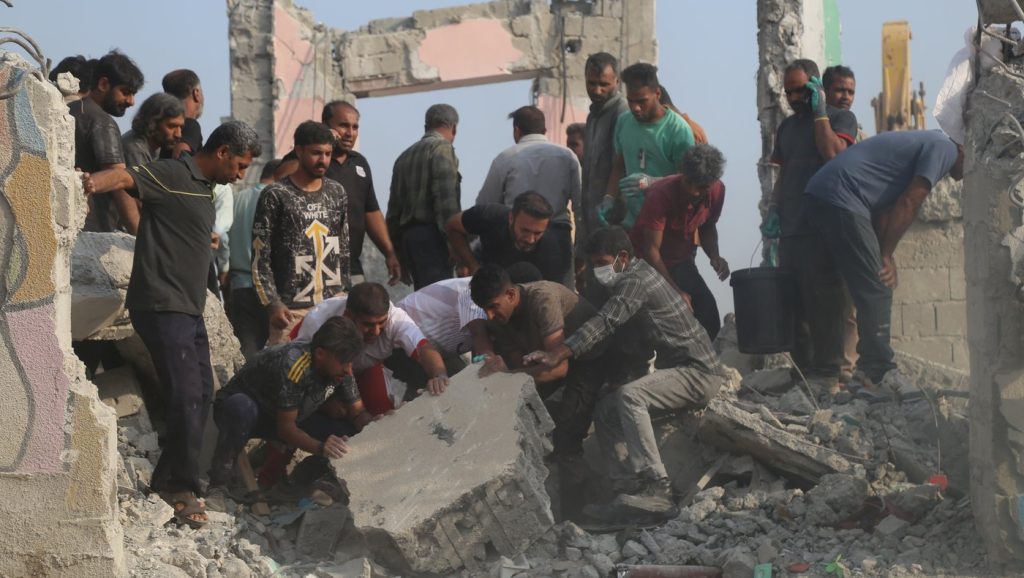
New evidence, including recent footage, suggests that a U.S. Tomahawk missile may have struck a school compound in Minab, southern Iran, resulting in over 165 deaths during the conflict in the Mideast. The incident occurred on February 28, 2026, near a facility used by Iran's Revolutionary Guard in Hormozgan Province. Experts who analyzed satellite images and the footage conveyed to the Associated Press indicate that the explosive impact might have been part of a series of bombings targeting the compound.
A U.S. official, speaking anonymously due to the sensitive nature of the issue, confirmed that the missile strike was likely of American origin. The newly revealed video, first examined by the investigative group Bellingcat, shows a missile impacting a structure and sending a significant plume of smoke into the atmosphere. The footage was reportedly captured on the same day as the school strike, with smoke visible from the vicinity of the educational institution. Geolocation efforts conducted by the AP corroborated the video’s authenticity, identifying specific visual markers such as a flat-roofed building and power lines.
Trevor Ball, a researcher for Bellingcat, has identified the weapon as a Tomahawk cruise missile, a type of munition exclusively available to the U.S. military in this context. This identification marks the first piece of definitive evidence regarding the type of weapon used in the attack. U.S. Central Command has acknowledged deploying Tomahawk missiles during this conflict and even released imagery of the USS Spruance missile destroyer, part of the USS Abraham Lincoln carrier group, launching a missile on the same day as the fatal incident.
Bellingcat's analysis appears to challenge assertions made by former U.S. President Donald Trump, who claimed that Iran was responsible for the school explosion. In a recent press conference, Trump mentioned that the Tomahawk missile could be possessed by Iran, despite no evidence supporting such a claim. Tomahawk missiles are sold to U.S. allies like Japan and Australia, but no verifiable information indicates that Iran has access to them. Trump further stated, “Whether it’s Iran or somebody else… a Tomahawk is very generic,” reflecting a dismissive stance on the specificities of the missile's international proliferation.
Moreover, after the incident, the U.S. military launched an assessment based on protocols that signal potential culpability for civilian harm, which further implicates American involvement. The strategic location of the school, adjacent to the Revolutionary Guard base and navy barracks, aligns with U.S. military operations that have previously targeted naval assets. Reports indicate that Israel has not conducted strikes in the southern regions of Iran, weakening potential claims of Israeli involvement.
The situation is complicated by the absence of bomb fragment imagery from the incident, as well as the lack of independent investigations on the ground since the war began. Janina Dill, an expert in international law from Oxford University, emphasized that even if attacking forces misidentified the school as part of the IRGC compound, it would constitute a serious violation of international law, obliging attackers to verify the status of targets to prevent civilian casualties.
In a stark contrast to these legal obligations, Trump administration officials have adopted a more aggressive rhetoric towards military engagement, emphasizing a commitment to lethal precision and disregard for "stupid rules of engagement." This framing was echoed by Defense Secretary Pete Hegseth during a March 2 press briefing, where the administration asserted its intention to minimize constraints imposed by international humanitarian law.